Relation of Determinant Factors and Their Effect on Improving the Online Learning: A systematic literature review
Ida Bagus Ketut Widiartha, 황준석, Ryan Adhitya Nugraha (2023) · International Conference on Advancement in Data Science, E-learning and Information System · DOI ↗
자매작 Analysis of Resilience of Education System in Higher Education Due to Covid-19 Pandemic in Indonesia: A Systematic Literature Review (resilience framework) 의 후속. 온라인 학습 의 효과성 = 강사 동기 × 학생 만족의 Harmony Model 제안. Scopus 2017-2022, 560 articles → Voyant tools 텍스트 마이닝 (cirrus + collocation analysis with detail correlation) → 새 검색어로 14 articles 평가. 결정 요인: acceptance, self-efficacy, communication, motivation, media/multimedia. Theory of Action Reason (Fishbein-Ajzen 1975) 적용. 강사 측 burden (social burden + physical burden — 콘텐츠 제작이 instructional designer + knowledge organizer 역할 부여) vs 학생 측 satisfaction (perceived enjoyment + usefulness + incentive + curiosity) 의 thread-off가 핵심. 두 축의 harmony 가 효과적 OL.
- RQ: 온라인 학습 환경에서 (i) 강사가 적절한 수업 자료를 제공할 의지에 영향을 미치는 결정 요인은 무엇이며, (ii) 학생이 온라인 학습 환경을 활용하도록 유도하는 결정 요인은 무엇인가?
- 방법론: 문헌 리뷰 (systematic protocol), 텍스트 마이닝 (Voyant tools — word cloud, term-collocation correlation, detail correlation), snowball-review
- 데이터: Scopus 2017-2022, 560 articles (검색어 동일 자매작) → Voyant tools → 새 검색어 query → 14 articles 평가 (Table 1)
- 주요 발견: 결정 요인: acceptance, self-efficacy, communication, motivation, multimedia. 모두 상호 연관. Multimedia → motivation → acceptance/satisfaction 경로. Harmony Model: 강사 burden (콘텐츠 제작 부담·instructional designer 역할) ↔ 학생 satisfaction (enjoyment + usefulness + incentive + curiosity) 의 thread-off. Theory of Action Reason 기반: 행동 = 태도 + 주관적 규범.
- 시사점: 단순 기술 도입이 아니라 강사 동기 부여 시스템 + 학생 만족 향상 두 축의 통합 설계. 강사 motivation 측정 + 학생 satisfaction 측정 → harmony 검증 → 불균형 시 정책 처치 (incentive 강화·workload 경감). Indonesia Kampus Merdeka 정책에 적용 가능.
요약
자매작 Analysis of Resilience of Education System in Higher Education Due to Covid-19 Pandemic in Indonesia: A Systematic Literature Review (JOIV 2023) 가 resilience framework 와 3 구성요소 (lecturer/student/technology) + RP 메커니즘을 제시했다면, 본 후속작은 효과성의 두 축 으로 좁힌다 — 강사가 적절한 자료를 제공할 의지 + 학생이 OL 환경을 활용할 동기. Harmony Model 은 두 축의 균형이 효과적 OL 의 조건임을 주장하며, Theory of Action Reason (Fishbein-Ajzen 1975; Salgues 2016; Nickerson 2022 — 모든 행동은 특정 이유에 기반하며 긍정·부정 감정에 영향) 을 이론 토대로 활용한다.
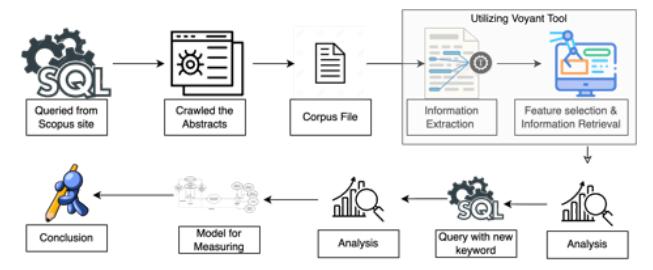
방법론: Scopus (2017-2022) 의 동일 검색어로 560 articles 검색 (자매작 429 보다 많음 — 검색 범위 확장). Voyant tools 의 텍스트 마이닝 으로 (i) word cloud (Fig 2 — 빈도), (ii) term-collocation correlation (Fig 3 — 단어 관계), (iii) detail correlation (Fig 4 — 관계 정밀도). 결정 요인 추출 후 새 검색어 (“student AND learning AND technology AND outcome AND study AND education AND framework learning research and online-learning”, PUBYEAR 2018-2022) 로 focused query → 14 articles 평가 (Table 1).
결정 요인 (Table 1 의 14 articles): acceptance (Hongsuchon et al. 2022; Larionova et al. 2018), self-efficacy (Ramsin & Mayall 2019; Cechova et al. 2018), experience (Zappatore 2022), game/media (Donkin & Rasmussen 2021), enjoyment/usefulness/convenience/compatibility/social influence/computer self-efficacy (Lim & Lee 2021 — Extended TAM/TTF), multimedia (Harerimana et al. 2022; Iqbal et al. 2018; Sharma et al. 2021), arts-inspired media (Parker & Perry 2021), performance/effort expectancy + social influence (Raza et al. 2021), motivation (Budiarsi et al. 2018), discussion/communication (Cechova et al. 2018). Fig 5: motivation 이 중심, multimedia → motivation, communication → motivation, self-efficacy → motivation, perceived enjoyment → motivation, social influence → motivation.
Stakeholders 분석 (Fig 6, Judrups 모델 기반): Lecturer (인도네시아 3 main tasks: education + research + community service) + 2 additional OL tasks (knowledge designer + knowledge organizer). 강사가 콘텐츠 디자인 + LMS 조직 + 비디오 미팅 진행 3중 부담. Burden 2 유형: (i) social burden (콘텐츠가 학생에게 매력적 아닐까 우려), (ii) physical burden (instructional designer + knowledge organizer 추가 작업, 다른 사람에 transfer 가능하나 재정 결과 동반). Burden 이 stress → emotional fatigue → 직업 만족 저하 (Prada-Ospina 2019).
Student 측: knowledge seeker. 강의 출석 + 자료 학습 + 과제 + 질문 권리. 만족도 = 콘텐츠 적절성 인식. 결정 요인 (Venkatesh & Davis 2000; Davis 1989): perceived enjoyment (특정 시스템 행동이 즐거운 정도), perceived usefulness (성과 향상 기여 정도), incentive (어떤 형태든 보상), curiosity (새 것 학습 욕구).
Knowledge Management 통합 (Yılmaz 2012): KM 은 조직의 공유 지식 organize + create + use + share 프로세스. OL 에 KM 도입 시: lecture = knowledge holder → explicit knowledge → LMS repository → student access → feedback (quick) → higher value than traditional. 다양한 관점·경험 → 다양한 perspectives → decision-making 효율성.
Harmony Model (Fig 7): Knowledge holder (lecturer) ↔ knowledge seeker (student) 양방향. 양측 모두 영향 요인. Theory of Action Reason: 모든 attitude/action 은 reason 기반 + 긍정/부정 감정 영향. Supporting reason (incentive·만족·motivation) vs non-supporting reason (burden·stress) 의 thread-off 가 두 축 모두에서 작동. Harmony 가능하면 효과적 OL, 불균형하면 처치 필요. Burden 관리는 appreciation from students + rewards 로 가능.
함의: 단순 기술 도입 X. Determinant factors 식별 → 분석 → 처치 사이클. 강사 측: 콘텐츠 제작 grant + remuneration + 인정 강화. 학생 측: 만족도 측정 + curiosity-trigger 콘텐츠 + incentive (grading). Indonesia Kampus Merdeka 같은 정책 결합 시 효과 극대화. 황준석 의 ICT for Development 라인의 인도네시아 시리즈 두 번째.
핵심 결과
| 차원 | 결정 요인 | 출처 |
|---|---|---|
| Acceptance | external validation, perceived ease | Hongsuchon 2022, Larionova 2018 |
| Self-efficacy | 능력 신뢰 (Bandura 1999) | Ramsin & Mayall 2019, Cechova 2018 |
| Multimedia | dual channel + cognitive load | Harerimana 2022, Iqbal 2018, Sharma 2021 |
| Motivation | intrinsic + extrinsic (Ryan-Deci 2000) | Budiarsi 2018 |
| Communication | interaction (Moore 1983, Schlosser 1994) | Cechova 2018 |
| Perceived enjoyment/usefulness | TAM 3 | Lim & Lee 2021, Venkatesh & Bala 2008 |
Harmony Model 두 축:
- Lecturer: knowledge holder/designer/organizer 의 3 역할 → burden (social + physical) ↔ supporting (incentive·grant·remuneration·인정)
- Student: knowledge seeker → satisfaction (enjoyment + usefulness + incentive + curiosity) ↔ non-supporting (engagement·motivation 부재)
방법론 노트
문헌 리뷰 체계 프로토콜은 자매작과 유사하나 Voyant tools 활용 강화 — cirrus diagram (frequency word cloud) → term-collocation correlation (단어 공출현 네트워크) → detail correlation (관계 정밀도) 의 3 단계. 재 검색 (focused query) 으로 14 핵심 articles 평가.
Theory of Action Reason (Fishbein & Ajzen 1975; Ajzen 1991 의 Theory of Planned Behavior 전신): 행동 의도 = 행동 태도 + 주관적 규범. 수학적으로 표현하면:
여기서 BI = behavioral intention, = empirically derived weights. Behavior = . Reasoned action 은 deliberate, conscious decision — 자동 반응 X. Salgues (2016) 가 health industrialization 에 적용한 변형 사용.
Knowledge Management (Nonaka & Takeuchi 1995; Yılmaz 2012): tacit knowledge (암묵지) ↔ explicit knowledge (형식지) 의 4 변환 (socialization · externalization · combination · internalization). OL 에서 lecturer 가 explicit knowledge 를 LMS 에 저장 → student 가 internalization → 일상에 적용 → outcome 발현. Video meeting 은 tacit knowledge transfer 채널 (강사 태도·논의·질문에서).
Harmony Model (Fig 7) 의 작동: , 가 harmony 함수 — 두 변수의 균형 (조화) 일 때 최대. 측정 도구: 강사 willingness scale (콘텐츠 제작 의지) + student satisfaction scale (perceived enjoyment + usefulness + incentive + curiosity). Harmony 측정 후 불균형 처치 — strong motivation으로 balance 회복.
연구 계보
자매작 Analysis of Resilience of Education System in Higher Education Due to Covid-19 Pandemic in Indonesia: A Systematic Literature Review 의 직접 후속 (JOIV 2023 → ICADEIS 2023). Fishbein and Ajzen (1975) 의 Reasoned Action Theory, Ajzen (1991) 의 Theory of Planned Behavior 가 핵심 토대. Mayer (2014) multimedia cognitive theory, Paivio (1990) dual coding, Baddeley (2005) working memory, Sweller (1999) cognitive load 의 multimedia 학습 이론 series. Ryan and Deci (2000) self-determination theory, Schiefele and Schaffner (2015) teacher motivation. Bandura (1999) social cognitive theory. Davis (1989) TAM (perceived usefulness/ease of use), Venkatesh and Bala (2008) TAM 3. Judrups (2015) 의 KM-eLearning 통합 모델 (lecturer 3 role), Nonaka and Takeuchi (1995) KM. Salgues (2016) 의 acceptability and diffusion 의 Theory of Action Reason 응용. Claudy et al. (2013) 의 Behavioral Reasoning Theory 의 attitude-behavior gap. Prada-Ospina (2019) 의 work-related stress/burnout. Indonesia education law (Yudoyono 2012). 황준석 의 4기 (2020-2023) ICT4D 라인의 인도네시아 OL 시리즈 두 번째 작품 — Harmony Model 로 핵심 결과를 ICADEIS 컨퍼런스에 출판.
See also
- 황준석
- Ida Bagus Ketut Widiartha
- International Conference on Advancement in Data Science, E-learning and Information System
- 온라인 학습
- 고등 교육
- ICT4D
- theory-of-action-reason
- 문헌 리뷰
- Analysis of Resilience of Education System in Higher Education Due to Covid-19 Pandemic in Indonesia: A Systematic Literature Review
인접 그래프
- 인물 3
- 방법론 2
- 주제 3
- 수록처 1
- 분류 3
- 논문 1