Influence of Lifestyle Pattern on Preference for Prosthetic Hands: Understanding the Development Pathway for 3D Printed Prostheses
Jong Jin Kim, jinseok-kim, 이종수, Jungwoo Shin (2022) · Journal of Cleaner Production 379:134599 · DOI ↗
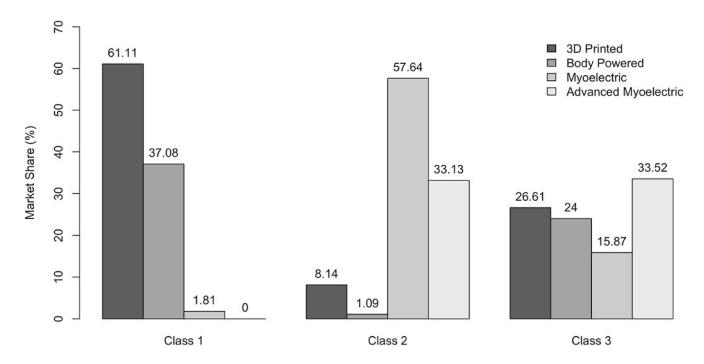
의수 (prosthetic hand) 선택에서 lifestyle pattern 이 사용자의 attribute 선호 구조를 어떻게 분리하는지 discrete-choice-experiment + latent-class-model 로 식별한다. 한국 일반인 701 명 face-to-face DCE 결과, 3 개 lifestyle class 가 도출 — Class 1 (31.3%, 가정형, price 67.62% 비중) · Class 2 (35.0%, 청년 외향형, dexterity 50.73% 비중) · Class 3 (33.7%, 활동형, weight 54.86% 비중). 3D-printed 의수의 시장 침투는 Class 1 에 가장 강하며 (가격 우위, market share 61.11%), Class 2 는 dexterity 가 123.4% 개선되어야 myoelectric 을 추월한다.
- RQ: 의수 선택은 단순히 장애 유형이나 사회인구학적 변수로 설명되는가, 아니면 lifestyle pattern 별 이질적 선호 구조가 존재하는가? 3D-printed 의수의 시장 침투 경로는 어디인가?
- 방법론: discrete-choice-experiment, latent-class-model, 한계 지불의사, 시나리오 분석
- 데이터: 한국 8 개 도시 20
59 세 N=701 (Gallup Korea face-to-face, 2019-04-0122), 의수 5 attribute (가격 3 수준 KRW 200만800만 / 무게 4 수준 500g2kg / dexterity 3 수준 26 movements / AS 3 수준 100300 days / education 2 수준) × 216 조합 중 fractional factorial 24 alternatives, 6 choice sets - 주요 발견: 3 class LCM (CAIC = 8420.9 가 최저로 최적); Class 1 (31.3%) 가정 시간 多 — price RI 67.62%, 3D-printed market share 61.11%; Class 2 (35.0%) 청년·외향형 — dexterity RI 50.73%, myoelectric 57.64% 선호; Class 3 (33.6%) 활동형 — weight RI 54.86%, advanced myoelectric 33.52% 선호; 3D-printed 가 myoelectric 대체하려면 Class 2 dexterity +123.4%, Class 3 weight -18.48% 필요
- 시사점: 정부 의수 R&D 예산 (한국 의료기기 R&D KRW 30.2B + 일상 보조기기 KRW 4.8B) 의 우선순위는 class 별 차별화. Class 1 → 가격·정보 접근성; Class 2 → 기능 (dexterity); Class 3 → 무게 경량화
요약
WHO-UNICEF 2022 보고에 따르면 25 억 인구가 보조기기를 필요로 하며 이는 2050 년 35 억으로 증가할 전망이다. 의수 같은 prosthetic device 는 customization 압력이 특히 큰데, 전통 의수 (body-powered · myoelectric · advanced myoelectric) 는 모두 가격 (KRW 175만1500만) · 무게 (0.61.3kg) · 기능 (2~8 movements) 의 trade-off 가 첨예하다. 3D-printed 의수는 저비용 · 빠른 생산 · 높은 맞춤성으로 unmet needs 를 만날 후보지만, 시장 침투 경로 (어느 attribute 를 먼저 개선해야 어느 사용자 segment 에 도달하는가) 가 실증되지 않았다. 본 논문은 이종수 · Jungwoo Shin 연구진의 healthcare consumer-choice 라인 안에서, lifestyle pattern (시간 배분) 을 latent class 의 membership 변수로 도입해 이 trade-off 를 사용자 segment 별로 분해한 첫 작업이다.
discrete-choice-experiment 는 의수 5 attribute (price 3 수준 · weight 4 수준 · dexterity 3 수준 · after-service 3 수준 · education 2 수준) × 216 조합 중 fractional factorial 24 alternatives 를 6 choice sets 로 묶고, 각 set 4 alternatives 의 ranking 을 수집. latent-class-model 의 utility 는 으로 class-specific coefficient. Class 수는 CAIC 최저화로 3 class 결정 (CAIC = 8420.9 < 4 class 의 8433.98). 결과: Class 1 (31.3%) price 계수 -0.869 *** (RI 67.62%) · weight 계수 -0.547 ** · dexterity 계수 +0.250 ***; Class 2 (35.0%) dexterity 계수 +1.974 *** (RI 50.73%) · price 계수 -0.651 *** · weight 계수 -1.939 ***; Class 3 (33.6%) weight 계수 -1.576 *** (RI 54.86%) · dexterity 계수 +0.229 *** · price 계수 -0.0904 ***. Membership 변수: 가정 시간 ↑ → Class 1 (계수 0.168 **), 직장·여가 시간 ↑ → Class 2 (각 0.137 · 0.204 **).
Market share 시뮬레이션 (base scenario: body-powered KRW 175만/0.7kg/2mv, myoelectric KRW 600만/1.3kg/6mv, advanced myoelectric KRW 1500만/0.6kg/8mv, 3D-printed KRW 140만/0.8kg/3mv) 결과: Class 1 → 3D-printed 61.11% > body-powered 37.08% > myoelectric 1.81%; Class 2 → myoelectric 57.64% > advanced myoelectric 33.13% > 3D-printed 8.14%; Class 3 → advanced myoelectric 33.52% > 3D-printed 26.61% > body-powered 24.00% > myoelectric 15.87%. Scenario analysis: 3D-printed 가 Class 2 의 myoelectric 을 추월하려면 dexterity +123.4%, advanced myoelectric 추월에 +161.19% 필요. Class 3 의 advanced myoelectric 추월에 weight -18.48% (dexterity 라면 +133.8% 필요). 정책 함의: 3D-printed 의수 R&D 우선순위는 dexterity > weight 순. Class 1 의 3D-printed 침투 (가격 우위) 는 정보 접근성 정책이 결정적.
핵심 결과
LCM 추정 (3 class, log-L = -4,021.637, CAIC = 8,420.9)
| Attribute | Class 1 (31.3%) | Class 2 (35.0%) | Class 3 (33.6%) |
|---|---|---|---|
| Price 계수 | −0.869*** | −0.651*** | −0.0904*** |
| Weight 계수 | −0.547** | −1.939*** | −1.576*** |
| Dexterity 계수 | +0.250*** | +1.974*** | +0.229*** |
| AS 계수 | +0.0279*** | −0.0383 | +0.0124 |
| Education 계수 | −0.116 | −0.0888 | +0.239** |
*** p<0.01, ** p<0.05.
Relative Importance (% 비중)
| Attribute | Class 1 | Class 2 | Class 3 |
|---|---|---|---|
| Price | 67.62 | 25.09 | 12.58 |
| Weight | 10.64 | 18.69 | 54.86 |
| Dexterity | 12.97 | 50.73 | 21.26 |
| AS | 7.26 | 4.92 | 5.76 |
| Education | 1.50 | 0.57 | 5.55 |
Market share (base scenario)
| 의수 type | Class 1 | Class 2 | Class 3 |
|---|---|---|---|
| Body-powered | 37.08% | 1.09% | 24.00% |
| Myoelectric | 1.81% | 57.64% | 15.87% |
| Advanced myoelectric | 0.00% | 33.13% | 33.52% |
| 3D-printed | 61.11% | 8.14% | 26.61% |
Substitution 임계치 (3D-printed → 기존 추월)
- Class 2: dexterity +123.4% → myoelectric 추월; +161.19% → advanced myoelectric 추월
- Class 3: weight −18.48% → advanced myoelectric 추월; dexterity +133.8% (대안 경로)
방법론 노트
latent-class-model 은 mixed logit 의 alternative 로, 모집단이 개 잠재 class 로 구분되고 같은 class 내 동일 선호 구조를 가정한다 (Greene and Hensher 2003). 개인 의 class · alternative · choice set 효용:
choice probability (type-I extreme value ):
Class membership 은 multinomial logit:
여기서 은 observable membership 변수 (gender, age, education, income, time spent at home/work/leisure, innovation perception). Likelihood 는 두 결합:
Attribute 의 marginal WTP 는 로 추정. 식별은 24 alternatives 의 orthogonal design + class-specific coefficient 의 동시 추정 + membership 변수의 between-class variation 에서 온다. 최적 class 수는 CAIC 최저화 (Pacifico and Yoo 2013) — 1 class CAIC 9034.9 → 2 class 8462.6 → 3 class 8420.9 → 4 class 8433.98, 3 에서 최저.
연구 계보
본 논문의 직접 선행은 How Are High-Tech Assistive Devices Valued in an Aging Society? Exploring the Use and Non-Use Values of Equipment That Aid Limb Disability (같은 저자 그룹의 동일 표본 사용, CVM 으로 보조기기 가치 평가) — 본 paper 는 같은 N=701 face-to-face 설문의 DCE 모듈 을 활용한 자매 작업이다. 방법론 조상은 Greene and Hensher (2003) 의 LCM, McFadden (1973) 의 MNL, Train (2009) 의 MLE. 의수 사용자 lifestyle 문헌의 직접 인용은 Cordella et al. (2016) · Resnik et al. (2019) · Chadwell et al. (2020) — 모두 lifestyle factor 의 중요성을 강조했지만 segmentation 까지 정량화하지 않았다. TEMEP 내 이종수 author page 의 제3기 demand-side econometrics 확장 라인 안에서 healthcare valuation sub-line 의 LCM 적용 작업이며, sibling How Are High-Tech Assistive Devices Valued in an Aging Society? Exploring the Use and Non-Use Values of Equipment That Aid Limb Disability 와 함께 고령 사회 보조기기 가치 평가 2 부작 (CVM × DCE) 을 구성한다.
See also
- discrete-choice-experiment
- latent-class-model
- 한계 지불의사
- 시나리오 분석
- 3d-printing
- prosthetic-hands
- assistive-devices
- preference-heterogeneity
- Jong Jin Kim
- jinseok-kim
- 이종수
- Jungwoo Shin
- How Are High-Tech Assistive Devices Valued in an Aging Society? Exploring the Use and Non-Use Values of Equipment That Aid Limb Disability
인접 그래프
- 인물 3
- 방법론 1
- 개념 1
- 수록처 1
- 분류 1
- 논문 2