How Can the Pay-TV Market Retain Its Users? A Critical Threat to the Pay-TV Market with Insights from South Korea
myongji-cho, kyungah-kim, 이종수, Jungwoo Shin (2026) · Journal of Media Economics · DOI ↗
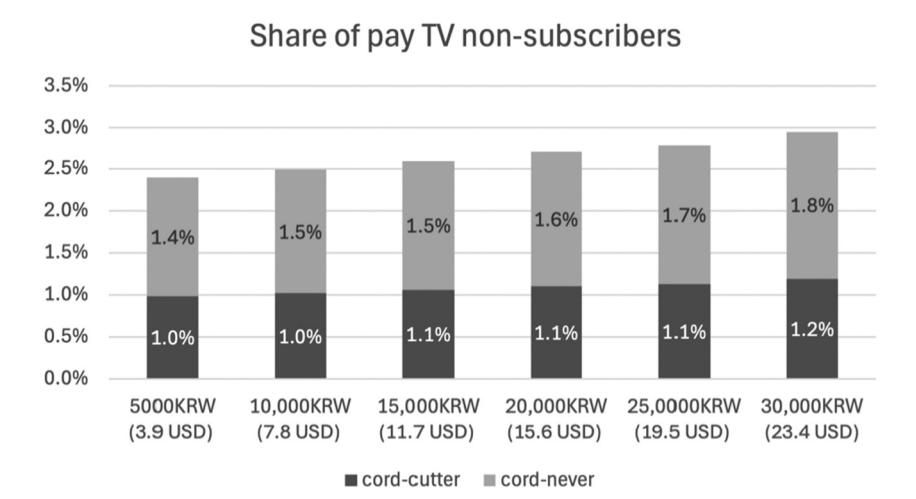
한국 1,003 명 face-to-face SP 설문 (Korea Gallup, 2023 년 4-5 월), 6 속성 (서비스 사업자, 라이브 채널, TVOD, 지연시간, OTT 종류, 월 구독료) × 2 시나리오 (paid OTT 추가 구독 전/후) 의 paired choice 를 혼합 로짓 (Train 2003 SMLE 추정) 으로 분석. Cord-cutting (완전 해지) 확률 1.1% vs Cord-shaving (저가 plan 으로 downgrade) 확률 8.2% — cord-shaving 이 한국 pay-TV 시장의 dominant threat. 가구 미디어 지출 +16.9/월 감소. 연간 손실 — cord-cutting 11.8M USD vs cord-shaving 146.3M USD (12 배). 한국 IPTV broadcasting revenue 의 3.89% 손실. *Bundled 패키지 + 저가 IPTV 가 한국의 retention success factor — 미국 cord-cutting trend 와 대조.
- RQ: 한국 pay-TV 구독자가 추가 paid OTT 구독 시 pay-TV 선택 행동은 어떻게 변하는가? (i) 완전 해지 (cord-cutting) 의 확률, (ii) 저가 plan 으로 downgrade (cord-shaving) 의 확률, (iii) TVOD 의 OTT 대체 관계 정량 검증. 가설 H1 (cord-cutting 발생 X), H2 (cord-shaving 발생 X), H3 (TVOD 가 OTT 대체 X) 검증
- 방법론: discrete-choice-experiment (6 속성 × 648 alternatives → fractional factorial 30 alternative → 10 choice set 의 2 group A/B), 혼합 로짓 (Train 2003 random coefficient, 정규분포 가정, 가격은 lognormal robustness check), simulated-maximum-likelihood (SMLE) 추정. Paired choice — 시나리오 1 (현재) + 시나리오 2 (paid OTT 추가 구독 가정) 의 same alternative 에 대한 두 번 선택. Model 1 = 시나리오 1 only, Model 2 = 시나리오 1+2 결합 (status-quo retention 변수 + provider switch 변수 + cordcut 변수 도입)
- 데이터: 한국 Korea Gallup 1,003 명 face-to-face survey (2023 년 4-5 월, 200 명 pilot 후), purposive quota sampling (남녀 50:50, 20-59 세, 서울 44%·기타 56%). 20 responses/응답자 × 1,003 = 20,060 observations. 6 속성: 사업자 (SKB / KT / LG U+ / Etc.=cable+satellite), 라이브 채널 (all / no terrestrial / no GP), TVOD (있음/없음), 지연 (1/2/3 분), OTT (all / no domestic / no foreign), 월 구독료 (11.5 / $19.2 USD)
- 주요 발견: (i) Model 1 (시나리오 1) 모든 IPTV 사업자 양 효용: SKB +1.473 > KT +1.209 > LG +0.951 > Etc. +0.547 (vs 미사용 baseline). 모두 유의한 random coefficient SD — 사업자 선호 이질성. (ii) Model 1 콘텐츠 선호: terrestrial 채널 제외 −0.321, GP 채널 제외 −0.333 (둘 다 disutility); TVOD 있음 +0.161 (utility); 지연 1 분당 −0.152; 국내 OTT 제외 −1.142, 해외 OTT 제외 −1.226 (해외 더 큰 disutility); 가격 1 단위 (\beta_{cordcut}3.9-23.1 변동에도 안정). (iv) Cord-shaving: = −0.237 (유의) — 시나리오 2 에서 저가 plan 으로 이동 선호. 8.2% 확률 로 cord-shaving. 가구 미디어 지출 +16.9/월** 감소. (v) Model 2 TVOD 비유의 (Model 1 +0.161 → Model 2 +0.077 비유의) — Hypothesis 3 지지: TVOD 가 OTT 대체. (vi) 연간 손실: 한국 IPTV cord-cutting 11.8M USD vs cord-shaving 146.3M USD (12 배). KT 60.8M USD, SKB 43.4M USD, LG 42.1M USD 의 cord-shaving 손실. IPTV broadcasting revenue 의 3.89%.
- 시사점: (a) Cord-shaving > cord-cutting 12 배 — 한국 pay-TV 정책 + 사업자 전략의 focus shift 필요. 미국 N-American cord-cutting dominant pattern 과 근본적으로 다른 시장 동학. (b) Bundled packages + 저가 IPTV 의 성공: 한국 92.5% 가구의 pay-TV 사용 (2023) — 35.4% 가 “bundled 패키지 혜택” 동기 — 의 retention success factor 정량 입증. (c) TVOD ↔ OTT 대체 관계 — pay-TV provider 가 TVOD opt-out 옵션 제공 + 저가 plan 유지 + 차별 콘텐츠 (terrestrial + 국내 OTT 파트너십) 강화. (d) Foreign OTT (Netflix, YouTube, Disney+) 의 separate subscription 선호 — pay-TV via TV device 가 foreign OTT 의 multi-device access 우선과 충돌. 국내 OTT (Wavve, TVING) 의 pay-TV 파트너십 이 retention strategy. (e) 이종수 의 방송-OTT 라인 의 최신 update — Over-the-Top Bundled Services in the Korean Broadcasting and Telecommunications Market: Consumer Preference Analysis Using a Mixed Logit Model (telematics 2021) 의 bundled OTT-TV 선호 의 cord-shaving-cord-cutting 분리 식별.
요약
본 paper 는 이종수 의 연구 궤적 방송-OTT consumer choice 라인 의 최신 작업. Journal of Media Economics 게재 (2026 년 1 월). Over-the-Top Bundled Services in the Korean Broadcasting and Telecommunications Market: Consumer Preference Analysis Using a Mixed Logit Model (Telematics & Informatics 2021) 의 bundled OTT-pay-TV consumer preference 의 cord-cutting-cord-shaving 분리 식별 후속작. 기존 문헌 (Shin-Park-Lee 2016 TFSC, Kim-Lee-Lee-Kim 2017 Telecom Policy, Tefertiller 2020) 은 OTT 가 cord-cutting 유발 의 일률적 가정 — 그러나 미국 외 시장 (한국·유럽) 의 실제 dynamic 은 다름. Fudurić-Malthouse-Lee (2020 J Media Bus Studies) 가 cord-shaving 의 별도 분석 시도 했으나 paid OTT 추가 구독 의 financial burden 의 consumer choice 영향 미반영. 본 paper 의 conceptual move 는 — paired SP choice (시나리오 1: 현재 / 시나리오 2: paid OTT 추가 구독) 로 cord-shaving 와 cord-cutting 을 동시 식별 + fee_diff 변수 로 지출 증가 의 WTP 감소 정량화.
방법론은 6 속성 discrete-choice-experiment + paired choice + 혼합 로짓 SMLE. 648 alternative combinations → fractional factorial 로 30 alternatives → 10 choice sets (A/B 그룹 나눔, 응답자 random assignment). 각 choice set 에서 3 alternatives + no choice 의 두 번 선택 — (1) 현재 (Scenario 1), (2) paid OTT 추가 구독 가정 (Scenario 2). 20 responses/응답자 × 1,003 = 20,060 observations. Model 1 (Scenario 1 only) 은 baseline preference 추정 — SKB +1.473, KT +1.209, LG +0.951, Etc. +0.547 의 모든 IPTV 양 효용 (vs 미사용 baseline), random coefficient SD 모두 유의 (heterogeneity 정당화). Model 2 (Scenario 1+2 결합) 은 retain vs switch vs cordcut decomposition — +2.457 (SKB 유지), −2.981 (cord-cutting 강한 음), −0.237 (저가 plan 으로 cord-shaving). 핵심 식별 — 의 유의한 음 이 지출 증가 → 저가 plan 이동 의 정량 증거.
발견의 정책 함의는 cord-shaving > cord-cutting 의 한국-특수 패턴. (a) Cord-cutting 1.1% — 가격 7.7/월 → pay-TV WTP −$16.9/월 (median −2.21, mean −2.49 의 willing-to-cord-shave). (c) TVOD vs OTT 대체 — Model 1 의 TVOD +0.161 (유의) 가 Model 2 에서 +0.077 (비유의) 으로 약화. OTT 가 subscription VOD 측면에서 TVOD 대체 — Katz-Jung-Callorda (2024 Telecom Policy) 의 VOD substitution 명제 지지. (d) 연간 손실 비교: Cord-shaving 146.3M USD vs Cord-cutting 11.8M USD (12 배). 한국 IPTV broadcasting revenue (376.5B USD 2022 — 사실은 KRW 기준 오류 likely) 의 3.89%. (e) Foreign OTT 의 separate subscription 선호: pay-TV via TV device 의 single-screen 한계, foreign OTT 의 multi-device access (Netflix, YouTube) 와 양립 불가. Pay-TV 는 domestic OTT (Wavve, TVING) 파트너십 + terrestrial 채널 강화 로 retention.
한계: (i) 한국-only — bundled pricing + 저가 IPTV 의 unique market structure; 미국·유럽 일반화 한계. (ii) Demographics × cord-shaving propensity 미분석 (Appendix C 의 SUR 분석 부분적). (iii) 가격 효과 선형 가정 — piecewise / quadratic nonlinear 미반영. (iv) Cord-shaving 의 세부 dynamics (어떤 채널·TVOD opt-out 우선 ?) 미분석. (v) Stated preference 의 hypothetical bias. (vi) Cross-sectional — 시계열 변화 미반영. 이종수 author page 의 방송-OTT consumer choice 라인 의 cord-shaving 정량 식별 의 첫 작업.
핵심 결과
Model 1 추정 (Scenario 1 only, mean / SD, all 99% CI 유의)
| 변수 | Mean | SD |
|---|---|---|
| SKB | +1.473 | 1.007 |
| KT | +1.209 | 0.762 |
| LG | +0.951 | −0.687 |
| Etc. (Cable+Sat) | +0.547 | 1.011 |
| Terrestrial 채널 제외 | −0.321 | n.s. |
| GP 채널 제외 | −0.333 | n.s. |
| TVOD 있음 | +0.161 | 0.585 |
| Latency (1 분/단위) | −0.152 | 0.489 |
| 국내 OTT 제외 | −1.142 | n.s. |
| 해외 OTT 제외 | −1.226 | 0.250 |
| 월 구독료 ($7.7/단위) | −1.053 | 0.773 |
(N = 20,060, log L = −5,849)
Model 2 추정 (Scenario 1+2 결합) — Retention / Switch / Cordcut
| 변수 | Mean | 의미 |
|---|---|---|
| SKB→SKB () | +2.457 | 사업자 유지 강한 선호 |
| KT→KT | +1.143 | 유지 |
| LG→LG | +0.958 | 유지 |
| Etc.→Etc. | −0.002 | 유지 무차별 |
| → Cordcut () | −2.981 | Cord-cutting 강한 음 |
| Others→SKB | −3.497 | 사업자 변경 disutility |
| TVOD 있음 | +0.077 (n.s.) | TVOD 효과 사라짐 |
| 월 구독료 ($7.7) | −0.045 | 가격 효과 약화 |
| Fee difference (\beta_{fee_diff}$) | −0.237 | 저가 plan 으로 cord-shave |
(N = 20,060, log L = −2,686)
Scenario analysis 결과
| 지표 | 값 |
|---|---|
| Cord-cutting 확률 | 1.0-1.2% (가격 변동 안정) |
| Cord-shaving 확률 | 8.2% |
| 가구 미디어 지출 +$7.7/월 → pay-TV WTP 감소 | −$16.9/월 |
| Willing-to-cord-shave median | −2.21 |
| Willing-to-cord-shave mean | −2.49 |
연간 손실 (Table 5, IPTV 사업자)
| 사업자 | Cord-cutting 손실 (USD/년) | Cord-shaving 손실 (USD/년) |
|---|---|---|
| KT | 4,887,149 | 60,810,850 |
| SKB | 3,534,635 | 43,433,656 |
| LG U+ | 3,404,085 | 42,118,474 |
| 총합 | 11,825,869 | 146,362,981 |
| 비율 (IPTV broadcasting revenue 대비) | 0.314% | 3.89% |
정량 결론. (i) Cord-shaving 손실 의 12 배 dominance — 정책·전략 focus shift 필요. (ii) Bundled package + 저가 IPTV 의 retention success — 가격 $23.1 까지도 cord-cutting 1.2% 만. (iii) TVOD ↔ OTT 대체 — pay-TV 가 TVOD opt-out 옵션 으로 base fee 유지 가능.
방법론 노트
혼합 로짓 의 효용함수 (Eq. 1):
(개인-specific random coefficient) 으로 IIA 완화 + 이질성 포착. 선택 확률 (Eq. 3):
Closed form 없음 → simulated-maximum-likelihood (SMLE) 추정. MWTP (Eq. 4):
Model 2 (Scenario 1+2 결합, Eq. 6) 의 retention/switch decomposition:
핵심 식별 — 의 유의한 음 이 지출 증가 → 저가 plan 이동 (cord-shaving) 의 직접 증거. 의 강한 음 이 cord-cutting unlikely 의 직접 증거. Willing-to-cord-shave (Eq. 7):
식별 가정: (i) Paired choice (시나리오 1 + 2) 의 within-respondent identification, (ii) 정규분포 random coefficient (lognormal robustness check 와 일치), (iii) Provider × retain/switch 의 full decomposition (Table 3 의 25 combinations), (iv) ASCs 가 fee 가 아닌 provider-level 에 분배.
연구 계보
본 paper 는 (a) Train (2003 Discrete Choice Methods with Simulation, 2009) 의 mixed logit + SMLE 정통, (b) Shin-Park-Lee (2016 TFSC) 의 OTT 와 cable/IPTV/satellite 의 differential 영향 — 본 paper 가 Netflix 진입 이후 update + cord-shaving 분리 식별, (c) Kim-Lee-Lee-Kim (2021 Telematics & Informatics) — Over-the-Top Bundled Services in the Korean Broadcasting and Telecommunications Market: Consumer Preference Analysis Using a Mixed Logit Model — 의 OTT-TV bundled 선호 의 cord-shaving-cord-cutting 분리, (d) Park-Lee-Kim (2024 Tech in Society) — Exploring the Fittest Choice Model for Consumer Preference Analysis on Over-the-Top Service — 의 OTT consumer choice model selection 의 방법론 sibling, (e) Fudurić-Malthouse-Lee (2020 J Media Bus Studies), Fudurić-Malthouse-Viswanathan (2018 Bus Horizons) 의 cord-shaving big data 분석 — 본 paper 가 SP-based 확률 추정 으로 보완, (f) Malone-Nevo-Nolan-Williams (2023 REStat) 의 OTT video substitute for TV — 본 paper 가 한국의 different pattern 대조, (g) Prince-Greenstein (2017 JEMS), Massad (2018) 의 cord-cutter demographics, (h) Tefertiller (2020), Menon (2022) 의 OTT adoption 동기 literature 의 통합. 이종수 author page 의 방송-OTT consumer choice 라인 의 cord-shaving 정량 식별 의 시작점 — 후속 aggregator 경제성, 시간 의존적 선호 dynamics 로 확장 가능.
See also
- 혼합 로짓
- discrete-choice-experiment
- simulated-maximum-likelihood
- 시나리오 분석
- pay-tv
- ott-services
- cord-cutting
- cord-shaving
- tvod
- bundled-services
- switching-cost
- 이종수
- myongji-cho
- kyungah-kim
- Jungwoo Shin
- Over-the-Top Bundled Services in the Korean Broadcasting and Telecommunications Market: Consumer Preference Analysis Using a Mixed Logit Model
- Exploring the Fittest Choice Model for Consumer Preference Analysis on Over-the-Top Service
- Journal of Media Economics
인접 그래프
- 인물 2
- 방법론 2
- 수록처 1
- 분류 1
- 논문 2