Analysis on the Acceptance of Coal Phase-Out Policy Considering Public Preferences: Policy Implications and Future Direction Based on Empirical Evidence from South Korea
문성호, 이종수, Junghun Kim, Hyunhong Choi (2025) · Energy Economics 145:108453 · DOI ↗
한국 석탄 발전 phase-out 정책의 공중 수용성을 6 개 attribute (capacity, location, site utilization, period, labor conversion, electricity bill) 의 discrete-choice-experiment 으로 정량화. N=510 가구, 3,060 obs. 재생 → LNG → 문화 복합 순 site 재활용 선호, East/West Sea > South Sea, 조기 decommission 선호, labor conversion 10%↑ 에 USD 1.00/월 추가 지불 의향. Scenario 분석: 전체 24 GW phase-out 시 cultural complex 가 renewable 을 추월 (전기료 격차 때문), 15 개 실제 석탄 발전소 phase-out 우선순위 ranking 산출.
- RQ: 한국 석탄 phase-out 정책의 (i) attribute 별 (capacity, location, site repurposing, decommission period, labor conversion, electricity bill) 공중 선호와 MWTP, (ii) 다양한 정책 옵션 (전체 24 GW phase-out, 개별 15 발전소 우선순위) 의 수용률, (iii) just-transition 의 labor conversion 정량 가치?
- 방법론: discrete-choice-experiment (1,296 조합 → orthogonal 18 alt → 6 sets × 3 alt + no-choice; Huber-Zwerina overlap-min design), 혼합 로짓 (normal coefficient; price 만 negative lognormal), 베이지안 추정 + markov-chain-monte-carlo (10,000 iter, 5,000 burn-in)
- 데이터: Gallup Korea 온라인 survey 2023-02, Korean household 가구 (전기료 attribute 때문), region quota sampling, N=510 (Male 58.4%, 40-59 세 53.1%, Seoul+metropolitan 49.1%). 6 choice occasions × 510 = 3,060 obs. Chi-square test: 표본-모집단 region 차이 무 (p > 0.05)
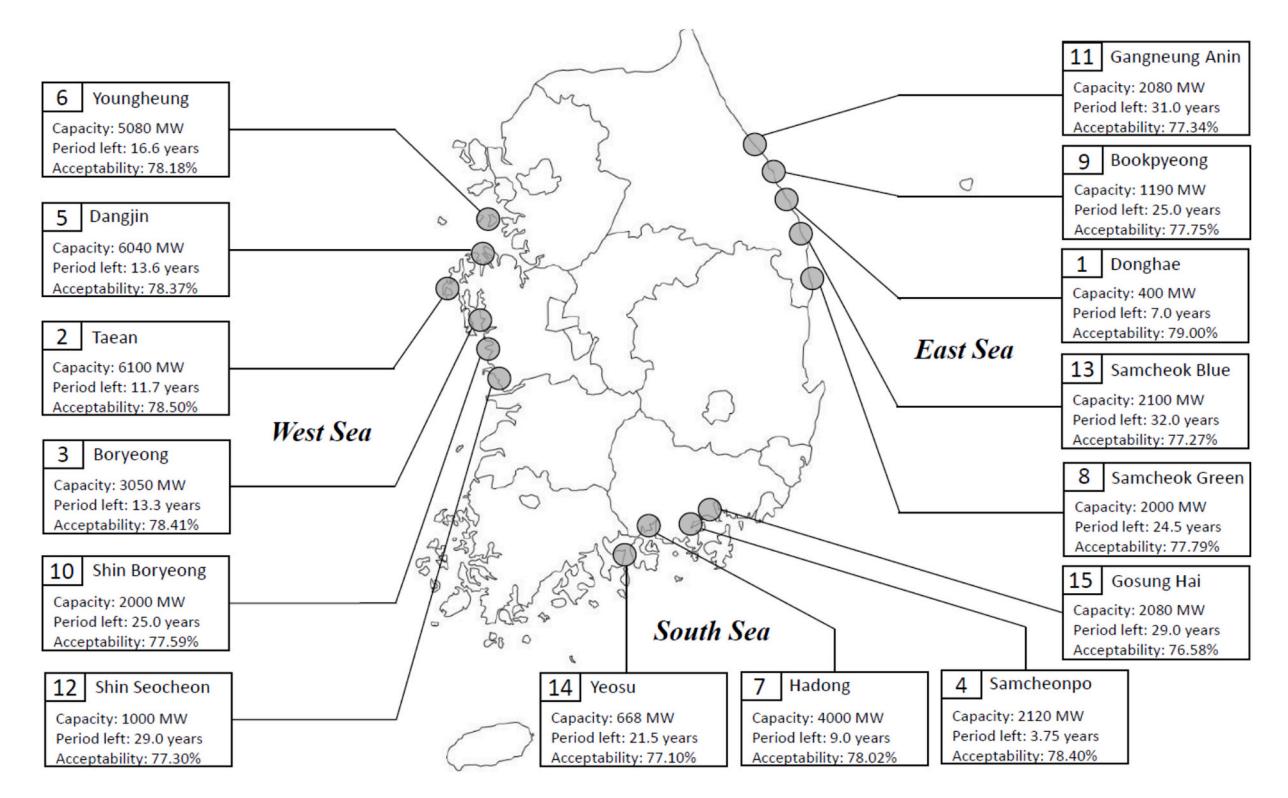
- 주요 발견: (i) Coefficient: capacity 0.035 (n.s.) — 시설 규모 자체엔 무관심; East Sea +0.446***, West Sea +0.414*** (vs South Sea); LNG repurpose -0.340***, cultural complex -0.433*** (vs renewable); period -0.390*** (지연 비선호); labor conversion +0.331*** (just transition 선호); electricity bill -1.556***; no-choice -10.616*** (강한 정책 지지). (ii) MWTP (median, KRW/월): East Sea +848, West Sea +339 (vs South), LNG -597, cultural -247 (vs renewable), period delay 10 yr -783, labor conversion 10%↑ +1,249 (USD 1.00). (iii) Total MWTP for 100% labor conversion: USD 157.95M/월 (= KRW 197.44B/월) for 15.81M households (Chungcheongnam-do fund 8M USD = 2.05% of residents’ MWTP). (iv) Scenario: West Sea 24 GW 전체 phase-out 시 renewable 26.4%, LNG 19.9%, cultural complex 33.7% — cultural complex 가 renewable 추월 (전기료 인상 격차). (v) 15 개 실제 발전소 phase-out 우선순위: 노후 + capacity 적은 발전소 선호 (E/W/S coast 골고루 분포). (vi) Labor conversion 0% → 100% 변화 시 수용률 77.8% → 82.8%.
- 시사점: (a) Renewable 우선 선호가 일관되지만, 24 GW 같은 대규모 전환 시 전기료 상승이 결정적 — 점진적 LNG 매개 전환 정당화. (b) 지역별 우선순위는 복합 attribute 의 product — capacity, period, location 모두 고려 시 단순 location-bias 해소. (c) labor conversion 의 정량 가치 USD 1.00/월/10% — 충남도의 KRW 100 억 (5 년 fund) 가 주민 MWTP 의 2.05% 에 그침 — fund scale 확대 정당화. (d) “no one left behind” 정량 empirical mandate.
요약
이 paper 는 이종수 의 citizen preference 라인 의 carbon-neutrality 정책 구체화 단계이다. 기존 한국 / 글로벌 에너지 전환 수용성 연구 (Huh et al. 2015, Kim et al. 2018, Shin et al. 2014, Borriello et al. 2021, Kaenzig et al. 2013, Tabi et al. 2014) 가 renewable vs fossil mix 선택 의 generic 비교에 머문 반면, 본 paper 는 coal phase-out 라는 specific 정책 의 implementation 단계 — capacity, location, site repurposing, period, labor conversion 의 trade-off — 를 attribute 로 명시. 직접 선행은 Rinscheid & Wüstenhagen (2019) 의 독일 coal phase-out preference, Park et al. (2023) 의 한국 cold reserve, Pan et al. (2023) 의 중국 conversion cost 분석, Policy Designs to Increase Public and Local Acceptance for Energy Transition in South Korea 의 author 본인 작업이다.
방법론은 6 attribute (capacity 4 lvls, location 3, site utilization 3, period 3, labor 3, price 4) → 1,296 조합 → orthogonal design 18 alt → Huber-Zwerina overlap-minimization 으로 6 choice sets × 3 alt + no-choice. Coefficient 는 모두 normal distribution 가정 (Train-Weeks 2005), 단 electricity bill 은 negative lognormal (모든 개인이 same negative direction). 베이지안 추정 markov-chain-monte-carlo 10,000 iter (burn-in 5,000). Identification: orthogonal attribute, no-choice 의 baseline 역할 (Vermeulen et al. 2008), price attribute 단조 음의 lognormal 로 MWTP 안정성 확보.
결과의 정책적 가치는 scenario 분석의 dynamic shift 에서 두드러진다. 단일 attribute MWTP 만 보면 renewable repurposing 이 cultural complex 보다 USD 0.20/월 선호되지만, 대규모 (24 GW) phase-out scenario 에서 renewable 의 전기료 인상이 더 커서 acceptance 가 26.4% 까지 떨어지는 반면 cultural complex 는 33.7% 로 추월. 즉 정책 scale 의 함수로 우선 옵션이 뒤집힘 — 단순 marginal preference 분석의 한계 노출. 15 개 실제 발전소의 phase-out 우선순위 분석은 capacity × period × location 의 다차원 combinations 으로 East/West Sea 우월성이 항상 성립하지 않음 을 보여, 단순 지역 ranking 이 아닌 complex multi-attribute optimization 의 필요성을 정당화. Labor conversion 의 정량적 가치 (USD 1.00/월/10%) × 1,581 만 가구 = USD 157.95M/월 의 total WTP 는 충남도의 5 년 KRW 100 억 fund 가 주민 willingness 의 2.05% 에 불과함을 시사 — just transition 의 fund scale 의 empirical 정당화. TEMEP 의 consumer preference 도구 가 국가 단위 정책 설계 에 직접 활용된 사례.
핵심 결과
| Attribute | Mean (b) | Std. Dev. | MWTP (median, KRW/월) |
|---|---|---|---|
| Capacity (1000 MW) | 0.035 | 0.329*** | +28 |
| East Sea (vs South) | 0.446*** | 0.743*** | +848 |
| West Sea (vs South) | 0.414*** | 1.651*** | +339 |
| LNG combined-cycle (vs renewable) | -0.340*** | 0.691*** | -597 |
| Cultural complex (vs renewable) | -0.433*** | 0.940*** | -247 |
| Period remaining (10 yr) | -0.390*** | 0.599*** | -783 |
| Labor conversion (10%) | 0.331*** | 0.456*** | +1,249 (= USD 1.00) |
| Electricity bill (KRW 1000) | -1.556*** | 2.305*** | — |
| No-choice (reject) | -10.616*** | 9.631*** | — |
Scenario: West Sea 전체 24 GW phase-out vs 3 GW
- 3 GW 시: renewable 34.8%, LNG 25.4%, cultural 26.8% (총 acceptance 87.0%, no-choice 13.0%)
- 24 GW 시: renewable 26.4%, LNG 19.9%, cultural 33.7% (총 80.0%, no-choice 20.0%)
- 12 GW 부근에서 cultural complex 가 renewable 추월
- Cultural complex 는 capacity 증가에 따라 acceptance 증가 (전기료 격차)
Labor conversion → acceptance
- 0% → 77.8%, 100% → 82.8% (5%p 차이)
- Total MWTP for 100% conversion: USD 157.95M/월 (KRW 197.44B/월 across 15.81M households)
방법론 노트
혼합 로짓 choice probability:
MWTP:
Utility specification:
Baseline: South Sea (location), renewable power plant (site utilization). 만 negative lognormal (모두 음의 방향 단조성 보장). 베이지안 추정 10,000 iter MCMC, burn-in 5,000. Aggregate acceptance:
Scenario analysis 에서 전기료 인상이 각 site utilization plan 별 다르게 계산됨 (Appendix A 의 LCOE 차이 적용) — 단순 attribute marginal effect 의 합이 아닌 동적 균형 시뮬레이션.
연구 계보
본 paper 는 (a) Rinscheid & Wüstenhagen (2019) 의 독일 coal phase-out preference (탄광 지역 vs 일반) 의 한국 확장, (b) Huh et al. (2015), Kim et al. (2018, 2020b) 의 한국 power mix 수용성 라인, (c) Woo et al. (2014), Lee et al. (2017) 의 contingent valuation 라인, (d) Pan et al. (2023) 의 중국 conversion cost 분석, (e) Park et al. (2023) 의 한국 cold reserve, (f) just-transition 문헌 (Harrahill & Douglas 2019, Mayer 2018, Blankenship et al. 2022), (g) Korean government 의 10차 기본 에너지 계획 + Powering Past Coal Alliance 정책 배경을 결합한다. 직접 선행: Policy Designs to Increase Public and Local Acceptance for Energy Transition in South Korea (동일 1 저자의 일반 에너지 전환 수용성) → 본 paper 의 coal-specific 좁힘. TEMEP 내 sibling: 이종수 의 energy preference 라인 의 hot 응용. Moon-Lee-Kim-Choi 의 연속 협업 라인 (jongsulee + junghun-kim + hyunhong-choi) 의 2025 시점 정점.
See also
- 이종수
- 문성호
- Junghun Kim
- Hyunhong Choi
- 혼합 로짓
- discrete-choice-experiment
- 베이지안 추정
- coal-phase-out
- just-transition
- energy-transition-policy-acceptance
- stranded-assets
- Energy Economics
- Policy Designs to Increase Public and Local Acceptance for Energy Transition in South Korea
- Impact of Energy Production Mix on Alternative Fuel Vehicle Adoption in Korea
인접 그래프
- 인물 4
- 방법론 2
- 주제 1
- 수록처 1
- 논문 2