Inter-organizational collaboration and optimal cognitive proximity: Moderating effect of knowledge complexity
Yeokyung Hwang, Junmin Lee, 황준석 (2023) · IEEE International Conference on Technology Management, Operations and Decisions · DOI ↗
본 연구는 inter-organizational collaboration 에서 인지적 근접성 의 양면성 (proximity-paradox) 을 지식 복잡도 가 어떻게 조절하는지 분석한다. USPTO 미국 biotechnology 부문 patent 데이터 (1982~2021, 14,353 patents, 1,766 assignees, pairwise panel 21,758 관측) 를 panel negative binomial fixed-effects 로 추정한 결과: (i) cognitive proximity 의 inverse U-shape 효과 확인 (COG β=0.171, COG² β=−0.096, p<0.01), (ii) knowledge complexity 의 두 방향 조절 효과 — 최적 cognitive proximity 가 우측으로 이동 (COG×KC β=0.110, p<0.01) 하고 marginal effect 가 가팔라짐 (COG²×KC β=−0.035, p<0.01), (iii) KC 자체는 협력 성과에 음 (β=−0.219, p<0.01). 함의: 복잡 지식 영역일수록 cognitive 인접 파트너 선택이 결정적이지만, 학습으로 인한 동적 근접성 변화로 장기 협력은 더 어려워진다.
- RQ: 인지적 근접성 가 협력적 혁신에 갖는 inverse-U 효과를 지식 복잡도 가 어떻게 조절하는가? 최적 proximity 의 위치 와 marginal effect 의 기울기 가 복잡성에 따라 어떻게 달라지는가?
- 방법론: panel-negative-binomial-regression (fixed effects, Hausman test 후 채택), patent-coauthorship-network (assignee-pair panel), Jaccard 유사도 (4-digit IPC portfolio overlap), knowledge-complexity-index (Balland & Rigby 2017), lind-mehlum-u-test (inverse-U 검정), haans-curvilinear-moderation-test (조절 효과 검정)
- 데이터: USPTO biotechnology patents 1982~2021 (WIPO IPC concordance “Biotechnology”); 14,353 patents, 1,766 US assignees (individual·non-US 제외), pairwise panel 21,758 관측
- 주요 발견: COG 와 COG² 1% 유의 (inverse U); COG×KC 양 + COG²×KC 음 (1% 유의) → KC 가 높을수록 최적 cognitive proximity 가 오른쪽 (더 가까운 쪽) 으로 이동하고 marginal effect 가 더 가팔라짐; KC 자체는 음 (β=−0.219, 협력 절대 수준 하향); GEO·INST·EXPR 모두 1% 유의 음 (control).
- 시사점: 복잡 지식 분야에서 협력 파트너 선정 시 cognitive 인접성을 더 중시해야 하며, 학습으로 인한 동적 근접성 증가 가 장기 협력의 성과 하락을 초래하므로 단기 빈번 교체 전략이 합리적. 정책적으론 specialized cluster 형성이 다양한 cross-field 연결보다 효과적일 수 있다.
요약
지식의 폭발적 증가와 전문화로 외부 협력이 혁신의 필수 조건이 되면서 (Schumpeter 1934; Nonaka & Takeuchi 1995; Dahlander & Gann 2010), 어떤 파트너와 협력해야 하는지 — 즉 인지적 근접성 의 역할 — 가 중심 질문으로 떠올랐다. Boschma (2005) 의 4 가지 비-지리적 proximity (organizational, institutional, social, cognitive) 중 cognitive proximity 는 학습의 직접 메커니즘이지만, 너무 가까우면 새 지식 X, 너무 멀면 absorptive capacity 부족 의 양면성 (proximity-paradox) 을 가진다 (Nooteboom 2000; Boschma & Frenken 2010; Broekel & Boschma 2012). Nooteboom et al. (2007) 은 cognitive distance 와 innovation 간 inverted-U 가설을 정식화했다. 본 연구는 여기에 지식 복잡도 라는 조절자를 추가해, 복잡 지식 영역에서 최적 proximity 의 위치와 marginal effect 가 어떻게 변하는지 분석한다.
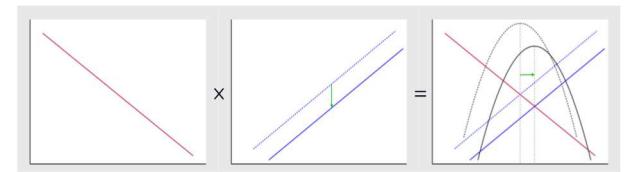
수학적 specification 은 Nooteboom et al. (2007) 의 novelty × absorption 분해를 따른다. Novelty 는 proximity 증가 시 감소 (downward sloping). Absorption 에서 KC 가 absorption 효과를 weakening 시키는 형태로 KC 를 도입. 두 식 곱으로 collaborative innovation 가 도출되어, 음의 항을 통한 KC 의 inverse-U 조절 이 식별 가능해진다. 데이터는 USPTO biotechnology 부문 (WIPO IPC concordance) 1982~2021, 14,353 patents·1,766 assignees, individual·non-US 제외 후 co-applicant pair panel 21,758 관측. 변수: LINK (co-patent 수), COG (Jaccard 유사도 of 4-digit IPC portfolio), KC (co-patent 의 평균 IPC complexity, knowledge-complexity-index), SOC (지난 2기 co-patent 수의 ln), GEO (WGS84 물리 거리 ln 의 역수), INST (같은 sector 더미), EXPR (organization 이 network 에 등장한 기간), SIZE (inventor 수 ln).
추정은 Hausman test 후 panel-negative-binomial-regression with fixed effects 채택, lind-mehlum-u-test + haans-curvilinear-moderation-test 로 inverse-U 와 조절 효과 검정. 결과 (Model 4): COG β=0.171 (p<0.01), COG² β=−0.096 (p<0.01) → inverse-U 확인. COG×KC β=0.110 (p<0.01), COG²×KC β=−0.035 (p<0.01) → KC 가 inverse-U 의 vertex 를 우측 (cognitive 더 가까운 쪽) 으로 이동시키면서 곡률도 가파르게 함. KC 자체 β=−0.219 (p<0.01) 로 협력 성과의 absolute level 은 하락 — 복잡 지식은 흡수 자체가 더 어려움 의 직접 효과. Robustness check 2개 모형 일관. 결과는 (i) 복잡 영역에서 cognitive 인접 파트너 매칭의 정밀성이 더 중요, (ii) 협력이 진행될수록 cognitive proximity 가 내생적으로 증가 (학습 효과) 해 최적점에서 멀어지므로 장기 협력이 어렵다는 dynamic proximity 통찰을 함의한다. 황준석 의 5기 (2024-2026 직전, 4기-5기 경계) 협력 네트워크·proximity 라인의 일환.
핵심 결과
| 변수 | (1) controls | (2) COG×KC only | (3) COG×KC + EXPR/SOC | (4) full |
|---|---|---|---|---|
| COG | — | 0.3124 *** | 0.1772 *** | 0.1708 *** |
| COG² | — | −0.0449 *** | −0.1057 *** | −0.0957 *** |
| COG × KC | — | 0.1268 *** | 0.1001 *** | 0.1096 *** |
| COG² × KC | — | −0.0673 *** | −0.0303 ** | −0.0354 *** |
| KC | — | −0.1452 *** | −0.2186 *** | −0.2185 *** |
| SOC | −0.1193 *** | — | 0.0665 ** | 0.0903 *** |
| GEO | −1.2473 *** | — | — | −1.2669 *** |
| INST | −0.3753 ** | — | — | −0.4416 ** |
| EXPR | −0.4571 *** | — | −0.4693 *** | −0.4796 *** |
- 종속변수: LINK (co-patent 수); N=21,758 pairwise observations; *** p<0.01, ** p<0.05
- 표본: USPTO biotechnology, 1982~2021, 14,353 patents, 1,766 US assignees
- Hausman test → fixed effects; Lind–Mehlum + Haans test → inverse-U + 조절 효과 통계적 확인
방법론 노트
핵심 식은 Nooteboom et al. (2007) 의 novelty × absorption 분해에 지식 복잡도 를 absorption 측 weakening 변수로 삽입한 형태:
여기서 는 cognitive proximity (COG), 은 협력 산출 (co-patents). 항이 baseline inverse-U 를, 가 KC 의 두 방향 조절 (vertex 이동 + 곡률 변화) 을 동시 식별한다. 추정식:
식별 strategy: (i) panel-negative-binomial-regression 는 LINK 가 non-negative count 라는 점에서 OLS·Poisson 보다 적합, fixed effects 로 pair-invariant heterogeneity 흡수. (ii) lind-mehlum-u-test (2010, OBES) 로 단순 inverse-U 가설 (단조 증가→감소 + vertex 가 표본 내) 검정. (iii) haans-curvilinear-moderation-test (2016, SMJ) 로 곡선 관계의 조절 효과 (vertex shift + slope change) 동시 검정. (iv) 모든 ICP variable 은 t-1 lag 로 동시성 편의 완화.
인지적 근접성 측정은 두 organization 의 4-digit IPC portfolio 간 Jaccard 유사도 (공유 IPC / 합집합 IPC) 로, 값 1 은 portfolio 동일, 0 은 무중첩. knowledge-complexity-index (Balland & Rigby 2017) 는 co-patent 의 평균 IPC complexity 로 — 지식의 novelty·non-ubiquity·tacit 정도를 정량화. 정책 함의 한 가지: 협력 진행 중 cognitive proximity 가 내생적으로 증가 해 시간이 갈수록 vertex 에서 멀어지므로 (특히 복잡 영역에서 슬로프가 가파라), 장기 단일 파트너십 보다 단기 빈번 재선택 이 합리적 — 이는 dynamic proximity 의 새 함의다.
연구 계보
직접 출발점은 Boschma (2005) 의 4-proximity framework 와 Nooteboom (2000), Nooteboom et al. (2007) 의 optimal cognitive distance / inverse-U 가설이다. proximity-paradox 는 Broekel & Boschma (2012) 의 Dutch aviation industry 분석에서 정식화됐다. knowledge-complexity-index 측정은 Balland & Rigby (2017, Economic Geography) 의 geography of complex knowledge 를 따른다. 통계 검정은 Lind & Mehlum (2010, OBES) + Haans et al. (2016, SMJ) 의 curvilinear moderation 표준. Cohen & Levinthal (1990) 의 absorptive capacity 가 cognitive proximity 의 mechanism 측에서 이론 토대. Empirical biotechnology 부문 선택은 Martínez Ardila et al. (2020), Philp & Winickoff (2019, OECD) 가 정당화. 황준석 의 4기-5기 (2020-2026) 협력 네트워크·patent-based proximity 라인의 일환이며, BK21 FOUR Smart City 프로그램 지원 받은 Yeokyung Hwang 의 작업.
See also
- 황준석
- Yeokyung Hwang
- Junmin Lee
- IEEE International Conference on Technology Management, Operations and Decisions
- 인지적 근접성
- 지식 복잡도
- proximity-paradox
- knowledge-complexity-index
- panel-negative-binomial-regression
- patent-coauthorship-network
- lind-mehlum-u-test
- Biotechnology
인접 그래프
- 인물 3
- 방법론 2
- 개념 1
- 주제 1
- 수록처 1
- 분류 1
- 논문 1