Analysis on gas and oil export intensity changes of MENA countries: Recent changes and drivers
aoumer-akli, 김연배 (2014) · Geosystem Engineering 17(1):69–77 · DOI ↗
MENA (Middle East + North Africa) 국가의 oil + gas export intensity (1980-2011) 변화를 LMDI 분해 으로 네 driver (price effect, export importance, oil/gas dependence, energy intensity) 로 분해. Bhattacharyya & Blake (2010, Energy Policy) 의 Laspeyres-index 결과를 (i) zero-residual LMDI 로 update, (ii) Oman 추가, (iii) Algeria·Qatar 의 gas export intensity 까지 확장. Price effect 가 가장 dominant, 그러나 최근 (2007-2011) Saudi Arabia · Libya · UAE 에서 export importance 가 −16% / −16% / −8% 의 큰 음(−) 기여 — 국내 에너지 수요 증가가 export 가능 oil 을 잠식. Qatar 만 energy intensity 가 지속 개선 (2007-2011 −9%), 나머지 MENA 는 모두 악화.
- RQ: MENA 주요 oil/gas 수출국에서 export intensity (EX/GDP) 의 driver 분해는 1980-2011 의 네 sub-period 에 어떻게 evolve 했는가? Bhattacharyya & Blake (2010) 의 Laspeyres 기반 결과를 LMDI 로 re-estimate + Oman + gas 차원으로 확장하면 무엇이 보이는가?
- 방법론: LMDI 분해 (Ang 2005, logarithmic mean Divisia, zero residual), 지수 분해 분석. Export intensity 를 네 ratio (effective price, export importance, oil dependence, energy intensity) 의 곱으로 분해.
- 데이터: MENA 8 개 oil 수출국 (Algeria, Iran, Kuwait, Libya, Oman [신규], Qatar, Saudi Arabia, UAE) 의 1980-2011 OER · GDP · OEV · POS · PEC; Algeria·Qatar gas (GER · GEV · PGS) 추가. Source: IEA (2011, 2013), OPEC (2012), UNSD (2013), KSO (2013), 알제리 Energy & Mining Ministry. Sub-period: 1980-1988 / 1989-2000 / 2001-2006 / 2007-2011 (gas: 1980-1990 / 1991-2001 / 2002-2010).
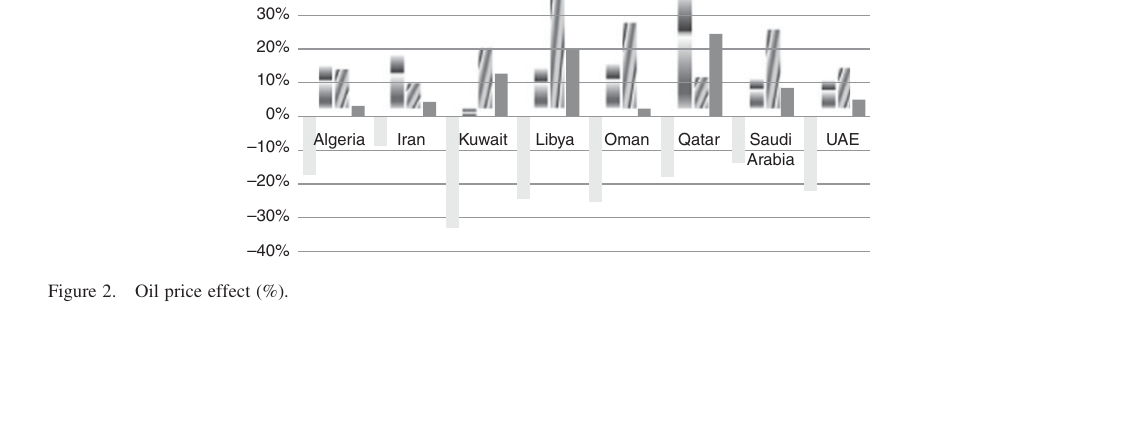
- 주요 발견: (i) Price effect dominant — 2001-2006 에 Libya +40%, Saudi Arabia +23%, Oman +25%. (ii) 2007-2011 에 export importance 가 Saudi Arabia −16%, Libya −16%, Algeria −13% 의 큰 음(−) 기여 — 국내 수요 증가가 export 잠식. (iii) Qatar 의 energy intensity 만 1989-2000 (−6%), 2001-2006 (−8%), 2007-2011 (−9%) 지속 개선; 다른 모든 MENA 국가 악화 (Libya 2007-2011 +40%). (iv) Qatar gas (2002-2010): export importance +17% (LNG 확장 dominant), price effect −14% (국제 가스시장 통합 후 가격 하락). (v) Libya 2007-2011 oil dependence −61% (2011 봉기로 oil 비중 급락).
- 시사점: (a) MENA 의 domestic energy demand 압력 — 인공적으로 낮은 국내 에너지 가격 + energy-intensive 산업화 → export 가능 oil 잠식. (b) Qatar 의 gas 전환 + 에너지 효율 개선 이 region benchmark. (c) LMDI 가 Bhattacharyya & Blake (2010) Laspeyres 의 잔차 (특히 Qatar 의 2 기 vs 3 기 순서 역전) 를 해결, driver attribution 의 정확성 향상.
요약
김연배 의 1 기 (에너지·환경 정책) energy decomposition 라인 (CO2 cement / iron-steel, CO2 Emission Trends in the Cement Industry: An International Comparison 등) 이 MENA 지역의 자원 부국 export intensity dynamics 로 확장된 application 이다. 기존 Bhattacharyya & Blake (2010, Energy Policy) 는 Laspeyres index 로 MENA 7 개국 oil export intensity 의 driver 를 분해했으나, Laspeyres 의 unexplained residual 이 일부 국가에서 큰 magnitude 로 남아 있었다 (저자들이 Annex 1 에서 명시). 본 paper 는 그 분석을 (i) zero-residual 을 보장하는 LMDI 로 re-estimate, (ii) Oman 추가, (iii) Algeria·Qatar 의 gas export intensity 까지 확장, (iv) 2007-2011 의 새 4 기를 추가하는 네 방향의 update 다.
방법론적으로 export intensity 를 네 ratio 의 곱으로 분해한다 — 평균 effective export price (OER/OEV), export importance (OEV/POS, 국내 oil 사용 대비 export 비중), oil dependence (POS/PEC, 에너지 mix 에서 oil 비중), energy intensity (PEC/GDP, 경제 효율). LMDI 분해 으로 각 기간의 change 를 네 effect 의 합으로 정확히 (잔차 0) 분해한다. 결과: price effect 가 모든 기간에 dominant; 그러나 2007-2011 에는 export importance 가 Saudi Arabia (−16%), Libya (−16%), Algeria (−13%) 에서 큰 음(−) 기여 — 국내 에너지 수요 증가가 export 가능 surplus 를 잠식했음을 의미한다. Libya 의 2007-2011 oil dependence −61% 는 2011 봉기로 oil 비중 급락의 결과, Qatar 의 gas export importance +17% 는 LNG capacity 확장의 결과다.
caveat: 분석 단위가 country-period 8 × 4 = 32 cell 로 disaggregation 이 거칠다 (sub-sector 별 driver, 가격 vs 물량 추가 분해 없음). Bhattacharyya & Blake (2010) framework 를 그대로 따르므로 exporter 의 oil dependence effect 해석이 unintuitive 하다 (이 paper 도 그 footnote 4 를 인용). 정책적으로 Qatar 의 gas 전환 + 에너지 효율 개선 모델이 region benchmark 로 추천되지만, LNG 시장 의존의 위험 (가격 변동성, 장기 commitment 리스크) 도 명시된다. 김연배 라인의 practitioner-researcher 협업 (Algeria Ministry of Energy and Mines 의 Akli) 으로 진행된 sub-line 이다.
핵심 결과
| MENA 국 | 2007-2011 Price | Export importance | Oil dependence | Energy intensity |
|---|---|---|---|---|
| Algeria | +3% | −13% | +2% | +1% |
| Iran | +4% | 0 | −4% | −1% |
| Kuwait | +13% | −4% | −5% | +5% |
| Libya | +20% | −16% | −61% | +40% |
| Oman | +2% | +7% | −20% | +12% |
| Qatar | +24% | +19% | −24% | −9% |
| Saudi Arabia | +8% | −16% | +2% | +5% |
| UAE | +5% | −8% | +1% | +6% |
Qatar gas (2002-2010): Δ_Peff −14%, Δ_Meff +17% (LNG 확장 driver), Δ_Geff −1.5%, Δ_Ieff −5%. Algeria gas (2002-2010): +4 / −3 / −1 / +0.4%.
방법론 노트
Export intensity 를 네 ratio 의 곱으로 분해, LMDI 분해 (Ang 2005) 으로 zero-residual 분해. Identification: 두 시점의 log mean weight 를 사용해 각 driver 의 기여를 정확히 (잔차 = 0) 분리.
OER = oil export revenue (2005 USD), GDP = gross domestic product, OEV = oil export volume (Mtoe), POS = primary oil supply, PEC = primary energy consumption. 첫 ratio = effective export price, 둘째 = export importance (vs 국내 oil 사용), 셋째 = oil dependence (oil 의 에너지 mix 비중), 넷째 = energy intensity (경제 효율). Gas 의 경우 OER→GER, OEV→GEV, POS→PGS 로 대체.
연구 계보
김연배 의 1 기 (2000-2008) 에너지·환경 정책 라인이 MENA 자원 부국의 export-intensity dynamics 로 확장된 application. Direct predecessor 는 Bhattacharyya & Blake (2010, Energy Policy) — MENA 7 개국 oil export intensity 를 Laspeyres index 로 분해한 동일 framework; 본 paper 는 그 결과를 zero-residual LMDI 로 re-estimate + Oman·gas 추가. 방법론적 근원은 Ang (2005, Energy Policy) 의 LMDI practical guide. CO2 Emission Trends in the Cement Industry: An International Comparison 등 김연배 1 기의 산업별 CO2 Divisia 분해 라인의 MENA hydrocarbon 적용 sub-thread (author page 분류). Practitioner-researcher 협업 — Aoumer Mohand Akli (Algeria Ministry of Energy and Mines) 와 기술경영경제정책전공 의 Korean energy policy 경험을 MENA 에 transfer 하는 sub-line.
See also
- 김연배
- LMDI 분해
- 지수 분해 분석
- mena-economies
- hydrocarbon-economy
- oil-export-intensity
- gas-export-intensity
- CO2 Emission Trends in the Cement Industry: An International Comparison
- aoumer-akli
- Geosystem Engineering
인접 그래프
- 인물 1
- 개관 1
- 방법론 2
- 수록처 2
- 분류 1
- 논문 2