Asymmetric Preference and Loss Aversion for Electric Vehicles: The Reference-Dependent Choice Model Capturing Different Preference Directions
Junghun Kim, hyunchan-seung, 이종수, Joongha Ahn (2020) · Energy Economics 86:104666 · DOI ↗
한국 전기차 (EV) 보급의 정체 (2019.6 누적 등록 72,814 대, 전체 차량의 0.31%) 원인을 reference-dependent choice model 로 분석. 응답자가 현재 보유 차량의 attribute 를 reference point 로 두고 EV alternative 를 평가한다고 가정하면, 차종 (SUV vs sedan) 의 loss aversion , 연비의 loss aversion 로 둘 다 강한 비대칭. 정부의 EV 보조금보다 충전소 접근성 80% 확보 가 시장 확산에 결정적이며, SUV 형 EV 모델 출시가 SUV 보유 소비자 (49.4%) 효용을 회복시킨다.
- RQ: EV 보급 정체는 단순 가격·기술 문제가 아니라 기존 보유 차량 대비 비대칭 손실회피 의 결과인가? Attribute 의 preference direction 이 이질적 일 때 (예: 일부는 SUV 선호, 일부는 sedan 선호) reference-dependent 모형으로 어떻게 식별하는가?
- 방법론: reference-dependent-choice-model, 혼합 로짓, loss-aversion, discrete-choice-experiment, bayesian-inference, 민감도 분석
- 데이터: 한국 7 개 도시 (서울 + 5 광역시 + 경기 신도시) 20~59 세 N=675 중 차량 보유자 N=532 (Gallup Korea face-to-face); 6 attribute (연료 4 종 · 차종 2 · 연비 3 · 충전 접근성 3 · 차량가격 4 · 스마트카 옵션 2) × 576 조합 중 12 choice cards 3 sets
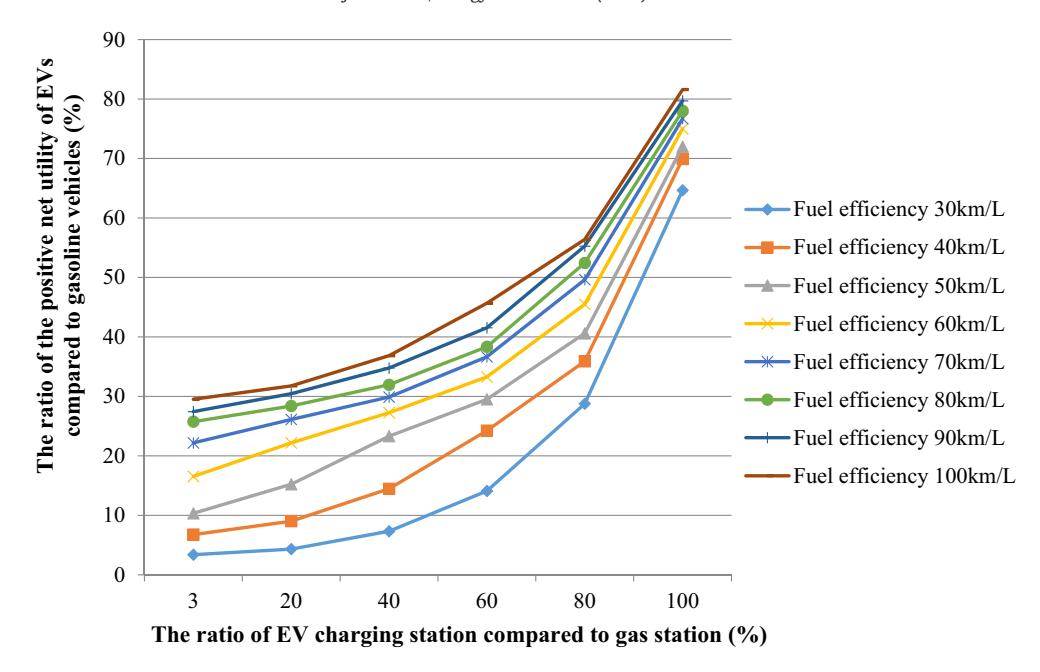
- 주요 발견: Loss aversion parameter — SUV 차종 , 연비 (둘 다 prospect theory 의 표준 범위); SUV 선호 49.4%, 비선호 50.6% — 거의 50:50 이질성; SUV 비선호 direction 한계효용 -2.825 *** vs preference direction +1.307 ***; AIC reference-dependent 3,685.18 < standard 3,948.15 (모형 적합도 우월); 충전소 접근성 3% → 80% 변화 시 EV positive net utility ratio 가 거의 선형 증가하지만 80~100% 구간에서 급격 가속
- 시사점: 정부는 EV 보조금보다 충전 인프라 우선 투자. SUV 형 EV 모델 출시는 SUV 선호자 (49.4%) 시장의 핵심. 수소차도 동일 — sedan 형 라인업 부재가 보급 제약
요약
한국은 2020 년까지 교통 부문 온실가스 34% 감축 목표 아래 EV 보급에 R&D · 보조금 · 충전 인프라 (2014 년 177 곳 → 2020 년 7 배) 의 3 축 정책을 집행해왔지만, 2019 년 6 월 기준 EV 누적 등록 0.31% 에 그쳤다. 기존 DCE 연구 (Brownstone et al. 2000, Hidrue et al. 2011 등) 는 모두 EV attribute 를 절대 수준 으로 모형화하고 utility 의 선형 가산 을 가정했지만, prospect theory (Kahneman-Tversky 1979) 는 소비자가 현재 보유 제품의 attribute 를 reference point 로 두고 상대적 차이 를 비대칭 으로 평가한다고 주장한다. Mabit and Fosgerau (2011) · Mabit et al. (2015) 가 alternative fuel vehicles 에 reference-dependent 모형을 처음 적용했지만, 모든 응답자에게 동일 reference (내연차) 를 부여하고 동일 preference direction (가격·시간) attribute 만 다뤘다. 본 논문은 Reference-Dependent Preferences on Smart Phones in South Korea: Focusing on Attributes with Heterogeneous Preference Direction 의 heterogeneous preference direction method 를 EV 차종 attribute (일부 SUV 선호, 일부 sedan 선호) 에 확장한 첫 시도다.
분석은 2 단계 Bayesian mixed logit + reference-dependent. (1) Standard mixed logit 으로 개별 응답자의 SUV 선호 direction 부호 식별 — 결과: SUV 선호 263 (49.4%), 비선호 269 (50.6%) 의 거의 50:50 분포. (2) Reference-dependent mixed logit 에서 각 응답자의 alternative attribute 가 preference direction (자기 선호와 일치) 이면 standard coefficient , non-preference direction 이면 로 가중. 결과: SUV preference direction +1.307 ***, non-preference -2.825 ***, . 연비 (same preference direction attribute) 도 동일 framework — preference (증가) +0.325 ***, non-preference (감소) -0.736 ***, . 모형 비교: log-likelihood -1,832.59 (reference-dependent) > -1,966.08 (standard); AIC 3,685.18 < 3,948.15 으로 reference-dependent 가 명확히 우월.
Sensitivity analysis 는 EV 와 gasoline 의 net utility 차이 가 양수인 응답자 비율을 충전소 접근성·연비 변화에 따라 simulate. 결과: 현재 충전소 3% 수준에서 연비를 100 km/L 까지 끌어올려도 positive net utility ratio 30% 가 한계 (현재 정부 목표). 충전소 80% 까지 확보하면 연비 개선 없이도 동일 30% 달성. 80~100% 구간에서 곡선 slope 가 급격 증가 — reference point (100%) 에 근접할수록 marginal utility deceleration 이 사라지는 prospect theory 패턴. 정책 함의: (i) 충전 인프라 투자가 보조금보다 효율적, (ii) SUV 형 EV 라인업 부재가 SUV 선호자 (49.4%) 시장 진입의 결정적 장벽, (iii) 수소차도 같은 논리 — 한국은 SUV 형만 출시 중이지만 sedan 형 시장이 미진입 상태로 잠재 보급 제약.
핵심 결과
Standard vs reference-dependent mixed logit (N=532, AIC 비교)
| 항목 | Standard | Reference-dependent |
|---|---|---|
| Log-likelihood | −1,966.08 | −1,832.59 |
| AIC | 3,948.15 | 3,685.18 |
| BIC | 3,982.37 | 3,727.94 |
Reference-dependent 한계효용 (Bayesian Gibbs sampling)
| Attribute | Direction | Mean coef. | SD | |
|---|---|---|---|---|
| SUV (vs ordinary) | Preference | +1.307*** | 3.029*** | — |
| SUV (vs ordinary) | Non-preference | −2.825*** | 3.002*** | 2.162 |
| 연비 (km/L) | Preference (증가) | +0.325*** | 1.572*** | — |
| 연비 (km/L) | Non-preference (감소) | −0.736*** | 5.833*** | 2.264 |
| 충전 접근성 (10%) | Non-preference (감소) | −0.726*** | 4.260*** | — |
| 차량가격 (KRW 1000만) | — | −1.483*** | 4.496*** | — |
| 스마트카 옵션 | — | +1.459*** | 2.389*** | — |
SUV 선호 분포 (heterogeneous direction)
| SUV 선호 | SUV 보유 | SUV 미보유 | 합계 |
|---|---|---|---|
| 선호 | 83 (15.6%) | 180 (33.8%) | 263 (49.4%) |
| 비선호 | 72 (13.5%) | 197 (37.0%) | 269 (50.6%) |
| 합계 | 155 (29.1%) | 377 (70.9%) | 532 (100%) |
Sensitivity 시뮬레이션 핵심 임계치
- 충전소 접근성 3% (현재) + 연비 100 km/L → EV positive net utility ratio ≈ 30%
- 충전소 접근성 80% + 현재 연비 → 동일 30% 달성
- 80~100% 접근성 구간에서 slope 급격 증가 (reference point 효과)
방법론 노트
reference-dependent-choice-model 의 핵심은 attribute 의 preference direction 이 응답자별로 다를 수 있는 case (예: SUV vs sedan) 를 2 단계 식별 로 처리하는 것. Step 1: standard mixed logit 으로 개별 부호 추정. Step 2: alternative attribute 와 reference 의 차이를 응답자의 방향 부호 와 비교해 같으면 preference direction, 다르면 non-preference direction.
Heterogeneous direction attribute 의 utility:
여기서 matched = or . Same preference direction attribute (연비) 는 단순 비교:
Sensitivity analysis 의 핵심:
가 만족되는 응답자 비율을 EV attribute 의 함수로 시뮬레이션. 식별은 (i) 12 choice cards 의 orthogonal design + (ii) standard mixed logit 의 individual coefficient 분리 + (iii) reference point 의 외생성 (응답자 현재 보유 차량의 실측 attribute) 으로 확보. 추정은 MCMC + Gibbs sampling (Edwards and Allenby 2003) — MLE 의 initial-value 의존성 회피.
연구 계보
본 paper 의 직접 method 조상은 Reference-Dependent Preferences on Smart Phones in South Korea: Focusing on Attributes with Heterogeneous Preference Direction (Kim, Lee, Ahn 2016, Computers in Human Behavior) — heterogeneous preference direction 의 reference-dependent DCM 을 smartphone OS 에 적용한 method origin. 본 paper 는 그 framework 를 EV 차종에 확장. AFV reference-dependent 라인은 Mabit and Fosgerau (2011, Transportation Research Part D) · Mabit et al. (2015, Transportation Research Part A) 의 덴마크 alternative fuel vehicles 분석이 시작. EV 보급 DCE 라인은 Hidrue et al. (2011, Resource and Energy Economics) · Brownstone et al. (2000, Transportation Research Part B) · Hong, Koo, Jeong, 이종수 (2012, Energy Policy) · Ahn, Jeong, Kim (2008, Energy Economics). Acknowledgment 에 구윤모 와 Jungwoo Shin 이 DCE design 협력으로 명시. 이종수 author page 의 제3기 행동경제학 심화 라인에서 sibling Do People Really Want Renewable Energy? Who Wants Renewable Energy? Discrete Choice Model of Reference-Dependent Preference in South Korea (재생에너지 정책 reference-dependent), Smartphone Preferences and Brand Loyalty: A Discrete Choice Model Reflecting the Reference Point and Peer Effect (스마트폰 brand loyalty reference-dependent) 와 함께 3 부작 reference-dependent 시리즈.
See also
- reference-dependent-choice-model
- 혼합 로짓
- loss-aversion
- discrete-choice-experiment
- bayesian-inference
- 민감도 분석
- electric-vehicle
- charging-infrastructure
- preference-heterogeneity
- Junghun Kim
- hyunchan-seung
- 이종수
- Joongha Ahn
- 구윤모
- Do People Really Want Renewable Energy? Who Wants Renewable Energy? Discrete Choice Model of Reference-Dependent Preference in South Korea
- Smartphone Preferences and Brand Loyalty: A Discrete Choice Model Reflecting the Reference Point and Peer Effect
- Reference-Dependent Preferences on Smart Phones in South Korea: Focusing on Attributes with Heterogeneous Preference Direction
인접 그래프
- 인물 4
- 방법론 2
- 수록처 1
- 분류 1
- 논문 4
이 문서를 가리키는 페이지
논문 (3)
- Demand Forecasting of Diesel Passenger Car Considering Consumer Preference and Government Regulation in South Korea
- Do People Really Want Renewable Energy? Who Wants Renewable Energy? Discrete Choice Model of Reference-Dependent Preference in South Korea
- Smartphone Preferences and Brand Loyalty: A Discrete Choice Model Reflecting the Reference Point and Peer Effect