Impact of public procurement for innovation on firm productivity
Kiyoon Shin, 이정동 (2022) · Applied Economics Letters 29:1016-1021 · DOI ↗
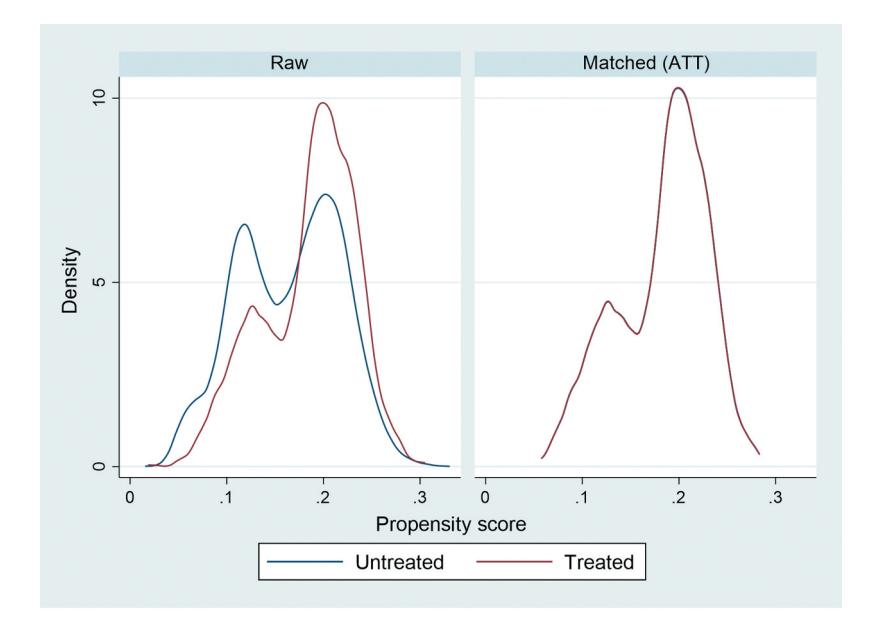
혁신 지향 공공조달 (PPI) 가 수요 측 혁신 정책 으로 부상하면서 실제 생산성 향상 효과 가 있는지 검증. 한국 한국 제조업 의 KIS-Value + 공공조달서비스 (PPS) 계약 데이터 결합 (N=8,994, 2013-2017) + 성향점수매칭 (kernel matching) + ATT 추정. PPI 계약 firm 의 value-added 가 1 년 후 +7.6%, 총요소생산성 가 2 년 후 +4.5% (모두 통계적 유의) — value-added 즉시 효과 → TFP 지연 효과 의 sequential pathway. 규모·학습 경제 mechanism 의 정량 검증.
- RQ: 혁신 지향 공공조달 이 일반 공공조달과 비교해 생산성 향상 의 실증적 effect 가 있는가, 그리고 그 효과의 시간 동학 (즉시 vs 지연) 은 어떠한가.
- 방법론: 성향점수매칭, 커널 매칭, 최근접 이웃 매칭, 처치 평균 효과 (ATT), 총요소생산성
- 데이터: 한국 한국 제조업 firm-level (KIS-Value + PPS 공공조달 계약 결합), N=8,994 obs, 2013-2017, treated 706 (PPI 우수제품 procurement), control 2,108 (일반 procurement).
- 주요 발견: PPI 계약 firm 의 value-added 증가율 +7.6% (1 년 후, p<0.01), TFP 증가율 +4.5% (2 년 후, p<0.05). 노동/자본 input 은 비유의 — 효과는 input 확대 아니라 productivity 향상 본체. NNM caliper 0.01 robustness check 통과.
- 시사점: PPI 의 signalling + 시장 형성 + scale 학습 3 mechanism 중 생산성 channel 의 실증 anchor. 일반 R&D subsidy 의 Crowding-out 효과 한계와 비교해 수요 측 정책 의 효율성 강조.
요약
기술경영경제정책전공 의 수요 측 혁신 정책 라인의 quantitative anchor. Kiyoon Shin 의 sibling 작업 Revitalizing the Concept of Public Procurement for Innovation (PPI) from a Systemic Perspective: Objectives, Policy Types, and Impact Mechanisms (PPI 의 4-type taxonomy + causal loop conceptual framework) 이 개념적 기여 였다면 본 paper 는 그 framework 의 실증 검증. 이정동 anchor 의 제3기 (3) 정책 일관성 라인 + 신은 제4기 진화론적 전환의 정책 application 갈래. 기존 PPI 실증 (Aschhoff · Sofka 2009, Ghisetti 2017, Raiteri 2018) 이 innovation output (특허, 매출, R&D 증가) 만 측정했다면 본 paper 는 productivity (TFP) 라는 더 근본적 outcome 으로 격상.
데이터 결합: KIS-Value 의 firm 재무·생산 정보 + 공공조달서비스 (PPS) 의 procurement 계약 정보. Treated = PPI 계약 firm (한국 우수제품 우선구매 제도 — 일반 procurement 와 별도 운영), control = 일반 procurement firm. Cobb-Douglas production function 의 4 outcome — value-added, TFP, labor input, capital input. TFP 는 Good et al. (1997) + Aw et al. (2001) 의 industry average reference 방식 (참조년 2011). 성향점수매칭 kernel matching 의 bandwidth 는 Huber-Lechner-Wunsch (2013, 2015) 방식 (pair matching with replacement, 90% quantile × 1.5). Probit propensity score 의 covariate: ln(total asset, R&D investment, total capital, education/training, lagged TFP, employees, fixed asset) + year + industry dummy. 1 년 lag covariate 로 selection bias 제어. Robustness: 1:5 NNM caliper 0.01.
결과의 시간 동학: PPI 효과는 value-added 즉시 → TFP 지연 sequential. Value-added +7.6% (1 년 후, k=1) 는 signalling 효과 와 contract volume 자체 의 직접 매출 증가. TFP +4.5% (2 년 후, k=2) 는 economies of scale + learning-by-doing 의 시간이 걸리는 본체 효과. 노동·자본 input 의 비유의는 factor input 확대 아닌 productivity 향상 본체임을 확인. 한계: 단일 국가 (한국) 단일 정책 (우수제품), 5-year window, PPI 효과의 spillover 미측정. 그러나 본 paper 의 PSM + 시간 동학 분리 framework 는 후속 PPI 연구의 표준 도구.
핵심 결과
| Outcome | k=1 | k=2 | k=3 |
|---|---|---|---|
| Δ value-added | +7.6% *** | +5.2% ** | +3.1% |
| Δ TFP | +2.8% | +4.5% ** | +3.2% |
| Δ labor input | +1.2% | +2.0% | +1.5% |
| Δ capital input | +0.9% | +1.8% | +1.2% |
Note: kernel matching 결과, *p<0.10, **p<0.05, ***p<0.01. NNM 1:5 caliper 0.01 도 동일 패턴 유지.
Probit propensity score 의 주요 covariate (dy/dx):
- ln(R&D investment): +0.021*** (PPI 진입 강력 predictor)
- ln(total capital): +0.135***
- ln(education/training): +0.023***
- ln(employees): −0.160*** (소규모 firm 이 PPI 채택 비율 높음)
방법론 노트
핵심 통찰: PPI 는 non-random assignment — 우수제품 인증을 받은 firm 만 contract 가능. 단순 비교는 selection bias. 성향점수매칭 으로 관측 가능 confounder 제어 + outcome variable 의 차분 (differenced) 으로 시간 불변 unobservable 추가 제어. 이중 보정.
핵심 식 (TFP 정의 + ATT 추정량):
여기서 는 firm 의 t 시점 매출, 는 production factor 의 지출, 는 매출 대비 share, 은 PPI treated, 은 contract 이후 lag year.
식별 전략: (i) PSM 으로 관측 covariate (R&D, 자본, 교육, employee 등) 매칭. (ii) Outcome 의 차분 변수 로 시간 불변 firm fixed effect 제어. (iii) Lagged TFP 를 probit covariate 에 포함해 prior productivity → PPI 선정 의 reverse causality 완화. (iv) NNM caliper 0.01 robustness check. 표본 design: 우수제품 procurement (treated) vs 일반 procurement (control) — PPI vs 비-PPI public sector 의 clean control.
연구 계보
본 paper 의 직접 선조는 Revitalizing the Concept of Public Procurement for Innovation (PPI) from a Systemic Perspective: Objectives, Policy Types, and Impact Mechanisms (PPI 의 4-type taxonomy + impact mechanism conceptual framework — 같은 1 저자) 와 Demand-side policy for emergence and diffusion of eco-innovation: The mediating role of production (수요 측 정책의 production 매개 효과 — 기술경영경제정책전공 내 수요 측 정책 라인 sibling). 외부의 Edler · Georghiou (2007, demand-side policy resurrection), Edquist · Zabala-Iturriagagoitia (2012, mission-oriented), Aschhoff · Sofka (2009, PPI 실증의 첫 시도), Borrás · Edquist (2013, innovation policy instrument 선택), Crespi · Guarascio (2019, demand-pull effect). 방법론은 Rosenbaum · Rubin (1983, propensity score), Huber · Lechner · Wunsch (2013, 2015, kernel matching tuning), Good et al. (1997) + Aw et al. (2001, industry-reference TFP). 기술경영경제정책전공 anchor 작업으로 The persistency and volatility of the firm R & D investment: Revisited from the perspective of technological capability 가 본 paper 의 KIS-Value 의 firm 패널 기반 R&D 동학 라인. 이정동 author page anchor 의 제3기 (3) accumulation 의 학술적 기반 구축 + 정책 일관성 시기 분류 + 제4기의 정책 application 갈래 에 위치. TEMEP 내 자매 작업은 Revitalizing the Concept of Public Procurement for Innovation (PPI) from a Systemic Perspective: Objectives, Policy Types, and Impact Mechanisms (conceptual sibling) 과 Revitalizing the race between technology and education: Investigating the growth strategy for the knowledge-based economy based on a CGE analysis (같은 2 저자 Yeongjun Yeo 의 노동·교육 정책 CGE).
See also
- 혁신 지향 공공조달
- 수요 측 혁신 정책
- 성향점수매칭
- 총요소생산성
- 규모·학습 경제
- Crowding-out 효과
- Revitalizing the Concept of Public Procurement for Innovation (PPI) from a Systemic Perspective: Objectives, Policy Types, and Impact Mechanisms
- Demand-side policy for emergence and diffusion of eco-innovation: The mediating role of production
- The persistency and volatility of the firm R & D investment: Revisited from the perspective of technological capability
- Kiyoon Shin
- 이정동
인접 그래프
- 인물 3
- 개관 1
- 방법론 5
- 주제 4
- 수록처 1
- 분류 3
- 논문 4