The power of regional centrality: specialization, diversity, and their effects on regional economic growth
Seoyoung Lee, Hongbum Kim, 황준석 (2025) · Humanities and Social Sciences Communications · DOI ↗
한국 자동차 산업의 inter-firm 거래망 (KoDATA + VALUE Search) 으로 15 개 광역시도의 regional centrality 를 연결중심성 로 측정해 지역 경제 성장 (GRDP per capita) 에 미치는 효과를 panel fixed-effects 회귀로 추정한다. Centrality 의 직접 효과는 +63.15** ~ +95.53*, location-quotient 기반 specialization 도 +51 ~ +94*** 양 (+). 그러나 degree × specialization 와 degree × diversity 의 three-way-interaction 항은 음 (−). 핵심 발견: 세 요인 (degree × specialization × diversity) 의 양 (+) three-way-interaction (+84.18***) 이 가장 강한 성장 효과 — 균형 이 답이다.
- RQ: 자동차 inter-firm 거래망의 regional centrality 가 GRDP 에 미치는 효과는 industrial specialization 과 diversity 에 의해 어떻게 moderate 되는가? 세 요인의 균형 조합은 어떤 효과를 가지는가?
- 방법론: 사회 네트워크 분석, 연결중심성 (weighted, normalized), 패널 회귀, fixed-effects, three-way-interaction, location-quotient, 허핀달-허쉬만 지수
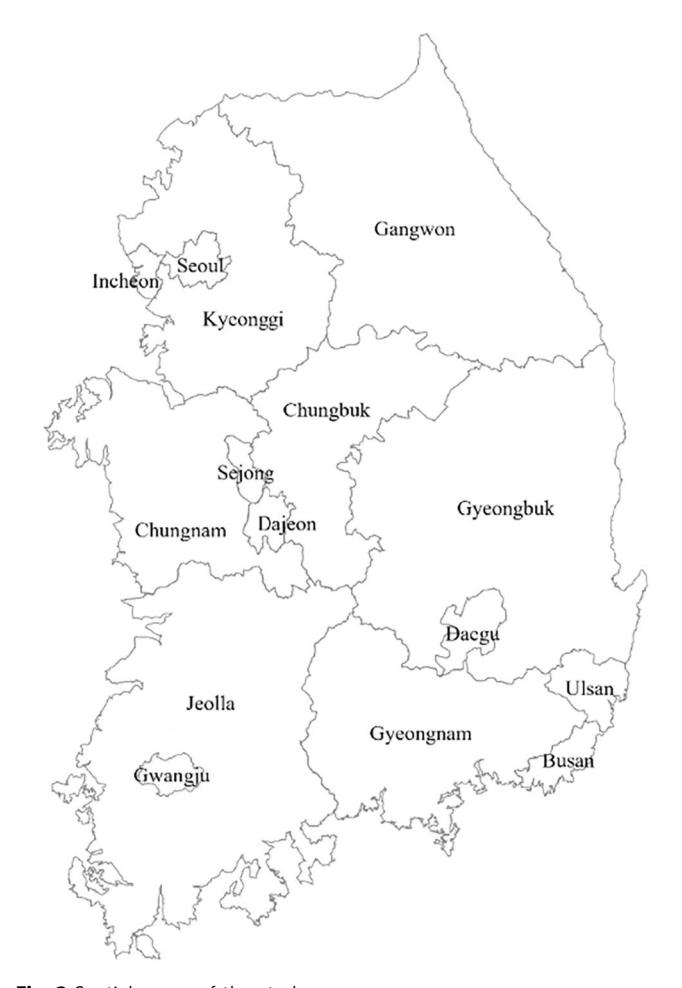
- 데이터: 한국 자동차 산업 inter-firm 거래 (KoDATA + VALUE Search, 946 기업 분석/1,457 중), 2008~2021. 15 개 광역시도 (제주 제외). KSIC 자동차 분류 기준. 6 대 완성차 (Hyundai, Hyundai Mobis, KIA, GM Korea, Renault Korea, KG Mobility) 는 공장 주소, 나머지는 본사 주소 사용
- 주요 발견: Lag 0 모형 R² = 0.89. degree +63.15** ; specialization +51.34***; diversity -228.8*** (단독 부정); degree × specialization -72.79***; degree × diversity -72.73**; specialization × diversity -56.47**; degree × specialization × diversity +84.18*** (3-way 균형 효과). Hausman test χ² = 123.51 으로 FE 채택. VIF 평균 3.40 (1.48
5.36). Lag 13 모형에서도 결과 강건 - 시사점: EV 전환으로 수직형 가치사슬이 수평화 되는 국면에서, 단순 cluster 특화는 한계. 산업 specialization 과 diversity 의 균형 + cross-region 네트워크 디자인이 핵심. 한국형 “Innovation City + 국가균형발전 특별법” 정책이 기존 metropolitan 편중을 깨려면 cross-region 거래망의 의도적 설계 필요
요약
본 연구는 Electric Vehicles 전환이 자동차 산업의 가치사슬을 수직 → 수평 으로 재편하는 국면에서, 전통적 closed-cluster 모델의 한계를 진단하고 cross-region 네트워크 위치 (regional centrality) 의 가치를 정량화한다. 기존 집적 경제 문헌은 Marshall (1890) 의 specialization 이득과 Jacobs (1969) 의 diversity 이득을 따로 분석해왔으며 (Beaudry & Schiffauerova 2009), 도시 간 인적·물적 자원 교환 지표 (Hussain et al. 2019, Reyes et al. 2008) 와 산업 구조 지표 (Frenken et al. 2007, Delgado et al. 2016) 가 분리돼 있었다. 본 연구는 두 차원을 동시에 한 모형에 넣고 three-way-interaction 으로 결합 효과를 식별한다.
데이터·방법론: KoDATA 의 firm-level 매출 비율 데이터를 VALUE Search 의 연매출과 결합해 2008~2021 의 weighted directed transaction network 를 구축 (946 기업 분석, KSIC 자동차 코드 기준). 6 대 완성차는 공장 주소로 (생산 위치 정확), 나머지는 본사 주소로 광역시도 노드 집계. Gephi 0.10.1 의 GeoLayout 으로 visualize. Centrality 는 weighted normalized 연결중심성 (Freeman 2002, Barrat et al. 2004) — 거래 volume 가중 + 네트워크 크기 정규화 (). location-quotient 로 자동차 산업 specialization 측정 (지역 자동차 고용 비중 / 전국 자동차 고용 비중), 허핀달-허쉬만 지수 의 complement (1 - HHI, 21 개 KSIC 대분류 기준) 로 diversity 측정. Control: 인구, 1 인당 지방세, 평균 사업체 규모, R&D 지출, 경제활동인구 비율, 대졸 취업 비율.
fixed-effects panel regression (Hausman test χ² = 123.51 으로 RE 기각) + Lag 0~3 의 동적 분석. 결과: (i) degree 의 직접 효과는 양 (+) 유의 모든 lag 에서 (+63.15** ~ +95.53*) — centrality 가 GRDP 의 핵심 driver, (ii) specialization 도 양 (+) — Hyundai-Kia 모듈러 supply chain 의 지역 클러스터 효과, (iii) diversity 는 단독 으로는 음 (−) — Jacobs 류 통념의 부분 부정, (iv) degree × specialization 과 degree × diversity 의 2-way 상호작용은 모두 음 (−) — 한 쪽 치우침이 centrality 이득을 갉아먹음, (v) 세 요인의 3-way 상호작용 +84.18***이 결정적 — 셋의 균형 조합 이 가장 큰 성장 효과. Marginal effect 분석 (Figs 3-5) 도 diversity 가 낮을 때 centrality·specialization 의 양 (+) 효과가 약화·역전됨을 확인.
저자들의 함의: EV 전환기에는 단일 산업 cluster 특화 (예: 경상도 내연기관, 전라도 배터리) 만으로 부족. cross-region transaction network design + 산업 다양성 + 거점 도시 centrality 의 동시 강화가 정책의 답. 한계: spatial autocorrelation 미반영 (cf. What makes smart cities inclusive? The spillover effects of the intra-city digital divide on inter-city digital inequality 의 후속 연구 여지). 황준석 author page anchor 의 제 5 기 (글로벌 스마트시티와 AI, 2024~2026) 의 “사회기술적 전환” 실타래의 EV·자동차 산업 응용으로, Is the transition to electric vehicles a crisis or an opportunity? The South Korean automotive industry experience 와 자매 논문이다.
핵심 결과
| 변수 | Model 1 (Lag 0) | Model 2 (Lag 1) | Model 3 (Lag 2) | Model 4 (Lag 3) |
|---|---|---|---|---|
| degree (centrality) | +63.15** | +92.20** | +83.31* | +95.53* |
| specialization (LQ) | +51.34*** | +44.64** | +80.36*** | +94.11*** |
| diversity (1−HHI) | -228.8*** | -199.2*** | -61.73** | +1.14 (n.s.) |
| degree × specialization | -72.79*** | -69.85*** | -64.02*** | -71.14*** |
| degree × diversity | -72.73** | -103.3** | -93.08* | -106.6* |
| specialization × diversity | -56.47** | -49.26** | -89.08*** | -104.0*** |
| degree × specialization × diversity | +84.18* | +80.17* | +73.32* | +81.10* |
| Observations | 205 | 190 | 175 | 160 |
| R² | 0.89 | 0.88 | 0.89 | 0.87 |
∗∗∗ p<0.01, ∗∗ p<0.05, ∗ p<0.1. 15 개 광역시도 × 14 년 panel (Jeju 제외, 일부 결측). diversity 의 단독 음 (−) 효과는 lag 가 길어지면서 약화 — long-run 에는 diversity 가 reset 됨. Conditional marginal effect (Franzese & Kam 2009) 로 해석: .
Control 부호: economic_pop 양 (+) 강하게 유의 (회귀 경제활동인구가 핵심 driver), pop 양 (+) 그러나 약함, tax · business_size 양 (+) 유의, rnd_expen 비유의 (단기 효과 없음), college_emp 음 (−) — Gibson & McKenzie (2012) 의 brain drain 효과: 대졸 인력의 역외 유출 이 지역 경제에 부정적.
방법론 노트
핵심 식별 전략은 three-way-interaction panel regression (Aiken et al. 1991, Franzese & Kam 2009) + 연결중심성 의 weighted normalization. 식:
여기서 는 두 지역 간 거래 volume (= 매출 비율 × 연매출), 는 연도 의 노드 수, 는 지역 의 산업 고용, 는 region FE, 는 통제변수 벡터. Specialization 과 diversity 의 관측 범위가 0 을 포함하지 않으므로 은 unconditional main effect 가 아닌 conditional effect 로 해석 (Brambor et al. 2006). Endogeneity 완화 전략: degree 의 1~3 년 lag 분석 — 모든 lag 에서 계수 부호·유의성 일관. Spatial autocorrelation 미반영은 한계로 명시.
연구 계보
본 연구는 세 갈래 문헌을 통합한다. 첫째, 집적 경제 — Marshall (1890), Krugman (1991), Krugman & Venables (1990), Fujita & Thisse (1996), Glaeser (2010), Faggio et al. (2017, 2020), Rosenthal & Strange (2001, 2020), Carlino & Kerr (2015), Beaudry & Schiffauerova (2009). 둘째, regional centrality 측정 — Freeman (2002), Newman (2004), Barrat et al. (2004), Opsahl et al. (2008), Ye & Xu (2021), Hussain et al. (2019), Reyes et al. (2008), Dosso & Lebert (2020). 셋째, specialization vs diversity 논쟁 — Jacobs (1969), Frenken et al. (2007) “related variety”, Bishop & Gripaios (2010), Andersson & Larsson (2022), Simonen et al. (2015), Van Der Panne & Van Beers (2006), Yeung (2021) “strategic coupling”. 자동차 산업 글로벌 가치사슬: Sturgeon & Van Biesebroeck (2009), Sturgeon et al. (2008), Buchmann & Savchenko (2017, Stuttgart), Kimura (2022, Aichi), Cho & Kang (2024, Korea), Oh & Rhee (2008).
황준석 author page anchor 의 제 5 기 (글로벌 스마트시티와 AI, 2024~2026) 의 “사회기술적 전환” 실타래의 EV·자동차 산업 응용. Is the transition to electric vehicles a crisis or an opportunity? The South Korean automotive industry experience (Journal of Asian Economics) 의 자매 작업으로, 후자는 EV 전환의 crisis vs opportunity 거시 평가, 본 paper 는 transition 시점의 cluster 재설계 라는 정책 함의. Hongbum Kim 의 ICT 산업 regional dynamics 라인과 결합. Korea Smart City 거버넌스 라인 (What makes smart cities inclusive? The spillover effects of the intra-city digital divide on inter-city digital inequality, Building smarter cities together: Government-to-government partnerships in the development of smart cities) 의 산업 supply-chain 측면 자매.
See also
- 황준석
- Hongbum Kim
- Seoyoung Lee
- Humanities and Social Sciences Communications
- regional-centrality
- 집적 경제
- industrial-specialization
- industrial-diversity
- Automotive Industry
- Electric Vehicles
- 사회 네트워크 분석
- 연결중심성
- location-quotient
- 허핀달-허쉬만 지수
- 패널 회귀
- three-way-interaction
- Is the transition to electric vehicles a crisis or an opportunity? The South Korean automotive industry experience
- What makes smart cities inclusive? The spillover effects of the intra-city digital divide on inter-city digital inequality
인접 그래프
- 인물 3
- 방법론 4
- 개념 1
- 주제 3
- 수록처 1
- 분류 1
- 논문 4