Is the transition to electric vehicles a crisis or an opportunity? The South Korean automotive industry experience
Seoyoung Lee, Hongbum Kim, 황준석 (2025) · Journal of Asian Economics 98:101938 · DOI ↗
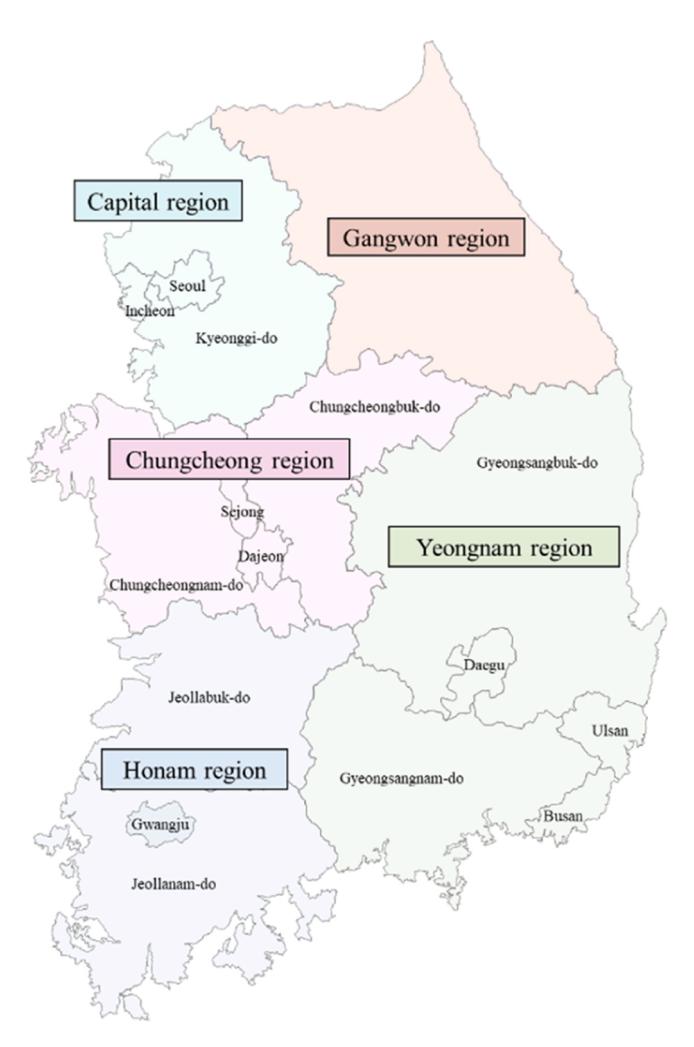
한국 자동차 산업의 EV 전환 (2008-2021) 이 위기인지 기회인지를 weighted directed 사회 네트워크 분석 + Network Positioning Matrix (degree × eigenvector centrality) 로 진단. KoDATA + Value Search 의 firm-level transaction 데이터 (946 firm, 226 municipality) 를 5 region (Capital / Yeongnam / Chungcheong / Honam / Gangwon) 으로 집계. 핵심 발견: 위기가 아니라 기회 — 2012-2013 의 일시적 축소 후 supply chain 이 expanded + distributed 되어 robustness 강화. Capital + Yeongnam (Hyundai, KIA 본사 hub) 유지, Honam (GM Korea Gunsan 폐쇄에도) 위치 유지, Chungcheong + Gangwon 이 periphery → ecosystem hub 로 성장.
- RQ: 한국 자동차 산업의 EV 전환은 (i) 지역 산업 생태계에 위기인가 기회인가, (ii) 5 region 의 supply chain 내 position 이 어떻게 변화했는가, (iii) 어떤 region 이 새 ecosystem hub 로 부상하는가.
- 방법론: 사회 네트워크 분석 (Gephi 0.10.1, Geo-layout), weighted directed network (transaction volume = edge weight), 연결중심성 (Nieminen 1974), 고유벡터 중심성 (Bonacich 1987), Network Positioning Matrix (Lee & Kim 2018) — 2×2 matrix: ecosystem hub / local hub / bridge / peripheral.
- 데이터: KoDATA (corporate sales + supplier 정보) + Value Search (geographic + financial). 자동차 산업 (KSIC 분류) 1,457 firm 중 946 firm (511 제외, 데이터 불일치/중복). 2008-2021, 226 municipality, 5 region. 6 major 자동차사 (Hyundai Motor, Hyundai Mobis, KIA, GM Korea, Renault Korea, KG Mobility) 는 본사 대신 factory 주소 사용.
- 주요 발견: (i) 위기 → 기회 전환: 2012-2013 일시 축소 (Korea 자동차 생산 -2.1% / -1.4%, ICE 규제 강화 — CAFE 2006, Fleet average 2009, GHG 2012 규제) 후 2014 부터 회복. (ii) Network 복잡도 증가: nodes 72→92, edges 290→578, mean degree 8.06→12.57, eigenvector mean 0.116→0.193 (2008→2021). (iii) Region별 동학: Capital (0.1597→0.1923 maintained), Yeongnam (Hyundai Ulsan/KIA Hwaseong 기반 회복 후 0.2768 = 최고), Chungcheong (0.1574→0.1834, 새 ecosystem hub 로 성장), Gangwon (0.0333→0.1578, periphery → ecosystem hub 의 가장 큰 변화), Honam (GM Korea Gunsan 폐쇄에도 hub 유지). (iv) Tesla (Roadster 2008, Model S 2012) + 한국 Green New Deal (2020) + 2050 Carbon Neutrality + Hyundai E-GMP 2020 가 catalyst.
- 시사점: EV 전환이 “위기” 인식 (38% supplier 만 active prep) 과 반대로 supply chain robustness 강화. 정책은 (a) 지역별 차별화, (b) Chungcheong / Gangwon 같은 신생 cluster 지원, (c) National Charging Infrastructure Plan (2030 500,000 stations) 같은 장기 인프라 투자 필요.
요약
황준석 의 4-5기 (socio-technical-transition · 산업 전환) 라인의 EV 분기. Seoyoung Lee (SNU TEMEP) + Hongbum Kim (Gachon U College of Business, Building smarter cities together: Government-to-government partnerships in the development of smart cities 와 동일 PI) + 황준석 의 산업 산학협력. 황준석 author page anchor 의 “사회기술적 전환” 라인 — Sustainability of ride-hailing services in China's mobility market: A simulation model of socio-technical system transition (중국 ride-hailing) → The relationship between shared mobility and regulation in South Korea: A system dynamics approach from the socio-technical transitions perspective (한국 공유 모빌리티 SD) → Evaluating Korean commuters' acceptance of MaaS through the UTAUT framework (한국 MaaS UTAUT) → 본 paper (한국 EV 전환 공급망 network) 의 연장. 기존 연구는 (i) Cho & Kang (2024) 의 20 년 5 region 자동차 ecosystem 분석 (network indicator), (ii) Cho & Kim (2023) 의 2018 단년 분석 — 두 한계는 (a) transaction volume 미반영, (b) cross-sectional 한계. 본 paper 는 14 년 panel + transaction volume weight + 5 region position 변화 추적으로 차별화.
방법론 핵심은 Network Positioning Matrix. degree centrality (직접 link 수) 와 eigenvector centrality (중심 노드와의 연결 weight 합) 를 2×2 matrix 로 plot. 4 사분면:
- Ecosystem Hub: high degree + high eigenvector (전 산업 리더)
- Local Hub: high degree + low eigenvector (지역 내 영향력만)
- Bridge: low degree + high eigenvector (bottleneck/gatekeeper)
- Peripheral: low + low
이 framework 는 Lee & Kim (2018) 의 ICT ecosystem 분석, Lee et al. (2019) 의 patent 기반 technology convergence, Liu et al. (2022) 의 USPTO patent transfer 등에서 적용 — 본 paper 는 자동차 supply chain 에 처음 적용. Gephi 0.10.1 의 Geo-layout 으로 지리 좌표 위 visualization.
핵심 발견 셋. 첫째, 2012-2013 의 일시 축소는 위기가 아니라 transition pain — 국제 ICE 규제 (CAFE 2006, Fleet average 2009, GHG regulation 2012) + 한국 자동차 생산 -2.1%/-1.4% 의 결과. 2014 이후 EV transition 본격화로 회복. 둘째, network distributed 화가 robustness 강화 — Christopher & Peck (2004), Nazemi & Parragh (2022) 의 distributed network resilience 명제를 EV transition 사례로 실증. nodes / edges / eigenvector 모두 증가, 표준편차도 증가 (다양화). 셋째, Chungcheong + Gangwon 의 부상: Hyundai Steel + Hyundai Transys + Hankook Tire 의 Chungcheong 집중, Sejong (2012 행정수도) 신설, 정부의 regional automotive 지원 정책. Gangwon 은 0.0333 → 0.1578 의 가장 극적 성장. 한계: KoDATA + Value Search 의 firm-level data 만, 다른 산업 (semiconductor, battery 등) 과의 cross-industry network 미고려.
핵심 결과
Network indicator 시계열 (2008-2021) — degree centrality:
| Year | Nodes | Edges | Mean | SD | Max |
|---|---|---|---|---|---|
| 2008 | 72 | 290 | 8.06 | 9.93 | 44 |
| 2012 | 59 | 235 | 7.97 | 7.94 | 34 (저점) |
| 2014 | 78 | 364 | 9.33 | 10.38 | 52 (회복) |
| 2021 | 92 | 578 | 12.57 | 14.20 | 60 |
Eigenvector centrality: 2008 mean 0.116 → 2021 mean 0.193 (+66%).
Region 별 degree centrality (2010 → 2020):
| Region | 2010 | 2020 | 변화 | 분류 진화 |
|---|---|---|---|---|
| Capital | 0.1597 | 0.1923 | +20% | Ecosystem Hub 유지 |
| Yeongnam | (Hyundai/KIA hub) | 0.2768 | 최고 | Ecosystem Hub 유지 |
| Honam | (변동) | (회복) | — | Hub 유지 (GM Korea 폐쇄에도) |
| Chungcheong | 0.1574 | 0.1834 | +16% | Periphery → Ecosystem Hub |
| Gangwon | 0.0333 | 0.1578 | +374% | Periphery → Local → Ecosystem Hub |
- 6 major auto firms: Hyundai Motor, Hyundai Mobis, KIA, GM Korea, Renault Korea Motors, KG Mobility Corp.
- 글로벌 catalyst: Tesla Roadster 2008, Model S 2012; EU Euro 6d 2020; China NEV 2009; 한국 Green New Deal 2020 + 2050 Carbon Neutrality.
- 정책: Eco-friendly Vehicle Purchase Subsidy (2023: 2.8조 KRW + 0.5조 KRW 충전 인프라), National Charging Infrastructure Plan (2030 500,000 stations).
방법론 노트
Degree Centrality (Nieminen 1974) — 직접 연결 수:
if direct link exists, otherwise. Hub region 식별.
Eigenvector Centrality (Bonacich 1987) — 연결된 노드의 중심도 가중합:
는 행렬 의 eigenvector, 는 associated eigenvalue, 는 두 노드 간 연결 강도 (transaction volume). recursive — 중심 노드와 연결된 노드가 중심.
Network Positioning Matrix (Lee & Kim 2018):
4 사분면 분류 (median split):
| Low | High | |
|---|---|---|
| High | Local Hub | Ecosystem Hub |
| Low | Peripheral | Bridge |
본 paper 는 5 region 의 2008-2021 trajectory 를 이 matrix 위에 plot 해 evolution 시각화.
Weighted Directed Network 구축: node = 지역 (city/municipality), edge = transaction , weight = 연간 sales 비율. KoDATA 의 firm-level transaction data 사용, factory address 기준 (본사 bias 회피).
시간 범위: 2008-2021 14 년. 시작점 2008 — Tesla Roadster + 글로벌 EV 본격화. 종료점 2021 — Hyundai E-GMP 출시 + 한국 2050 Carbon Neutrality Scenario 선언.
연구 계보
황준석 author page anchor 의 “사회기술적 전환” + “혁신과 기업 성과” 두 라인이 교차하는 paper. 직계 ancestor:
(i) 사회기술적 전환 라인 (4-5기): Sustainability of ride-hailing services in China's mobility market: A simulation model of socio-technical system transition (중국 ride-hailing 지속가능성, T&I 2020, 23 cit) → The relationship between shared mobility and regulation in South Korea: A system dynamics approach from the socio-technical transitions perspective (한국 공유 모빌리티 SD, Technovation 2022, 10 cit) → 본 paper. 시스템 다이내믹스 (SD) → 사용자 수용 (UTAUT, Evaluating Korean commuters' acceptance of MaaS through the UTAUT framework) → 산업 공급망 (SNA, 본 paper) 의 분석 수준 다양화.
(ii) 네트워크 분석 라인: Identification of effective opinion leaders in the diffusion of technological innovation: A social network approach (의견 지도자 SNA, TFSC 2012, 206 cit) → Technology convergence capability and firm innovation in the manufacturing sector: an approach based on patent network analysis (특허 네트워크 TC, R&D Management 2019, 75 cit) → Redefining the role of investors in South Korea's startup ecosystem: A network analysis and explainable AI approach (투자자-스타트업 네트워크 XAI) → 본 paper (자동차 supply chain network). SNA 의 적용 대상이 의견 지도자 → 기술 → 투자자 → 공급망으로 확장.
기술적 reference: (i) EV transition: Berkeley et al. (2017) ICEV path dependency, Wu et al. (2021) petroleum socio-economic structure, Sykes & Axsen (2017) battery tech. Tesla, EU Euro 6d, China NEV 2009 등 글로벌 정책. (ii) Regional industrial ecosystem: Moore (1993) ecosystem framework, Kim et al. (2017), Lowe & Evans (1995), Korhonen & Snäkin (2005), Ashton (2008, 2009). (iii) Network positioning matrix: Lee & Kim (2018) ICT ecosystem 원조, Lee et al. (2019) patent + technology convergence, Liu et al. (2022) USPTO patent transfer. (iv) Supply chain resilience: Christopher & Peck (2004), Nazemi & Parragh (2022), Chopra (2003), Christopher & Towill (2001), Akın Ateş et al. (2022).
황준석 author page anchor 의 5기 “AI / EV / 글로벌 스마트시티” 분기의 paper 출력. 같은 author / 시기의 자매 paper: Evaluating Korean commuters' acceptance of MaaS through the UTAUT framework (MaaS 수용), Smart Mobility Solutions for Urban Transportation in ASEAN: A Bibliometric Study of Trends and Innovations (ASEAN 모빌리티), Systematic application of traffic-signal-control system architecture design and selection using model-based systems engineering and Pareto frontier analysis (TSCS MBSE) — 5 기 모빌리티 cluster 의 4 paper.
See also
- 황준석
- Seoyoung Lee
- Hongbum Kim
- Journal of Asian Economics
- 사회 네트워크 분석
- Network Positioning Matrix
- Electric Vehicles
- Automotive Industry
- Regional Industrial Ecosystem
- supply-chain
- Sustainability of ride-hailing services in China's mobility market: A simulation model of socio-technical system transition
- The relationship between shared mobility and regulation in South Korea: A system dynamics approach from the socio-technical transitions perspective
- Evaluating Korean commuters' acceptance of MaaS through the UTAUT framework
- Technology convergence capability and firm innovation in the manufacturing sector: an approach based on patent network analysis
- Identification of effective opinion leaders in the diffusion of technological innovation: A social network approach
- Building smarter cities together: Government-to-government partnerships in the development of smart cities
인접 그래프
- 인물 3
- 방법론 4
- 주제 3
- 수록처 1
- 분류 2
- 논문 11