The Effect of Partnership for Innovation Using Lead User Theory: Case Study of Korean Industry
Yunyoung Kim, 이정동 (2007) · Portland International Conference on Management of Engineering and Technology (PICMET) ‘07, pp. 617–627
von Hippel (1986) 의 Lead user 이론 를 한국 산업 innovation partnership 의 어떤 파트너 유형 이 효과적인지 식별하는 데 응용. lead user 의 두 정의 components — (1) 혁신으로 높은 개인 효익 을 기대 (high personal need), (2) 시장의 중요 trend 의 선두 에 위치 (ahead of trend) — 를 STEPI Korean Innovation Survey 2002 (manufacturing N=3,775) · 2003 (service N=2,000) 에서 측정 가능한 두 proxy — (1) 파트너의 기여도 (firm 의 idea 채택 비중), (2) 파트너의 아이디어 중요도 — 로 operationalize. 두 axis 위에 10여 종 파트너 유형 (client firm, supplier, university, GRI, joint venture 등) 을 plot 한 결과, 제조업·서비스업 모두에서 client firm 이 lead user 의 strongest character 보유. value chain 위쪽 (downstream) 의 client firm 과 supplier firm 이 innovation partner 로 most effective.
- RQ: 한국 제조업·서비스업 firm 의 innovation 성공에 가장 기여하는 파트너 유형은 무엇이며, Lead user 이론 의 두 components 기준으로 어떻게 식별되는가?
- 방법론: Lead User Method (von Hippel 1986), 설문조사 분석 (STEPI Korean Innovation Survey), 2×2 좌표 positioning (high need × ahead-of-trend 좌표상의 파트너 plot)
- 데이터: STEPI Korean Innovation Survey 2002 manufacturing sector (N=3,775, 2000–2001 신제품 1,006건 = 26.6%, 협력 firm 663) + 2003 service sector (N=2,000, 2002 신제품 434건 = 21.7%, 협력 firm 256); 파트너 유형 10여 종 (client / components / consulting / equipment / GRI / interrelated / JV / private research / rival / university)
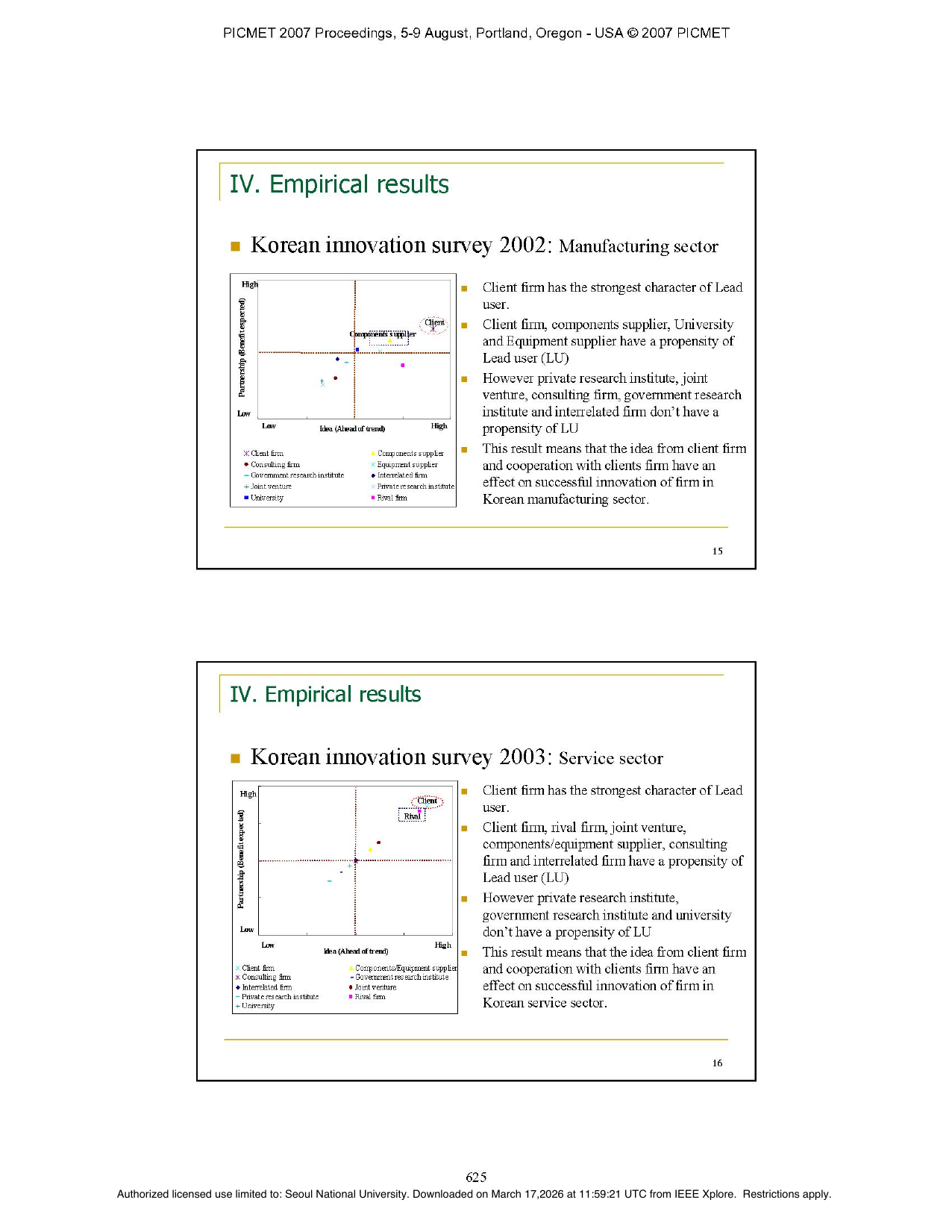
- 주요 발견: 제조업·서비스업 모두 client firm 이 lead user character 의 strongest position; 제조업 LU 성향 파트너: client > components supplier > university > equipment supplier; 서비스업 LU 성향 파트너: client > rival firm > joint venture > components/equipment > consulting > interrelated; 양 sector 모두 private research institute · GRI · interrelated firm 은 LU 성향 없음; university 는 제조업 LU 성향이 있지만 서비스업에서는 없음
- 시사점: 한국 firm 의 innovation 정책의 partnership leverage 는 value chain 위쪽 의 client firm + supplier 와의 systematical 지식 공유 · 협력. 정부 / GRI / 대학 (서비스업) 등 공공·비-가치사슬 파트너 는 lead user 가 아니므로 일반 R&D 지원만으로는 innovation 효과 부족. client-supplier 의 commercial transaction 위에서 innovation capacity 가 형성
요약
Lead user 이론 (Eric von Hippel, 1986 Management Science) 는 모든 user 가 동일하지 않다 는 핵심 통찰 — 일부 user 가 (i) 혁신 solution 에서 높은 개인 효익 을 기대하므로 innovate 할 incentive 가 강하고, (ii) 시장 중요 trend 의 선두 에 위치해 다른 user 보다 먼저 needs 를 경험한다는 lead user 의 두 정의 components. 이들은 passive consumer 가 아닌 active innovator 로서 firm 의 innovation 과정에 정보·아이디어를 공급한다 (von Hippel · Franke · Schreier 2005 MIT working paper). 본 paper 의 motivation 은 (i) 한국 산업 partnership 에서 어떤 유형의 파트너 가 lead user 의 두 components 를 만족하는지 정량 식별하고, (ii) 그 결과를 R&D 정책 / 기업 partnership 전략 leverage 로 변환하는 것.
데이터는 STEPI (Science and Technology Policy Institute) 의 Korean Innovation Survey 두 wave — 2002 manufacturing sector (N=3,775, 26.6% 가 2000–2001 신제품 commercialization, 663 firm 이 외부 파트너와 협력) 와 2003 service sector (N=2,000, 21.7% 신제품, 256 firm 협력). Survey 는 firm 이 어떤 유형의 파트너로부터 idea 를 얻었는지 + 그 파트너의 contribution / idea importance 가 어땠는지 의 응답을 포함. 본 paper 는 lead user components 의 두 proxy 로:
- Component 1 (high personal need) ← 파트너의 기여도 (firm 의 idea 채택 비중) — 파트너가 가장 큰 효익을 기대하는 영역의 contribution 이 가장 클 것이라는 logic
- Component 2 (ahead of trend) ← 파트너의 아이디어 중요도 — firm 이 신뢰하고 채택하는 아이디어를 가진 파트너는 trend 선두에 있다는 logic
10여 종 파트너 유형 (client firm, components supplier, consulting firm, equipment supplier, government research institute, interrelated firm, joint venture, private research institute, rival firm, university) 을 두 axis 좌표상에 plot. 오른쪽 위 quadrant (high need + ahead of trend) 에 위치한 파트너가 lead user character 보유.
핵심 발견은 두 sector 에서 일관: client firm 이 lead user character 의 strongest position. 제조업에서는 client > components supplier > university > equipment supplier 가 LU quadrant 에 위치 — value chain 위쪽 의 commercial transaction 파트너 가 LU. 서비스업에서는 client > rival firm > joint venture > components/equipment > consulting > interrelated 가 LU — 제조업과 큰 패턴 일치하지만 rival firm 이 서비스업에서 LU 성향이 강하다는 점이 흥미롭다 (서비스업의 경쟁자 학습 채널). 양 sector 모두 private research institute · government research institute · interrelated firm (관계 기업, 같은 그룹 등) 은 lead user 가 아님. 특히 서비스업에서 university 도 LU 성향 없음 — 제조업과의 미세한 차이.
해석은 명확하다. Lead user 의 두 components 가 모두 시장 사용자 위치에서의 needs 와 관련되므로, commercial transaction 을 통해 firm 의 product / service 를 직접 사용 하는 파트너 (client firm) 가 LU character 가 가장 강한 것은 logical. Components / equipment supplier 도 firm 의 input 공급 으로 value chain 안에 있어 LU 성향. 반면 university · GRI · private research institute 등 공공·비-가치사슬 파트너는 제3자 관찰자 위치라 lead user 정의의 components 를 만족하기 어렵다. 단 제조업에서는 university 가 기술 trend 선두 의 R&D 정보 를 갖춰 LU 성향이 나타나지만 서비스업에서는 서비스 사용 trend 의 frontier 가 university 가 아닌 경쟁자·고객 에 있어 university LU 성향 사라짐.
정책·전략 함의: (i) 한국 firm 의 partnership 정책은 client firm · supplier 와의 systematical 지식 공유 · 협력 채널 강화, (ii) 정부의 R&D 지원이 대학 · GRI · private research institute 중심으로 설계되는 일반 패턴은 innovation 성공 의 leverage 부족 — gain commercially 위해서는 commercial 채널 강화 필요, (iii) 서비스업과 제조업의 partnership 전략 차이 — 서비스업은 rival firm 으로부터의 learning 이 추가 leverage. 한계는 (i) 두 components proxy 의 정성적 정당성 (contribution · idea importance 가 high need / ahead of trend 의 정확한 measure 인지), (ii) 좌표상 plot 만으로 정량 regression 부재, (iii) 두 wave (2002 · 2003) 의 cross-section 만으로 longitudinal dynamics 미관측. 본 paper 는 conceptual application + 정성적 evidence 의 성격이 강하다.
핵심 결과
STEPI Korean Innovation Survey 데이터 요약
| Wave | Sector | N (응답) | Innovative firm | 협력 firm |
|---|---|---|---|---|
| 2002 | Manufacturing | 3,775 | 1,006 (26.6%) | 663 |
| 2003 | Service | 2,000 | 434 (21.7%) | 256 |
파트너 유형 LU 성향 결과 (Fig. 1–2)
| Sector | LU character 보유 파트너 (순위) | LU 성향 없음 |
|---|---|---|
| Manufacturing | client > components supplier > university > equipment supplier | private research, joint venture, consulting, GRI, interrelated |
| Service | client > rival firm > joint venture > components/equipment > consulting > interrelated | private research, GRI, university |
Lead User 의 두 components × proxy 매핑
| Component (von Hippel 1986) | Proxy (본 paper) | Logic |
|---|---|---|
| (1) high personal need from innovation | 파트너 기여도 (firm 채택 비중) | 효익 기대 큰 파트너가 더 contribute |
| (2) ahead of important trend | 파트너 아이디어 중요도 | trend 선두 파트너의 idea 가 더 중요 |
Sector 비교에서 striking 한 패턴
| Partner type | Manufacturing | Service |
|---|---|---|
| Client firm | LU strongest | LU strongest |
| Supplier (comp/equip) | LU | LU (consolidated) |
| University | LU | non-LU |
| Rival firm | non-LU | LU |
| Joint venture | non-LU | LU |
| Private/GRI | non-LU | non-LU |
→ University 의 LU 성향은 manufacturing 만, service 에서 rival firm · JV 가 새로 LU 진입.
방법론 노트
Lead User Method 는 von Hippel (1986 Management Science) 의 lead user 정의에 따른 식별 절차. 일반적으로 (i) 시장의 중요 trend 식별, (ii) 그 trend 의 leading edge user pool 찾기 (interview · screening), (iii) 그 lead user 의 innovation 아이디어를 firm 의 product development 에 통합 — 의 3 step 으로 진행. 본 paper 는 이 표준 식별 절차 대신 survey 데이터에서 lead user character 의 statistical proxy 측정 으로 method 를 응용. 두 components 를 paired axis 로 두고 파트너 유형을 좌표 plot 하는 2×2 좌표 positioning 형식.
추정 식은 없다 — descriptive 좌표 분석 + 정성적 ranking. 좌표 axis 의 metric 정의:
- X-axis (ahead of trend) = 파트너의 아이디어 중요도 의 응답 평균 (Likert 척도 또는 비중)
- Y-axis (high need) = 파트너로부터 idea 를 채택한 firm 비율 (or 기여도 평균)
좌표 오른쪽 위 quadrant 에 위치한 파트너 = lead user character 보유. 단 quadrant 경계의 정확한 threshold 가 명시되지 않음 — visual inspection 에 의존.
식별은 (i) 10여 종 파트너 유형의 cross-section variation, (ii) 두 sector (manufacturing · service) 의 paired 비교, (iii) STEPI survey 의 firm 응답의 aggregate 통계에서 온다. 한계는 (i) 두 components proxy 의 정성적 정당성, (ii) 정량 회귀 부재, (iii) 단일 시점 cross-section.
연구 계보
본 paper 의 lead user theory lineage 는 von Hippel (1986 Management Science) “Lead Users: A source of novel product concepts” — original 정의, 직접 predecessor 는 Franke-von Hippel-Schreier (2005 MIT working paper) “Finding commercially attractive user innovations: A test of lead user theory” — 본 paper 가 reference [3] 으로 명시 인용. Niwa (2006 Technology Management, Tokyo University Press) 의 일본 기술경영 책. Innovation partnership lineage 는 Lee K.R. (2000 STEPI working paper) “Introduction Review of Innovation Theory” — 한국 innovation 분류 framework, Moon (2006 STEPI) 의 NIS R&D partnership 활성화 전략. STEPI 한국 innovation survey 의 framework 은 Shin-Song-Um-Lee (2002, manufacturing) · Um-Choi-Shin-Song-Lee (2004, service) 의 STEPI working paper 데이터셋.
TEMEP 내 sibling: (i) The Study on the Technology Finance Policy for Technology Development on the Value Chain Based Innovation System — 같은 PICMET 2007 발표 batch 의 NIS capital flow + value chain 분석으로, 본 paper 의 value chain client-supplier partnership 발견과 연결. 같은 STEPI 데이터셋의 다른 시각. (ii) 이정동 의 R&D linkage · NIS 라인. 본 paper 의 client firm 이 lead user 발견은 기술경영경제정책전공 의 demand-side innovation 시각 — 단순 supply-side R&D 정책 한계를 user-driven innovation 으로 확장 — 의 정량적 evidence. 후속 기술경영경제정책전공 작업의 client-driven innovation · 서비스 R&D 정책 라인의 발판.
See also
- Lead user 이론
- Lead User Method
- 혁신 파트너십
- Client firm
- 가치사슬
- STEPI Korean Innovation Survey
- 한국 혁신체계
- The Study on the Technology Finance Policy for Technology Development on the Value Chain Based Innovation System
- Yunyoung Kim
- 이정동
인접 그래프
- 인물 2
- 개관 1
- 방법론 3
- 개념 4
- 주제 2
- 수록처 1
- 분류 2
- 논문 1