The Study on the Technology Finance Policy for Technology Development on the Value Chain Based Innovation System
Haeyoung Byun, 이정동 (2007) · Portland International Conference on Management of Engineering and Technology (PICMET) ‘07, Portland Oregon (5-9 Aug), pp. 113-118
한국 기술기반 중소기업 의 외부 자금조달 제약을 국가혁신체계 (NIS) 의 capital flow 재구조화 위에서 분석. Freeman (1987) · Nelson-Winter (1982) · Nelson-Rosenberg (1993) 의 6 actor NIS 를 capital provider (정부, 금융기관, 해외) 와 capital receiver (대학, 연구기관, firm) 로 二分하고, capital receiver 의 가치사슬 위치 (up-stream R&D, middle-stream 제조, down-stream marketing) 별 financing 효과를 분리한다. N=112 innovative SMEs (115 응답 중 결측 3 제외, 제조·서비스) 설문에서 dominant 외부 자본원은 government grant + bank debt + retained earnings 이지만 preferred 자본원은 VC investment 와 down-stream/collaboration firm financing (단 management intervention · 불공정 계약 friction 해결 전제). 정책 처방은 (i) 정부 직접 grant 의 한계 인정 → fund of fund (정부가 민간 VC fund 위에 layered 형태로 투자, 민간 screening 활용), (ii) 대기업 CVC (CVC) 의 open bid 인센티브화.
- RQ: 한국 기술기반 중소기업 의 innovation 활동을 위한 외부 자금조달 의 시장 실패는 국가혁신체계 의 capital flow 관점에서 어떻게 재구조화돼야 하며, 정부의 finance 정책은 가치사슬 단계별 어떻게 차별화돼야 하는가?
- 방법론: 설문조사 분석 (N=112 innovative SMEs), 정책 framework 개념화 (NIS rearrangement + value-chain segmentation)
- 데이터: 한국 제조·서비스업 innovative SMEs 설문 (총 115 응답, 결측 3 제외, 분석 N=112). 외부 financing 출처 유형 / down-stream firm 으로부터의 financing 인식 / 협력 firm 지원의 commercialization 단계 효과
- 주요 발견: SMEs dominant 자본원은 government grant + bank debt + retained earnings; preferred 자본원은 VC investment + down-stream/collaboration firm financing — 단 management intervention · 불공정 계약 friction 해결 전제. Down-stream/collaboration firm financing 의 cited benefit 은 well-timed financing (적시성) · 매출 증가 · commercialization 후기 marketing 효과 3 항목. 서울 위치 SMEs 가 down-stream firm financing 접근성에서 우위 — 지역간 financing 격차
- 시사점: 정부 직접 grant 한정 정책의 한계 (screening 비용 · 전문성 부족 · 민간 underinvestment 보정 부재) → (i) fund of fund — 정부가 민간 VC fund 위에 layered 형태로 자금 제공해 민간 screening 활용, (ii) CVC 진흥 — 대기업 down-stream/협력 SMEs venture 투자에 open bid 인센티브, (iii) value-chain 단계별 차별 — up-stream R&D 는 long-payback risk capital, middle-stream 제조는 process innovation fund, down-stream 은 marketing/distribution 자금
요약
한국 경제는 정부 개입에 의해 catching-up 단계를 빠르게 통과했으며, 그 핵심에 국가혁신체계 (NIS) 의 구축과 R&D 자본 배분 정책이 있었다. 그러나 NIS 의 traditional framework — Freeman (1987 Technology Policy and Economic Performance: Lessons from Japan), Nelson-Winter (1982), Nelson-Rosenberg (1993), Song W. (2004 STEPI) — 는 actor (university / research institute / firm / 정부 / 금융 / 해외) 와 그 interaction 을 중심으로 짜여, 자본 흐름 의 dimension 이 잠재돼 있다. 본 paper 는 이 NIS 를 capital flow 축으로 재구조화 한다. 6 actor 를 capital provider (정부, 금융기관, 해외) 와 capital receiver (university, research institute, firm) 의 두 그룹으로 split, capital receiver 의 가치사슬 위치 (up-stream R&D, middle-stream 제조, down-stream marketing) 별 financing 필요와 효과를 분리한다. 정부의 leverage 는 두 갈래 — (i) capital provider 로서 direct grant 또는 indirect fund of fund 제공, (ii) regulator 로서 infra-structure (신용평가, 기술 가치평가, trust guarantee) 와 intermediary institute (VC, 은행) 지원.
이 framework 의 동기는 한국 기술기반 중소기업 의 외부 자금조달 4 friction — (i) 기술 가치 평가 어려움, (ii) 담보 부족, (iii) 긴 payback (R&D → commercialization), (iv) 거래·return 이전 financing 필요 — 과 IMF 이후 한국 bank-based 시스템의 위험회피 성향 강화. 정량 logic 은 Modigliani-Miller 의 financing-irrelevance 와 대조: imperfect capital market 에서는 financing method 가 firm start-up size 에 영향 (Colombo-Grilli 2005 Economics Letters, 이탈리아 high-tech young firm), start-up size 가 firm 생존 확률에 영향 (Agarwal-Audretsch 2000 — entry size + life cycle + technology 와 firm survival). 따라서 financing method → firm size → survival chain 이 innovation policy 의 leverage 경로.
실증 부분은 N=112 innovative SMEs 설문. 핵심 발견 두 가지. 첫째, 자본원 다양화의 필요성 — SMEs 의 dominant 외부 자본원은 government grant + bank debt + retained earnings 이지만, preferred 자본원은 VC investment 와 down-stream / collaboration firm financing (단 management intervention · 불공정 계약 등 friction 해결 전제). 즉 현재 자본원과 desired 자본원 간 gap 이 정책 leverage 의 자리. 둘째, down-stream firm financing 의 commercialization 효과 — innovative SMEs 가 cite 한 benefit 은 (i) well-timed financing (적시성), (ii) 매출 증가, (iii) commercialization 후기 marketing 효과 의 3 항목. 특히 서울 위치 SMEs 가 down-stream firm financing 접근성에서 우위 — 지역간 financing 격차의 단서. 이 발견은 collaboration with large firms 가 단순 자본 공급을 넘어 marketing / 산업화 know-how 의 동시 이전 mechanism 임을 시사. 정책 처방 (Section IV) 은 (i) 정부 직접 grant 의 한계 — screening 비용 · 전문성 부족 · 민간 underinvestment 보정 부재 — 인정 후 (ii) fund of fund 도입 — 정부가 firm 에 직접 invest 하지 않고 민간 VC 펀드 위에 layered 형태로 자금 제공, (iii) CVC 진흥 — 대기업 down-stream SMEs venture 투자를 정부 open bid 와 결합. fund of fund 의 public policy 차별점은 단순 수익 극대화가 아닌 innovation system 의 capital flow 보정. 한계는 (i) survey N=112 일반화 제약, (ii) survey 가 인식 (preference) 측정이라 실제 financing outcome 의 인과 효과 미실증, (iii) value-chain segmentation 의 firm-level 위치 식별 기준 모호.
핵심 결과
NIS 재구조화: capital provider vs receiver (Figure 1-2)
| Group | Actor | Role in capital flow |
|---|---|---|
| Capital provider | 정부 | direct grant + indirect fund of fund |
| 금융기관 (은행, VC, 연구소) | market-based financing, intermediary | |
| 해외 | FDI, licensing, technology transfer | |
| Capital receiver | University | basic research → technology transfer |
| Research institute | applied research, project out-sourcing | |
| Firm (특히 SMEs) | innovation execution, commercialization |
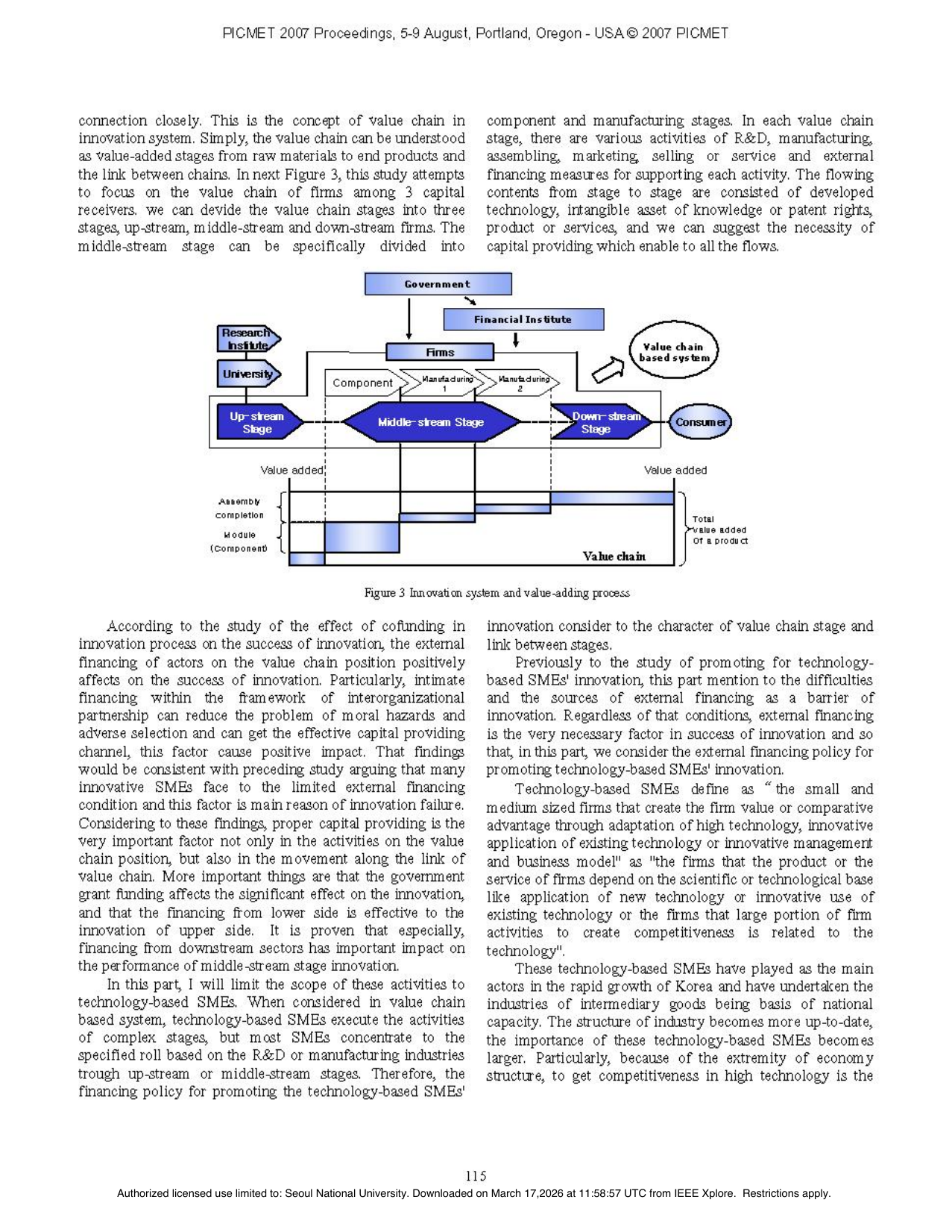
Value chain 단계별 financing 필요 (Figure 3)
| Stage | Activity | Required financing |
|---|---|---|
| Up-stream | R&D, 원천기술 개발 | long-payback risk capital, VC equity |
| Middle-stream (component) | 부품 / 제조기술 | process innovation fund, product innovation 자금 |
| Middle-stream (assembly) | 조립 / 양산 | equipment loan, working capital |
| Down-stream | marketing / distribution / service | sales/marketing financing |
Innovative SMEs 외부 financing 설문 (N=112)
| 항목 | Dominant 자본원 | Preferred 자본원 |
|---|---|---|
| 자본 종류 | government grant + bank debt + retained earnings | VC investment, down-stream/collaboration firm financing |
| Gap reason (preferred 미실현) | 위험 회피 (bank), screening 비용 (정부 grant) | management intervention · 불공정 계약 friction |
Down-stream/collaboration firm financing 의 cited benefit (Figure 5)
- Well-timed financing (적시성)
- 매출 증가 (sales boost)
- Commercialization 후기 marketing 효과
- 서울 위치 SMEs 의 접근성 우위 (지역 격차)
정책 제안 (Section IV)
| 제안 | Mechanism |
|---|---|
| 정부 직접 grant 한정 → 보완 | 시장 실패 보정 약, 민간 underinvestment 미해소 |
| Fund of fund | 정부 → 민간 VC fund → SME (layered, 민간 screening 활용) |
| CVC 진흥 | 대기업 down-stream SME venture 투자, 정부 open bid 인센티브 |
| Infra-structure | 신용평가, 기술 가치평가, trust guarantee system |
| Value-chain 차별 | up/middle/down 단계별 capital 종류 차별화 |
방법론 노트
본 paper 는 conceptual / policy framework 가 주축이며, 정량 model 은 small survey analysis (N=112) 에 한정. 정량 회귀 없이 descriptive 표현 — empirical validation 보다 conceptual framing + 정책 제안 에 무게.
NIS 재구조화 framework. Freeman (1987), Nelson-Winter (1982), Nelson-Rosenberg (1993), Song W. (2004) 의 actor-interaction 정의 위에 capital flow dimension 을 superimpose. 6 actor 를 (a) provider {government, financial intermediaries, foreign} 와 (b) receiver {university, research institute, firm} 으로 split, edge 는 자본의 방향성 + 형태 (grant / debt / equity / FDI). 정부의 leverage 는 두 갈래:
Financing → size → survival chain. Modigliani-Miller 의 financing irrelevance 와 대조해, imperfect capital market 에서는:
Colombo-Grilli (2005 — 이탈리아 high-tech young firm) 가 external equity financing 받은 firm 의 start-up size 가 internal financing 만의 firm 보다 큼을 보였고, Agarwal-Audretsch (2000) 가 entry size · life cycle · technology 와 firm survival 의 cross-section 을 추정. 본 paper 의 정책 logic 은 이 chain 의 financing method 의 정책 leverage 화.
Value chain segmentation. Up-stream → middle-stream (component / assembly) → down-stream 의 3 단계 + 단계간 link 의 chain. 단계별 발생 risk 와 required capital horizon 이 다르므로 financing source / 종류 / 정부 보정 정책이 단계별 차별화 필요.
Survey 분석. 112 innovative SMEs 의 외부 financing 출처 응답을 카테고리 (government grant / bank debt / VC / down-stream collaboration / retained earnings) 별 비중 + benefit perception 으로 표면 통계. 식별은 (i) 응답의 descriptive variation, (ii) 서울 vs 비서울 cross-section 차이, (iii) 자본원 카테고리간 응답 비중 비교 — 모두 정성적 단계.
연구 계보
본 paper 의 NIS conceptual lineage 는 Freeman (1987 Technology Policy and Economic Performance: Lessons from Japan, reference [1]) — 일본 catching-up 의 NIS 정의, Nelson-Winter (1982 An Evolutionary Theory of Economic Change, reference [2]) — 진화경제학 framework, Nelson-Rosenberg (1993 National Innovation Systems: A Comparative Analysis, reference [3]) — 국가별 NIS 비교, Song W. (2004 STEPI, reference [4]) — 한국 innovation system 개발 전략 위에 위치. Technology finance for SMEs lineage 는 Hahm-Kang (2005 Economic Papers Vol.11 No.3, reference [7]) 의 한국 SME bank lending, Colombo-Grilli (2005 Economics Letters 88: 243-250, reference [8]) — 이탈리아 high-tech young firm 의 external equity financing 과 start-up size, Agarwal-Audretsch (2000, reference [9]) — entry size · life cycle · technology 와 firm survival.
TEMEP 직접 predecessor 는 이정동 와 박찬수의 Research and development linkages in a national innovation system: Factors affecting success and failure in Korea (2005 Technovation, reference [5]) — 본 paper 가 reference [5] 로 명시 인용, 이정동 의 NIS 라인 (이정동 1기-2기 전환점, 1996-2010 의 도구의 확산 시기) 위에 Haeyoung Byun 의 finance policy 시각이 추가된 직접 후속. 또한 Min C.K. (2005 STEPI, reference [6]) 의 Policy alternatives for promoting innovation-driven SMEs: The supply value chain perspective 가 본 paper 의 value-chain segmentation 의 한국적 source.
TEMEP 내 sibling cluster 는 기술경영경제정책전공 의 innovation policy 라인 — 이정동 의 NIS · R&D persistency · public R&D 효과 작업 — 과 technology-based SME finance 의 새로운 fork. 본 paper 가 정식화한 fund of fund + CVC 의 정책 제안은 후속 한국 정부 정책 (KVIC fund of fund 확대, 대기업 CVC 자율화 2021 등) 의 학술적 anchor 의 하나 — 단 본 paper 가 그 인과 연결을 직접 주장하지는 않는다.
See also
인접 그래프
- 인물 2
- 개관 1
- 방법론 2
- 개념 4
- 주제 3
- 수록처 1
- 분류 2
- 논문 6
이 문서를 가리키는 페이지
논문 (6)
- Economic Impact Assessment of the Government-led Venture Firm Certification Policy
- Evaluation of credit guarantee policy using propensity score matching
- Strategy of start-ups for IPO timing across high technology industries
- Technology strategy for enhancing the public-to-private technology transfer: evidence from the duration of patent
- The Effect of Asset Composition Strategy on Venture Capital Firm Efficiency: An Application of Data Envelopment Analysis
- The Effect of Partnership for Innovation Using Lead User Theory: Case Study of Korean Industry