Effects of sector coupling on the decarbonization potential of the manufacturing sector—an integration of the power, hydrogen, and manufacturing sectors
Hwarang Lee, Jeongeun Lee, Sung Won Kang, Dongwoo Kim, Insook Kim, 구윤모 (2024) · energy-strategy-reviews · DOI ↗
한국 전력 + 수소 + 제조 의 sector coupling 효과를 통합 hybrid 모형 으로 분석. 탄소세 ($20/tCO2) 시 2050 재생 전력 비중 ↑ + 전력 가격 18% 인상, 제조업의 전기화 (direct electrification) + 수소 (indirect electrification) 인센티브 증가. 전력 mix 의 decarbonization 수준 이 sector coupling 의 효과 결정 — 전력 부문 decarbonization 이 manufacturing decarbonization 의 precondition*.
- RQ: 한국의 전력 + 수소 + 제조 의 sector coupling 이 제조업의 decarbonization potential 에 어떻게 영향을 미치는가? 탄소세 강도별 효과는?
- 방법론: hybrid-energy-system-model 의 3 부문 (전력 + 수소 + 제조) 통합 — bottom-up-energy-system-model + 연산일반균형 모형 soft-link, 시나리오 비교 (BAU, CTAX5, CTAX20)
- 데이터: 한국 2015 baseline + 2050 연장, 전력 부문 부문별 발전 mix + 수소 생산 (회색/녹색) + 제조업 부문 (철강, 시멘트, 석유화학)
- 주요 발견: (1) CTAX20 (탄소세 $20/t): 2050 재생 전력 > 비재생 (2034 cross-over), fossil 전력 15% in 2050. (2) CTAX20: 2050 전력 부문 배출 42 Mt CO2eq (base-year 대비 대폭 감소). (3) 전력 가격 18% 인상 (CTAX20 vs BAU). (4) 전력 가격·배출강도가 제조업의 direct electrification + 수소 활용 동기. (5) 기술 채택 kink — 새 기술 채택 시 전력 가격·수요 비선형 변화.
- 시사점: 전력 부문 decarbonization 이 manufacturing decarbonization 의 precondition. 탄소세가 전력 mix 재생화 + 제조업 전기화 attractiveness 의 두 효과 동시 발현. Net-zero 경로의 부문 간 결합 정책 설계 필요.
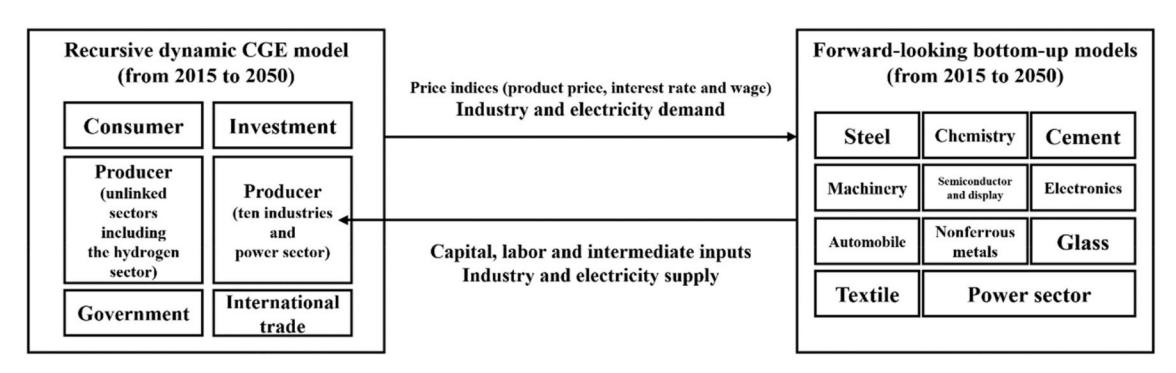
Fig. 1 — 전력 + 수소 + 제조 sector coupling 의 구조와 탄소세 효과.
요약
이 paper 는 구윤모 · Hwarang Lee 의 3 기 (2022-2026) 정점 작업 중 하나. A hybrid energy system model to evaluate the impact of climate policy on the manufacturing sector: Adoption of energy-efficient technologies and rebound effects (manufacturing 단독) + Economic impacts of carbon capture and storage on the steel industry: A hybrid energy system model incorporating technological change (CCS) + The impact of technology learning and spillovers between emission-intensive industries on climate policy performance based on an industrial energy system model (cross-industry) 의 통합 확장 — 3 부문 sector coupling.
방법론적 핵심은 3 부문 통합 hybrid 모형. (i) 전력 부문 — bottom-up 발전 mix 모형 (renewable + non-renewable + fossil + nuclear), 탄소세에 따른 mix 재편. (ii) 수소 부문 — 회색 (gray) 수소 (천연가스 reforming) + 녹색 (green) 수소 (전기분해) 의 생산 비용 + 배출 강도. (iii) 제조 부문 — 전기 + 수소 + fossil 의 대체 elasticity. Soft-link iterative 으로 3 부문 가격·수요·기술 mix 동시 수렴.
핵심 발견:
(i) 전력 mix 재편: BAU 에서 2050 재생 전력 50% 미만, CTAX5 에서 2045 cross-over, CTAX20 에서 2034 cross-over — 탄소세가 재생 시장 점유 변화 속도 결정. 2050 fossil 전력 15% (CTAX20).
(ii) 전력 가격 + 수요: CTAX20 시 2050 전력 가격 +18% (vs BAU). 가격 상승으로 전력 수요 감소 하지만 전기화 (manufacturing electrification) 의 attractive 가 증가 — fossil fuel 사용 감소 효과 가 electricity 사용 감소 효과 보다 큼.
(iii) Kink 효과: 새 기술 도입 시점에 전력 가격 + 수요 곡선이 kink — 마진 비용 변화의 비선형 시그널. 학습 곡선 + 기술 도입 임계점 의 동학적 효과.
(iv) 부문 간 의존성: 전력 부문이 충분히 decarbonized 안 되면 수소 + 제조 부문 전기화 의 환경 효과 미미. 즉 전력 decarbonization 이 precondition.
구윤모 의 연구 궤적 안에서 이 paper 는 3 기 hybrid 모형의 multi-sector 확장, chang-kibyeong-2025-unicon-net-zero (2025 UNICON 완전 통합) 의 직전 작업.
핵심 결과
| 시나리오 | 2050 재생 비중 | 2050 fossil 비중 | 2050 전력 부문 배출 | 전력 가격 (vs BAU) |
|---|---|---|---|---|
| BAU | < 50% | > 50% | (기준) | (기준) |
| CTAX5 | > 50% (2045) | < 50% | 감소 | +5-10% |
| CTAX20 | > 50% (2034) | 15% | 42 Mt CO2eq | +18% |
- 전력 가격 ↑ → 전력 수요 ↓, but electrification attractiveness ↑
- 새 기술 채택 시점에 가격·수요 kink — 학습 + 임계 효과
- 전력 decarbonization 이 manufacturing decarbonization 의 precondition
방법론 노트
hybrid-energy-system-model 의 3 부문 통합:
For each scenario (BAU, CTAX5, CTAX20):
  For year t = 2015, ..., 2050:
    1. Power: solve generation mix x_t* with carbon tax τ → electricity price p_e_t + emission intensity ε_e_t
    2. Hydrogen: solve gray/green mix with p_e_t, τ → hydrogen price p_h_t
    3. Manufacturing: solve fuel mix (electric, hydrogen, fossil) with p_e_t, p_h_t, τ
    4. Update electricity/hydrogen demand from (2), (3) → update (1)
    5. Converge if ∥demand changes∥ < ε
탄소세: 가 모든 부문의 fossil fuel 사용에 부과 → 전력 (직접) + 수소 (간접) + 제조 (직간접) 의 재생 대체 인센티브.
식별 가정: (i) 2015-2050 외삽의 기술 학습률, (ii) 3 부문의 soft-link 수렴, (iii) hydrogen 의 gray-green substitution elasticity 외생.
연구 계보
이 paper 는 (i) Davis et al. (2018) 의 sector coupling for decarbonization 정통, (ii) Robinius et al. (2017) 의 power-to-gas / power-to-X 라인, (iii) A hybrid energy system model to evaluate the impact of climate policy on the manufacturing sector: Adoption of energy-efficient technologies and rebound effects · Economic impacts of carbon capture and storage on the steel industry: A hybrid energy system model incorporating technological change 직접 선행 — 의 결합. 구윤모 의 연구 궤적 3 기 multi-sector hybrid 의 정점, chang-kibyeong-2025-unicon-net-zero 의 완전 통합 모형 (UNICON) 의 직전 단계.
See also
- 구윤모
- Hwarang Lee
- Jeongeun Lee
- hybrid-energy-system-model
- sector-coupling
- electrification
- 수소경제
- manufacturing-decarbonization
- energy-strategy-reviews
- A hybrid energy system model to evaluate the impact of climate policy on the manufacturing sector: Adoption of energy-efficient technologies and rebound effects
- Economic impacts of carbon capture and storage on the steel industry: A hybrid energy system model incorporating technological change
인접 그래프
- 인물 6
- 방법론 1
- 주제 2
- 수록처 1
- 논문 5
이 문서를 가리키는 페이지
논문 (5)
- A general equilibrium analysis of individual choice behavior on alternative fuel vehicles
- A hybrid energy system model to evaluate the impact of climate policy on the manufacturing sector: Adoption of energy-efficient technologies and rebound effects
- Economic impacts of carbon capture and storage on the steel industry: A hybrid energy system model incorporating technological change
- The Economic Impacts of Implementing Net Zero Policies in Korea: A Combined Top-Down and Bottom-Up Approach
- The impact of technology learning and spillovers between emission-intensive industries on climate policy performance based on an industrial energy system model