The Economic Impacts of Implementing Net Zero Policies in Korea: A Combined Top-Down and Bottom-Up Approach
Ki-Bok Chang, Sung Won Kang, Oh Sang Kwon, Seoungho Lee, Jeongeun Lee, 구윤모 (2025) · climate-change-economics 16(1):2440011 · DOI ↗
구윤모 의 2 기 + 3 기 모든 도구의 통합 정점 — UNICON (UNIfied Climate Options Nexus) 모형. Bottom-up 26 개 부문 + CGE 85 개 부문 + Hybrid SAM 의 완전 통합. PMP 기반 bottom-up 으로 기저년 재현, top-down CGE 와 hybrid SAM 으로 데이터 정합 보장. 결과: 탄소세 KRW 500,000/tCO2 (USD 400) 으로도 완전 net-zero 달성 불가능, 그러나 통합 모형이 CGE 단독 대비 더 큰 감축 + 더 작은 경제 위축 추정. 한국 2050 탄소중립 경로 의 정량 청사진.
- RQ: 한국 2050 net-zero 정책의 경제적 영향 은? top-down (CGE) + bottom-up 통합 모형이 단독 모형 대비 어떤 차이를 보이는가?
- 방법론: UNICON (UNIfied Climate Options Nexus) — hybrid-energy-system-model + positive-mathematical-programming (bottom-up) + 연산일반균형 모형 (top-down) + Hybrid SAM (마이크로 조화)
- 데이터: 한국 산업연관표 + 26 개 산업 부문 (bottom-up) + 85 개 산업 부문 (CGE) + 기저년 에너지 사용·배출 데이터
- 주요 발견: (1) 탄소세 KRW 500,000/tCO2 (USD 400) 으로도 net-zero 달성 불가 — 경제적 한계. (2) 통합 모형 > CGE 단독 — 통합 모형이 더 큰 감축량 + 더 작은 경제 위축. (3) PMP 가 기저년 재현 + 정책 시나리오 유연성 동시 확보. (4) 통합 모형이 CCS, 수소 환원 제철, 재생 발전 등 구체 감축 기술 의 단가·도입 시점을 명시적 모델링.
- 시사점: 탄소중립 탄소세 단독 불가능 — 기술 개발 + 보조금 결합 정책 필요. 통합 모형 (hybrid) 이 부문 단독 모형 대비 더 정확한 정책 평가. 한국 2050 net-zero 의 정량적 청사진 제공.
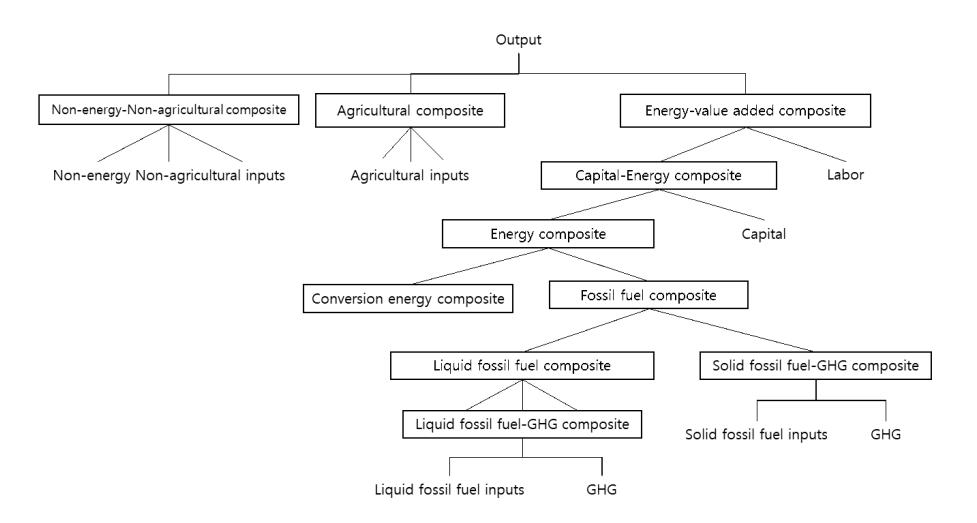
요약
이 paper 는 구윤모 의 3 기 (2022-2026) 정점 작업 — 2 기 + 3 기 모든 방법론 도구의 통합. A bottom-up model of industrial energy system with positive mathematical programming (PMP) + The differentiated impact of emissions trading system based on company size (CGE 분리 SAM) + A hybrid energy system model to evaluate the impact of climate policy on the manufacturing sector: Adoption of energy-efficient technologies and rebound effects (hybrid 모형) + Economic impacts of carbon capture and storage on the steel industry: A hybrid energy system model incorporating technological change (학습) + Effects of sector coupling on the decarbonization potential of the manufacturing sector—an integration of the power, hydrogen, and manufacturing sectors (sector coupling) 의 모든 통합 → UNICON.
방법론적 핵심은 Hybrid SAM (Social Accounting Matrix) 구축. 기존 hybrid 모형들은 부문 정의 차이 로 데이터 정합 이 문제 — bottom-up 의 26 부문이 CGE 의 85 부문에 어떻게 매핑 되는지 모호. 본 paper 는 element-level 마이크로 조화 — bottom-up 의 기저년 input 을 SAM 의 대응 account 에 정확히 매핑한 Hybrid SAM 구축. 데이터 일관성 보장 + 시나리오 시뮬레이션의 두 모형 결과 정합.
PMP 활용: positive-mathematical-programming 으로 기저년 코너해 회피 + 정책 변화 시 유연한 기술 선택. LP 대비 과잉특화 없는 현실적 기술 mix.
핵심 발견:
(i) 탄소세 KRW 500,000/tCO2 (USD 400) 으로도 net-zero 불가능: 즉 탄소세 단독 으로는 한계. 기술 개발 + 보조금 의 결합 필요. 일부 감축 기술 (CCS, 수소 환원 제철, 신재생) 은 고탄소세에서도 도입률 낮음 — 비용 자체 너무 높음.
(ii) 통합 모형 > CGE 단독: 같은 탄소세에서 통합 모형이 더 큰 감축 + 더 작은 경제 위축. 이유 — CGE 가 에너지 가격 변화 를 에너지 input 비율 변화 로 처리하는 반면, 통합 모형은 구체 감축 기술 도입 을 내생적 으로 모델링. 즉 CGE 단독은 기술 가능성 무시 로 경제 영향 과대, 감축량 과소 추정.
(iii) PMP 의 기저년 재현 + 시나리오 유연성: LP 의 주관적 제약 제거 + 정책 변화 시 부드러운 기술 대체 — 둘 다 동시 만족.
(iv) CCS + 수소 환원 제철 + 재생: 통합 모형에서 각 기술의 단가 + 도입 시점 + 누적 도입 capacity 명시적 추적. 정책 함의 — 어느 기술이 어느 시기 에 어느 정도 보급되는지 구체 청사진.
구윤모 의 연구 궤적 안에서 이 paper 는 2 기 + 3 기 모든 방법론 도구의 통합 정점, 구윤모 연구 prepubertal 인생작 으로 평가될 수도. 한국 2050 net-zero 의 정량 청사진.
핵심 결과
| 항목 | 통합 모형 (UNICON) | CGE 단독 |
|---|---|---|
| 같은 탄소세 시 감축률 | 더 큼 | 작음 |
| 같은 탄소세 시 경제 위축 | 더 작음 | 큼 |
| 기저년 재현 | PMP 으로 자동 | 제약 필요 |
| 기술 도입 모델링 | 명시적 | 에너지 가격 변화로 간접 |
| 탄소세 | Net-zero 달성? |
|---|---|
| KRW 100,000/t (USD 80) | 불가능 |
| KRW 300,000/t (USD 240) | 불가능 |
| KRW 500,000/t (USD 400) | 불가능 |
- 탄소세 단독 한계 — 기술 개발 + 보조금 + 규제 결합 필요
- CCS, 수소 환원 제철, 신재생 등 구체 기술의 단가 + 도입 시점 추적
- 한국 2050 탄소중립 의 정량 청사진
방법론 노트
UNICON = Hybrid SAM + PMP bottom-up + CGE top-down + iterative soft-link:
1. Hybrid SAM 구축: bottom-up 의 26 부문 inputs → CGE 의 85 부문 accounts 매핑
2. PMP bottom-up: 기저년 재현하면서 기술 mix x_t* 산출 (PMP 의 internal solution)
3. CGE top-down: 부문별 가격·소득·수요 균형 → 거시 변수
4. Soft-link: bottom-up 의 기술 효율 변화 → CGE input, CGE 의 수요 변화 → bottom-up input
5. Iterate until convergence: ∥변수 변화∥ < ε
식별 가정: (i) Hybrid SAM 의 element-level 매핑 정확성, (ii) PMP 의 비선형 비용함수 calibration 정확, (iii) soft-link 의 수렴 보장.
연구 계보
이 paper 는 (i) Hourcade et al. (2006) 의 hybrid energy-economy model 정통, (ii) Bohringer & Rutherford (2009) 의 integration tools 라인, (iii) A bottom-up model of industrial energy system with positive mathematical programming · The differentiated impact of emissions trading system based on company size · A hybrid energy system model to evaluate the impact of climate policy on the manufacturing sector: Adoption of energy-efficient technologies and rebound effects · Economic impacts of carbon capture and storage on the steel industry: A hybrid energy system model incorporating technological change · Effects of sector coupling on the decarbonization potential of the manufacturing sector—an integration of the power, hydrogen, and manufacturing sectors 의 전체 시리즈 직접 선행 — 의 최종 통합. 구윤모 의 연구 궤적 2 기 + 3 기 모든 방법론 통합 정점.
See also
- 구윤모
- Ki-Bok Chang
- Jeongeun Lee
- hybrid-energy-system-model
- positive-mathematical-programming
- 연산일반균형 모형
- unicon
- net-zero
- carbon-neutrality
- climate-change-economics
- A bottom-up model of industrial energy system with positive mathematical programming
- The differentiated impact of emissions trading system based on company size
- A hybrid energy system model to evaluate the impact of climate policy on the manufacturing sector: Adoption of energy-efficient technologies and rebound effects
- Effects of sector coupling on the decarbonization potential of the manufacturing sector—an integration of the power, hydrogen, and manufacturing sectors
인접 그래프
- 인물 6
- 방법론 1
- 주제 1
- 수록처 1
- 논문 5