Strategic Management of Cloud Computing Services: Focusing on Consumer Adoption Behavior
Jungwoo Shin, Manseok Jo, 이종수, Daeho Lee (2014) · IEEE Transactions on Engineering Management 61(3):419-427 · DOI ↗
한국 일반 소비자의 cloud computing (IaaS) 채택 결정과 단말기 (desktop/laptop/netbook/tablet/smartphone) 와 cloud type 의 보완·대체 관계 를 2-stage 모형으로 분석. Bayesian 혼합 로짓 으로 6 attribute (service fee, provider, storage capacity, max file size, sync devices, stability) 의 효용 + MWTP 추정 → multivariate-probit-model 으로 cloud type × terminal device 결합 결정. Service fee 가 평균 상대 중요도 46.36% 로 압도적, stability 13.35%, storage capacity 16.17%. Type 3 cloud (1 TB 대용량) ↔ laptop 양의 covariance, desktop 은 모든 mobile 단말기와 음의 covariance — 모바일 단말기일수록 대용량 cloud 가 보완재. 400 응답자 conjoint survey (2011.4-5).
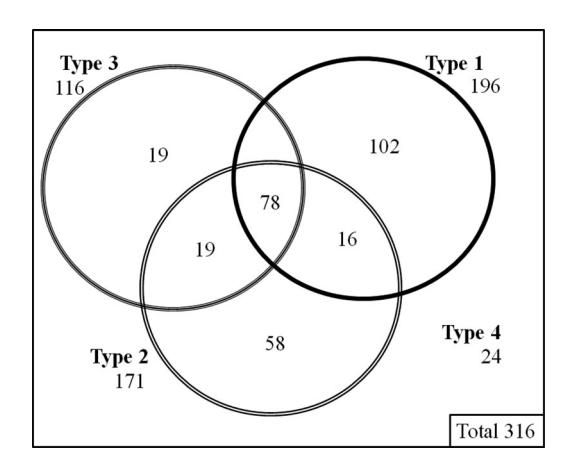
- RQ: (i) 한국 IaaS 의 6 핵심 attribute (service fee, provider, storage capacity, max file size, sync count, stability) 중 상대 중요도와 MWTP 는? (ii) Cloud type (Type 1 free / Type 2 stable / Type 3 capacity / Type 4 other) 과 5 단말기 (desktop/laptop/netbook/tablet/smartphone) 의 동시 보유 패턴 은 어떤 보완·대체 구조를 보이는가? (iii) Sociodemographic (gender, age, education, income) 의 modulation 은?
- 방법론: Stage 1 — Bayesian 혼합 로짓 (random coefficient ). Stage 2 — multivariate-probit-model (multivariate normal disturbance ). 베이지안 추정 + 깁스 샘플링 (20,000 draws, burn-in 10,000, every 10th retained = 1,000 posterior draws). 컨조인트 분석 (4 sets × 4 cards fractional factorial, 432 → 16 alternatives).
- 데이터: 한국 일반 소비자 400 명 (2011.4-5, purposive quota sampling, 20~60 세, 49.5% 남성). Attribute levels: service fee (Free/0.5/1/2 만원), provider (ISP/WPS), capacity (20/300/1,000 GB), max file (0.5/2/4 GB), sync (2/3/5 devices), stability (0/1/2% 단절률). 추가 terminal device 선택 (desktop, laptop, netbook, tablet PC, smartphone) 동시 측정.
- 주요 발견: (1) 상대 중요도 — service fee 46.36% (최고), storage capacity 16.17%, stability 13.35%, max file size 12.66%, provider 6.10%, sync count 5.37%. (2) MWTP: 안정성 +1% 향상 KRW 2,153, storage +100 GB KRW 892, 파일사이즈 +1 GB KRW 923, provider ISP 가입 KRW 832. (3) Likelihood ratio index 0.231 (log-likelihood -2218 → -1706). (4) Cloud-device covariance: Type 3 (1 TB) ↔ laptop +0.129† 양, ↔ desktop -0.112† 음 — 대용량 cloud 가 portable device 의 storage 한계를 보완. (5) Type 1 (free) ↔ smartphone +0.169* — 모바일 사용자는 가격 민감. (6) Desktop 은 모든 mobile (laptop -0.322**, netbook -0.460**, smartphone -0.517**) 와 음의 covariance — 단말기 분리 사용 패턴. (7) Sociodemographic: 젊고 고소득 → Type 3 cloud 선호 (-0.015**, +0.003**), 저학력 → Type 4 -0.339**.
- 시사점: IaaS provider 전략 — (a) 가격이 must-be attribute (46.36%), 무료/저가 진입이 채택의 결정적 lever. (b) 대용량 cloud 는 laptop · netbook 사용자 의 storage 보완재로 marketing, premium pricing 가능. (c) 모바일 통신사는 smartphone bundle 형 저가 cloud 가 경쟁력. (d) Bowling-alley 전략 (대용량 cloud + 단말기 bundle) 으로 young, high-income segment 공략. SaaS 시장으로의 확장이 다음 연구 과제.
요약
이 paper 는 이종수 의 ICT-도메인 라인 위에서 cloud computing 이라는 2010 년대 초 신흥 시장 의 소비자 채택 을 conjoint + Bayesian DCM 으로 분석한 first 작업이다. 기존 cloud 연구 (Marston et al. 2011, Kushida et al. 2011, Etro 2009 등) 는 managerial overview 또는 qualitative analysis 에 머물렀고, Behrend et al. (2011) 의 technology acceptance model 은 perception 만 다뤘으며, Anadasivam (2010) 의 conjoint 는 terminal device 결합 을 누락했다. 본 paper 는 (i) attribute 우선순위 + MWTP, (ii) cloud × terminal device 의 결합 covariance, (iii) sociodemographic modulation 의 셋을 동시 추정해 cloud provider 의 전략 의사결정에 정량 input 을 제공한다.
방법론은 2-stage Bayesian discrete-choice framework. (i) Stage 1 — 혼합 로짓 의 random coefficient 가 IIA 회피 + heterogeneity 흡수. Utility 에서 6 attribute 의 mean coefficient 와 variance 추정. (ii) Stage 2 — multivariate-probit-model (Edwards-Allenby 2003, Allenby-Rossi 1998) 의 multivariate normal disturbance 가 4 cloud type + 5 terminal device 의 동시 선택 covariance 식별. covariance > 0 이면 보완 (동시 구매), < 0 이면 대체 (one-or-other). Bayesian-MCMC 깁스 샘플링 (20,000 draws, burn-in 10,000) 으로 mixed-logit 의 complex multivariate density 적분 + MVP 의 -variate normal CDF 적분 회피.
핵심 발견은 3 layer 의 정량적 정합성. (1) Attribute 우선순위: service fee 가 압도적 (46.36%), 다음이 storage capacity (16.17%), stability (13.35%), file size (12.66%) — cloud 는 가격 민감 commodity 시장이며 stability, capacity 가 차별화 lever. (2) MWTP 의 경제적 해석: 1% stability 개선이 월 KRW 2,153 의 추가 지불의향 — Durkee (2010) 의 고가용성은 비싸다 명제와 정합 (100% 접근 시 cost 가 geometric 으로 증가). (3) Cloud-device covariance 의 보완 구조: Type 3 (1 TB) ↔ laptop +0.129 (대용량이 portable device 의 내장 storage 부족 보완), Type 3 ↔ desktop -0.112 (desktop 은 자체 대용량 → 외부 cloud 불필요), Type 1 (free) ↔ smartphone +0.169 (모바일 사용자는 가격 민감). 정책 함의는 cloud provider 가 모바일 device 의 storage 한계 를 premium cloud capacity service 로 변환 가능, 통신사는 저가 cloud + smartphone 번들 이 경쟁력. Sociodemographic modulation: 젊고 고소득 → Type 3 cloud (age -0.015**, income +0.003**), 저학력 → Type 4 (-0.339**) — 고학력은 attribute 식별 능력 으로 specialized cloud 선택. 한계: (i) SaaS·PaaS 미포함 — IaaS 만 한정, (ii) 2011 한국 시점 (smartphone 보급 초기, tablet 시장 작음), (iii) brand loyalty · 과거 사용 경험 미통제, (iv) cloud × device 가 full simultaneous 가 아닌 2-stage 추정 — 일관 coefficient 보장 못함 (Conclusion 에서 integrated model 제안).
핵심 결과
Mixed logit 추정 (Table III) — 6 attribute 의 mean coefficient, 상대 중요도, MWTP
| Attribute | Mean | 상대 중요도 (%) | Median MWTP |
|---|---|---|---|
| Service Fee (KRW 만원) | -6.074** | 46.36 | — |
| Storage Capacity | +0.582** | 16.17 | KRW 892 / 100 GB |
| Stability (실패율 %) | -1.323** | 13.35 | KRW 2,153 / 1% 개선 |
| Max File Size | +0.604** | 12.66 | KRW 923 / 1 GB |
| Service Provider (ISP=1) | +0.458** | 6.10 | KRW 832 |
| Sync Device Count | -0.061 (n.s.) | 5.37 | KRW 110 |
Log-likelihood: -2218.07 (zero) → -1706.21 (convergence), LR index 0.231.
MVP 분산-공분산 (Table V) — cloud-device 보완 구조
| 관계 | Covariance | 해석 |
|---|---|---|
| Type 3 (1 TB) ↔ Laptop | +0.129† | 보완 (대용량 + portable) |
| Type 3 (1 TB) ↔ Desktop | -0.112† | 대체 |
| Type 1 (free) ↔ Smartphone | +0.169* | 보완 (모바일 가격 민감) |
| Desktop ↔ Smartphone | -0.517** | 대체 (단말기 분리) |
| Desktop ↔ Netbook | -0.460** | 대체 |
| Desktop ↔ Laptop | -0.322** | 대체 |
| Smartphone ↔ Netbook | +0.293* | 보완 (mobile 사용자) |
방법론 노트
혼합 로짓 의 random coefficient 가 consumer preference heterogeneity 를 직접 모델링 — 단순 multinomial logit (homogeneous ) 의 IIA 가정과 representative agent 가정을 동시 완화. multivariate-probit-model 은 동시 다중 선택 (cloud 1 개 + device 1 개 이상) 의 결합 결정을 IIA 제약 없이 추정 — 보완·대체 패턴이 covariance 에 직접 readable.
핵심 식. Mixed logit utility:
여기서 는 type-1 extreme value. 개별 i 의 likelihood:
MWTP for attribute :
MVP utility (terminal device ):
with binary . 선택확률:
식별: (i) Bayesian 깁스 샘플링 으로 MLE 의 initial-value, global-optimum 문제 회피, (ii) 1,000 retained posterior draws 가 finite-sample bias 보정, (iii) MVP 의 비대각 원소가 covariance 식별 (대각 normalized to 1 for identification).
연구 계보
직접 predecessor 는 (i) McFadden (1974, Frontiers of Econometrics) 의 conditional logit 정통, (ii) Train (2003) 의 simulation discrete choice + mixed logit, (iii) Edwards & Allenby (2003, JMR), Allenby & Rossi (1998, J. Econometrics) 의 multivariate probit + Bayesian 결합, (iv) Huber & Train (2001) 의 classical vs Bayesian individual partworth 동치성, (v) Green & Srinivasan (1978, J. Consumer Research) 의 컨조인트 분석 출발 paper. Cloud-specific 선행은 Marston et al. (2011, Decision Support Systems) 의 managerial framework, Behrend et al. (2011) 의 TAM, Bhardwaj et al. (2010) 의 IaaS price elasticity. 이종수 author page 의 ICT consumer preference 라인 — Impact of Electric Vehicles on Existing Car Usage: A Mixed Multiple Discrete-Continuous Extreme Value Model Approach (자매, 같은 1 저자, 동일 Bayesian mixed framework 의 자동차 도메인 적용) 과 sibling. Daeho Lee (KISDI) 와의 협업은 ICT 정책 응용 라인의 institutional anchor. 본 paper 가 적용한 Bayesian mixed logit + MVP 의 2-stage joint estimation 패턴은 이후 이종수 라인의 RPS · 5G · smart grid 채택 분석에 반복 사용된다.
See also
- 이종수
- Jungwoo Shin
- Daeho Lee
- 혼합 로짓
- multivariate-probit-model
- 베이지안 추정
- 컨조인트 분석
- 클라우드 컴퓨팅
- iaas
- Impact of Electric Vehicles on Existing Car Usage: A Mixed Multiple Discrete-Continuous Extreme Value Model Approach
- IEEE Transactions on Engineering Management
인접 그래프
- 인물 4
- 방법론 4
- 주제 1
- 수록처 1
- 분류 2
- 논문 3