Myanmar's decision-making structure for the introduction of renewable energy
Surim Oh, Soohyeon Kim, Inkyung Cho, Zin Hpyo Kyaw, 허은녕 (2023) · Journal of Cleaner Production 413:137254 · DOI ↗
미얀마 (전력 demand 7%/yr 증가; 시민 절반 전력 접근 불가; 수력 발전 50% + 화석연료 30%; 27 GW solar 잠재력; Germanwatch 2021 의 2000–2019 climate risk index 최상위) 정부 관료의 재생에너지 도입 의사결정 구조를 2단계 설문 (basic survey 26명 + in-depth AHP survey 53명) 으로 분석. 순서형 로짓·프로빗 으로 8 condition perception 의 willingness 영향 추정, 계층분석법(AHP) 로 4 upper + 14 lower decision-making factor weight 도출. 결정자 84% 가 도입 찬성, 국제관계 condition 부정 인식 87.5% (군부 쿠데타 후 제재 맥락); 의사결정에서 환경 > 경제 > 사회정치 > 기술 순. climate change mitigation, renewable potential, introduction cost 가 세부 1위.
- RQ: 미얀마 정책 결정자들의 재생에너지 도입에 대한 perception 과 의사결정 구조의 핵심 요인은 무엇인가? 정책 stance 와 결정구조가 일관적인가?
- 방법론: 순서형 로짓·프로빗, 계층분석법(AHP) (consistency 검증 후 17/53 제외, 36명 분석)
- 데이터: Ministry of Natural Resources and Environmental Conservation + Ministry of Electricity and Energy + MOGE + 기타 (대학, 국영기업) 관료 — basic survey 26명, in-depth survey 53명. 2017.6–2018.9 e-mail + Google Survey.
- 주요 발견: Willingness 84% 찬성 / 8% 중립 / 8% 반대. Basic survey + ordered logit-probit — international relations 부정 87.5%, coefficient -1.330* (odds ratio 3.781) 가장 강함. 환경 conditions positive 62.7%, coefficient 0.650*** (양 — 환경 개선 자체가 의도). Inherent risks positive 71.2%, coefficient 1.157*** (양). Social 부정 14.9%, coefficient -0.425** (odds 1.530). AHP upper weight — ENVR 0.2704 > ECON 0.2664 > POLI 0.2356 > TECH 0.2276. Lower weight 1위 — 환경: climate mitigation 0.2614; 경제: introduction cost 0.3851; 정치: social acceptance 0.2915; 기술: technical stability 0.3628.
- 시사점: (i) 정책 stance (재생 우호 + 외부 자금 의존) 와 결정구조가 일관적. (ii) 국제 협력 채널 강화가 lever — 2021 군부 쿠데타 후 정치 불안정 해소가 외국 투자 유치의 전제. (iii) mini-grid (소규모 분산 solar/풍력/수력) 가 site restriction · 자연재해 영향 ·rural electrification 동시 해결.
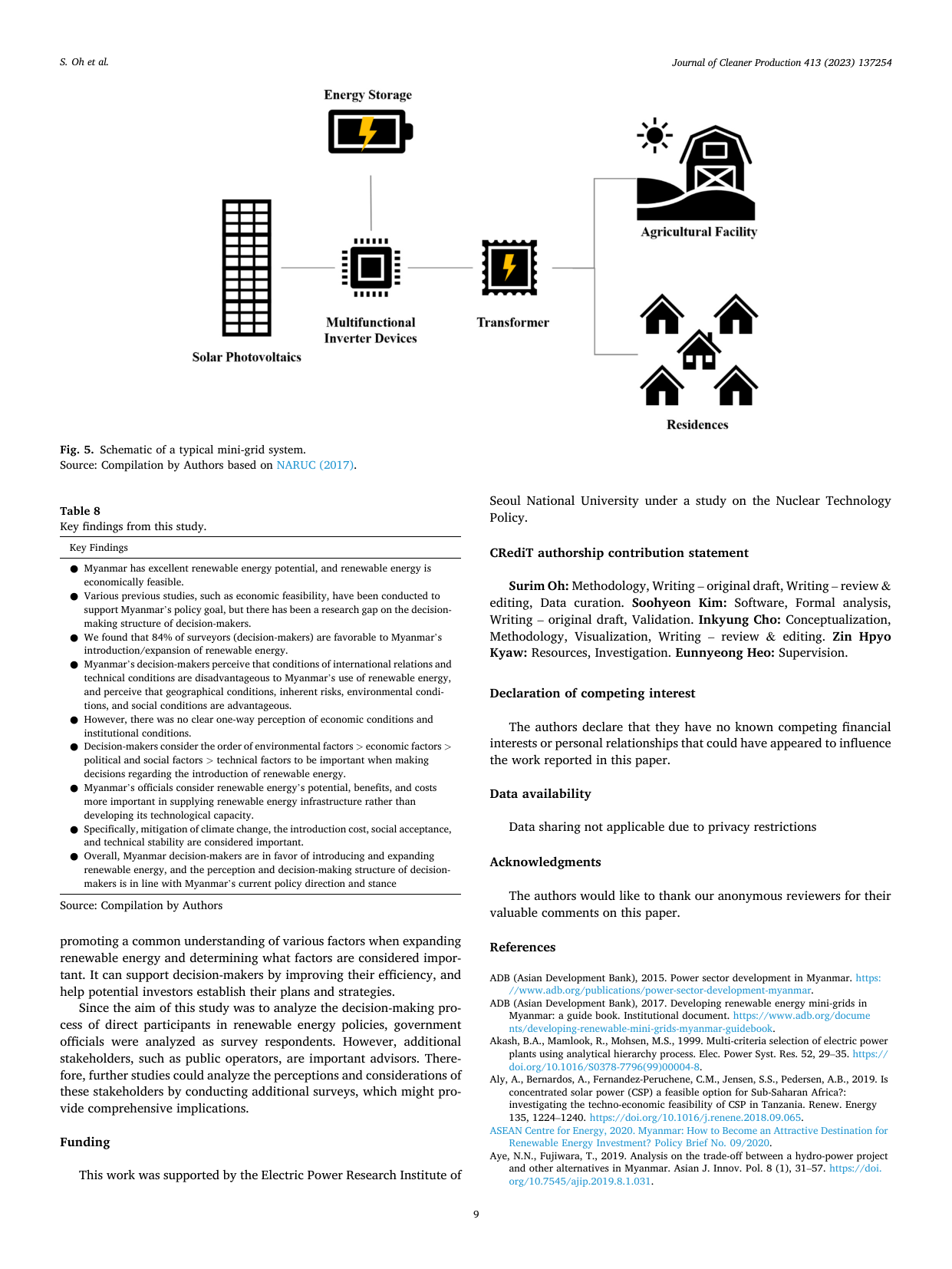
Fig. 5. Mini-grid 시스템 schematic — 태양광 module + ESS + 분산 grid. 모듈 단위로 install·move·확장 용이, 자연재해 후 복구 쉬움.
요약
미얀마 NDC (2021) 는 2018 baseline 대비 GHG 40% 감축, 2030 가구 전력 접근 100% (현재 절반 미만) 를 목표로 mini-grid 기반 재생에너지 확대를 핵심 정책으로 채택. ASEAN 중 hydropower 활용도 최고 (전체 발전의 50%+) 이나 태양광 잠재력 27 GW 거의 미활용; biomass (firewood, charcoal) 의 rural 의존이 deforestation + 호흡기 질환 (5세 미만 79% 가 가정 대기오염 노출, Rana et al. 2021) 원인. 2019년 미얀마는 대기오염 사망 45,000명, Yangon PM2.5 가 WHO 권고치 4배 (World Bank/WHO 2019). Germanwatch (2021) 의 2000–2019 climate risk index 최상위 3국 (Puerto Rico, Haiti 와 동급). 본 paper 는 이러한 전력·기후·환경 위기 + 외국 투자 의존 + 2021 군부 쿠데타 후 정치 instability 라는 복합 맥락에서 정책결정자의 의사결정 구조를 정량화. 허은녕 · Surim Oh · Soohyeon Kim · Inkyung Cho 라인의 개도국 시리즈 (인도네시아 → 캄보디아 → 미얀마) 의 세 번째 paper.
설문 — basic survey 26명, in-depth AHP survey 53명 (consistency 검증 후 36명 분석). Basic 은 8 category (technical / inherent risk / economic / international / geographical / environmental / social / institutional) × 여러 component 의 5-point Likert (positive ~ negative). AHP 는 4 upper (TECH/ECON/ENVR/POLI) + 14 lower factor pairwise comparison (5-point scale). 순서형 로짓·프로빗 의 logit·probit 둘 다 추정해 robustness. 계층분석법(AHP) 는 Saaty 1980 의 hierarchy + consistency index/ratio (CI/CR < 0.1) 검증.
결과 1 (willingness): 84% 찬성 — 미얀마 정책결정자가 재생 도입에 가장 우호적인 그룹 (캄보디아 92% 보다 약간 낮음, 인도네시아 nuclear 55% 와는 비교 불가). 결과 2 (basic survey + logit-probit): international relations conditions 가 가장 negative (87.5% 부정 응답 — 외국 투자·지원 부족) + coefficient -1.330* (odds ratio 3.781 — 개선되면 willingness 가 3.8 배 증가) — 즉 국제 협력의 부재가 dominant barrier 이자 동시에 가장 강력한 lever. Technical conditions 도 negative 74.9% (자체 기술 부족, 선진국 의존). 한편 inherent risks 의 perception 은 positive 71.2% (재생은 화석연료보다 안전) + coefficient 1.157*** (positive — 재생 risk 가 negligible 으로 인식되며 willingness 와 직접 정비례). 환경 conditions positive 62.7% + coefficient 0.650*** (positive — 환경 개선 자체가 도입의 목표). Social conditions coefficient -0.425** (음, odds 1.530 — social benefit 증가가 willingness 증가 lever). 결과 3 (AHP): upper factor — ENVR 0.2704 > ECON 0.2664 > POLI 0.2356 > TECH 0.2276. 즉 재생의 환경적 benefit + cost 가 기술 capacity 보다 우선. Lower factor 1위 — climate mitigation 0.2614 (ENVR) + introduction cost 0.3851 (ECON) + social acceptance 0.2915 (POLI) + technical stability 0.3628 (TECH).
함의는 정책 stance 와 결정구조의 일관성. 미얀마는 cost-effective project 설계 + 외국 fund (NDC, climate fund) 접근 + 정치 instability 해소 + biomass 의존 축소 + mini-grid 확대 의 5축 정책이 결정자의 의사결정 우선순위와 직접 부합. 군부 쿠데타 후 international relations 가 더 악화된 맥락에서 외국 투자 유치는 정치 안정성 우선 의 전제 필요. mini-grid 는 site 확보 어려움 + 자연재해 영향 + rural 전력 접근 + 모듈 단위 expansion 의 4 가지를 동시에 해결. 본 paper 는 시리즈의 cross-country 비교 자료를 완성하며, IRENA / ADB / 한국 ODA 의 동남아 정책 패키지 차별화에 기여.
핵심 결과
Basic survey + ordered logit-probit (Table 6):
| Condition | Pos% | Neg% | Coefficient (SE) | Odds ratio |
|---|---|---|---|---|
| Technical | 9.6 | 74.9 | -0.034 (0.258) | 1.035 |
| Inherent Risks | 71.2 | 21.2 | 1.157*** (0.393) | 0.314 |
| Economic | 31.5 | 37.6 | -0.084 (0.107) | 1.088 |
| International Relations | 4.2 | 87.5 | -1.330* (0.806) | 3.781 |
| Geographical | 73.1 | 7.7 | 0.019 (0.269) | 0.981 |
| Environmental | 62.7 | 14.7 | 0.650*** (0.195) | 0.522 |
| Social | 43.2 | 14.9 | -0.425** (0.187) | 1.530 |
| Institutional | 24.6 | 46.1 | -0.215 (0.179) | 1.240 |
* p<0.1, ** p<0.05, *** p<0.01. Willingness 84% / 8% / 8%.
AHP upper + 1위 lower factor (Table 7):
| Upper factor | Weight | Lower 1위 | Weight |
|---|---|---|---|
| Environmental | 0.2704 | Climate mitigation | 0.2614 |
| Economic | 0.2664 | Introduction cost | 0.3851 |
| Political/social | 0.2356 | Social acceptance | 0.2915 |
| Technical | 0.2276 | Technical stability | 0.3628 |
Respondent affiliation (Table 4) — Ministry of Electricity and Energy + MOGE 가 basic 14/26, in-depth 24/53 으로 dominant.
방법론 노트
순서형 로짓·프로빗 (Cho et al. 2021 의 방식과 동일) — 5-point Likert ordinal response 의 latent variable 모형:
odds ratio — condition 1단위 개선 시 willingness odds 증가 배수. logit (logistic CDF) + probit (normal CDF) 둘 다 추정.
계층분석법(AHP) — 4 upper × 3~4 lower factor 2단계 hierarchy 의 pairwise comparison matrix . weight vector 는 의 eigenvector 로 도출. consistency index , consistency ratio 가 0.1 미만이면 응답 채택 (Saaty 1980, Wind-Saaty 1980). 53명 중 17명 inconsistency 로 제외, 36명 분석.
설문 design — basic survey 의 draft 는 Hämäläinen (1990), Heo et al. (2010), Erol-Kılkış (2012) 기반, in-depth survey 는 Cho et al. (2021) + Kim et al. (2022) 기반, 한국·미얀마 전문가 검토로 revise. 미얀마 IEPP (International Energy Policy Program of Seoul National University) 참여 관료 자문.
연구 계보
Determinants of nuclear power expansion in Indonesia (Cho et al. 2021, 인도네시아 nuclear) 와 An analysis of Cambodia's policy-maker's acceptance of renewable and nuclear energy (Kim et al. 2022, 캄보디아 renewable + nuclear) 의 직접적 자매 paper — 동일 framework (8-condition basic + 4-main 14-sub AHP) 을 동남아 3국 cross-country 비교에 완성. 미얀마 선행 연구는 모두 프로젝트·기술의 feasibility 에 집중 — ADB 2017 의 mini-grid pilot (Magway/Mandalay/Sagaing), Soe et al. 2015 (소형 풍력 경제성), Naing et al. 2019 (floating PV-hybrid 샨 주), Win et al. 2017 (solar-diesel hybrid 비용), Aye-Fujiwara 2019 (재생 최적 portfolio), JFE Engineering 2018 (waste-to-energy 양곤), Deloitte 2015 (전력 정책 financial), Numata et al. 2020 (AHP barrier), Hlaing-Dargusch 2020 (challenge 식별). 본 paper 는 이들과 달리 decision-maker 의 perception 과 결정구조 를 직접 분석. Stakeholder decision-making 라인 — Hirmer et al. 2021 (시에라리온 RACI 차트), Giordano et al. 2020, Raghunathan 1999, Parnell et al. 2011. Renewable barrier 라인 — Reddy-Painuly 2004 (인도), Richards et al. 2012 (캐나다 풍력), Poortinga et al. 2006 (영국). 한국 renewable evaluation framework 라인 — Heo et al. (2010) fuzzy AHP 가 본 시리즈의 4-main 14-sub 구조의 직접적 토대. 허은녕 의 3기 (2018~2024) 개도국 에너지 정책 시리즈의 완결.
See also
- Determinants of nuclear power expansion in Indonesia
- An analysis of Cambodia's policy-maker's acceptance of renewable and nuclear energy
- 계층분석법(AHP)
- 순서형 로짓·프로빗
- 개도국 에너지 정책
- 재생에너지 정책
- Surim Oh
- 허은녕
- Journal of Cleaner Production
인접 그래프
- 인물 5
- 방법론 2
- 주제 2
- 수록처 1
- 분류 1
- 논문 2