War, Peace and Economic Growth: The Phoenix Factor Reexamined
Tai-Yoo Kim, Gicheol Jeong, 이종수 (2014) · springer-book-chapter Ch. 8 · DOI ↗
전쟁이 전후 경제에 부정적이라는 War Destruction view 와 긍정적이라는 War Construction view 의 오랜 대립을 기술·산업 생산 역량 누적 이라는 제3의 설명으로 재해석. WWII 참전 20 개국 1950–1960 패널을 Barro 성장회귀 + SUR 로 분석해, 전쟁 중 누적된 industrial powerhouse 지위가 전후 1 인당 GDP 성장률을 유의하게 끌어올림을 확인 (계수 0.014–0.019, t≈5).
- RQ: 전쟁 중 누적된 기술·산업 생산 역량은 전후 경제 성장에 유의한 영향을 미치는가? 전쟁의 파괴 (사상자) 자체는 어떻게 작용하는가?
- 방법론: barro-growth-regression, 외견상 무관 회귀, 패널 데이터 분석
- 데이터: WWII 참전 20 개국, 1950–1960 (5 년 2 기간 패널), Penn World Table 5.6 + Barro–Lee 2010 교육연수 + Clodfelter 2002 사상자 + Mitchell 1980 전력·철광 생산
- 주요 발견: Industrial Powerhouse 더미 계수 0.0143 (Model 1) / 0.0190 (Model 2), t-통계량 ≈ 5.0–5.3, p<0.001. TDP·BDP (인구 대비 사상자) 도 양 (+0.0009, t≈7–10) — 파괴 자체보다 어떤 역량 위에서 파괴가 일어났는가 가 회복 속도를 결정.
- 시사점: Phoenix Factor 의 원인은 정치 구조 파괴 (Olson 1982) 도 자본 갱신 (Kugler–Arbetman 1989) 도 아닌, 전시 동원으로 누적된 기술·산업 생산 역량. 지식기반사회의 R&D 집중 + 국제 분업 이 전쟁 없는 phoenix 를 가능하게 한다.
요약
전후 경제 성장에 대한 두 전통은 정반대 결론을 낸다. Thorp (1941), Wright (1943), Higgs (2004) 의 War Destruction view 는 전시 자원 파괴·정부지출 distortion·민간 자본 위축으로 인한 부정적 효과를 강조한 반면, Organski–Kugler (1977), Olson (1982), Kugler–Arbetman (1989) 의 War Construction view 는 정치 구조 해체나 신기술 자본재 도입으로 인한 phoenix-like 회복을 주장했다. 두 견해 모두 실증 결과가 혼재해 어떤 조건에서 회복이 일어나는가 를 식별하지 못했다. 본 chapter 는 Tai-Yoo Kim · Gicheol Jeong · 이종수 가 이 미해결 긴장을 기술·산업 생산 역량 누적 이라는 제3 변수로 묶어 푼다.
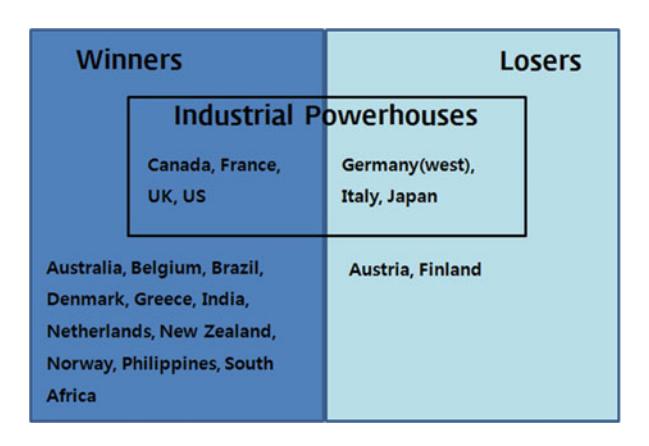
분석은 WWII 참전국 (공산화 국가 제외) 20 개국 1950–1960 패널. 표본은 세 층으로 분할된다 — Actors (참전 여부), Winners/Losers (영토 보존 기준), Industrial Powerhouses (1936–1945 평균 전력 ≥ 10,000 GWh + 철광 ≥ 200 만 톤). 종속변수는 1950–1955 · 1955–1960 두 5 년 기간의 1 인당 실질 GDP 성장률. Barro 성장회귀의 표준 변수 (초기 GDP, I/Y, G/Y, 평균 중등 교육 연수) 에 Industrial Powerhouse 더미와 전쟁 강도 변수 (TDP = 인구 대비 총 군사 사망, BDP = 인구 대비 전투 사망) 를 추가하고 외견상 무관 회귀 (Barro–Lee 1994 와 동일) 로 추정. Industrial Powerhouse 계수는 두 모델 모두 0.014–0.019 로 양·유의 (t≈5, p<0.001), 사상자 계수도 양·유의. 어떤 국가가 더 잘 회복했는가는 전시 동원의 양과 그 동원이 만든 산업·기술 base 의 두께였다.
논의 절은 분석을 accelerating society 이론 라인 — Tai-Yoo Kim 의 KHU 1992 박사논문 이후 일관된 — 으로 묶어 마무리한다. 농업 사회는 토지·노동 한계 때문에 양의 합 게임이 불가능해 전쟁이 negative-sum 이지만, 산업 사회는 expansive reproduction 으로 양의 합이 가능했고, 지식기반사회는 R&D 와 국제 분업으로 자원 갈등 자체를 우회할 수 있다는 규범적 주장. Phoenix Factor 의 정확한 mechanism 식별은, 더 이상 phoenix 를 불태우지 않고 성장을 얻는 길을 가리키는 도구다. 본 paper 는 동 시리즈 (Decelerating Agricultural Society, Gene of Accelerating Industrial Society 등) 의 전쟁 측면을 책임지는 chapter.
핵심 결과
| 변수 | Model 1 계수 (t) | Model 2 계수 (t) |
|---|---|---|
| Industrial Powerhouse 더미 | 0.0143 (4.99) | 0.0190 (5.33) |
| TDP (인구 대비 총 사망) | 0.0009 (9.76) | — |
| BDP (인구 대비 전투 사망) | — | 0.0009 (7.35) |
| I/Y (투자/GDP) | 0.0005 (1.72) | 0.0007 (1.73) |
| G/Y (정부소비/GDP) | 0.0009 (1.88) | 0.0010 (1.61) |
| SST (평균 중등 교육연수) | 0.0074 (3.58) | 0.0060 (2.31) |
| Ln(GDP) 초기 | 0.0111 (4.12) | 0.0151 (4.59) |
| R² (1950–1955 / 1955–1960) | 0.914 / 0.478 | 0.896 / 0.339 |
표본 N=20, 두 5 년 기간 SUR 시스템.
방법론 노트
기본 회귀는 Barro 의 cross-country 성장 식:
여기서 는 국의 시점 1 인당 GDP, 는 Solow 결정요인 (자본·교육), 는 그 외 변수. 본 chapter 는 WWII 전후 두 5 년 구간을 보기 위해 다음 형태로 재구성한다:
는 핵심 관심 벡터 — Industrial Powerhouse 더미 (1936–1945 전력·철광 생산 기준) 와 전쟁 강도 (TDP, BDP). 식별 전략은 기술 누적의 proxy 를 전쟁 사상자 (파괴 강도) 와 분리해 동시에 회귀 — 두 변수가 같은 방향으로 양이라는 결과는 “파괴가 모든 것을 설명한다” 가설을 기각한다. 추정은 Barro–Lee 1994 의 외견상 무관 회귀 로 두 기간을 system 으로 묶어 효율성 확보.
연구 계보
Tai-Yoo Kim 의 accelerating society 시리즈 (Springer, 2014) 의 8 장. 시리즈 자매 chapter (Accelerating Economic Growth in Industrial Societies: The Process of Expansive Reproduction, Determinants of Economic Divergence Among Accelerating Societies) 와 expansive reproduction 의 일관된 라인 — 농업 사회는 deceleration, 산업 사회는 acceleration, 지식기반사회는 더 빠른 acceleration. 직접 선행 작업은 Organski–Kugler (1977) 의 phoenix factor 정의, Olson (1982) 의 정치 구조 파괴 가설, Kugler–Arbetman (1989) 의 자본 갱신 가설. 방법론적 기반은 Barro–Lee (1994), Koubi (2005), Kang–Meernik (2005) 의 전쟁·성장 패널 회귀. TEMEP 내부 anchor 로는 이종수 의 외견상 무관 회귀 · 산업분석 패널 회귀 라인 (2000 년대 초반 이후) 이 공저자로서 econometric 기여를 담당했다.
See also
인접 그래프
- 인물 3
- 방법론 2
- 주제 1
- 수록처 1
- 분류 1
- 논문 3