Productivity dynamics and the cleansing effect of two recessions: evidence from the manufacturing sector in Korea
Hun Jun Lee, 이정동, Chulwoo Baek (2017) · Pacific Economic Review 22:677-701 · DOI ↗
Schumpeter (1934, 1954) 의 creative destruction 명제 — 침체기에 비생산적 firm 이 exit 하고 자원이 생산적 firm 에게 reallocation 되는 cleansing effect — 가 한국 1997 외환위기와 2008 글로벌 금융위기 두 침체에서 모두 작동했는가. 1993-2013 광공업 plant 978,321 obs panel 위에서 chained multilateral TFP + Griliches-Regev 분해 + Cox proportional hazard 로 검증. 1997 위기엔 cleansing 효과 없음 (exit effect 양의 부호, 생산적 plant 가 오히려 exit), 2008 위기엔 cleansing 효과 있음 (exit effect 음의 부호). 차이는 1997 이후 financial supervisory 정비와 zombie firm 청산 mechanism 의 작동.
- RQ: 한국의 두 침체 (1997 Asian financial crisis, 2008 global financial crisis) 에서 cleansing effect (= 비생산적 plant 가 exit 하고 자원이 생산적 plant 로 reallocation 되어 aggregate TFP 가 향상되는 효과) 가 실제로 작동했는가, 두 위기 사이의 차이는 무엇이 결정했는가.
- 방법론: 총요소생산성, 연쇄 다국간 지수, 생산성 분해 (Griliches-Regev), Cox 비례 hazard 모형
- 데이터: 한국 통계청 광공업 조사 plant-level panel, 종업원 10 인 이상, 1993-2013 (21 년), N=978,321 plant-year observation.
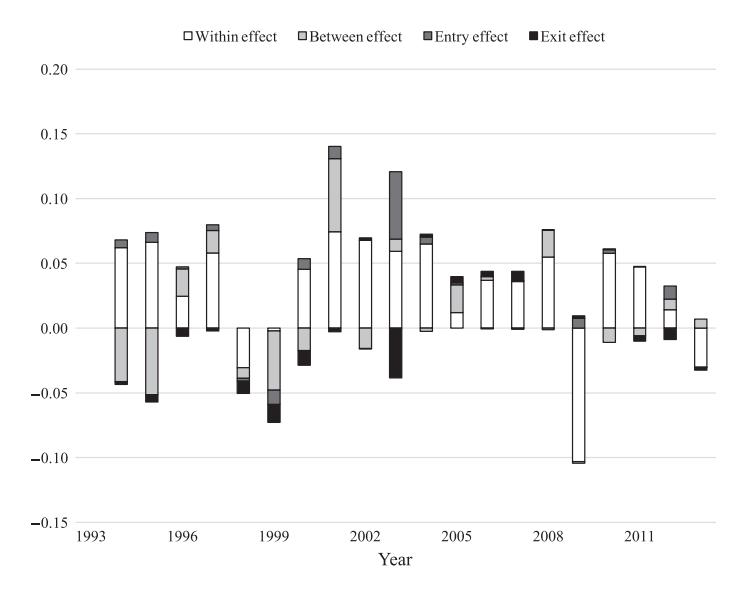
- 주요 발견: 1993-2013 평균 TFP 성장 +2.84%/year. 1997-98 위기: within -0.0305, exit +0.0096 (양의 부호 = no cleansing). 2008-09 위기: within -0.1031, exit -0.0020 (음의 부호 = cleansing). Cox hazard 회귀 — 1990s 는 sales/asset 만 양 (생존 도움) TFP 는 음 (생산적 plant 도 exit), 2000s 는 sales/asset/TFP 모두 양.
- 시사점: cleansing effect 는 자동 이 아니라 제도적으로 조건부 — 1997 위기 직후 financial supervisory 통합 + zombie 청산 mechanism 정비가 2008 의 cleansing 가능하게 한 핵심 변화. 위기 = 자원 reallocation 기회, 단 제도가 받쳐줄 때만.
요약
창조적 파괴 의 macro counterpart 인 청소 효과 (cleansing effect) hypothesis 는 Caballero & Hammour (1994, AER) 가 침체기 job destruction 증가의 cleansing 으로 처음 정량화 한 이래, 경기 침체가 자원 reallocation 을 통해 economy 의 productivity 를 향상시킨다 는 명제로 정착. 그러나 후속 작업 — Barlevy (2002) 의 sullying effect, Caballero & Hammour (2000) 의 financial constraint 조건부 cleansing, Caballero, Hoshi & Kashyap (2008) 의 zombie lending — 이 cleansing 의 조건성 을 강조. 본 paper 는 한국이라는 동일 국가의 두 침체 를 비교해 이 조건성을 실증한다. 같은 batch 의 How an Economic Recession Affects Qualitative Entrepreneurship: Focusing on the Entrepreneur's Exit Decision 가 진입 cohort 의 quality 라는 micro 차원으로 같은 1997 위기를 보았다면, 본 paper 는 aggregate productivity reallocation 의 macro 차원으로 본다.
분석은 Good, Nadiri & Sickles (1997) 의 연쇄 다국간 지수 로 plant-level TFP 측정 → Griliches & Regev (1995) decomposition 으로 within / between / entry / exit 4 효과 분리 → 1997 과 2008 두 위기 cohort 비교. 위기별 exit effect 의 부호가 cleansing 의 핵심 시그널. 핵심 결과 (Table 6) — 1997-98 의 exit effect +0.0096 (비생산적 plant 가 덜 exit, 또는 생산적 plant 가 위기로 exit), 2008-09 의 exit effect -0.0020 (비생산적 plant 가 더 exit). Cox proportional hazard 회귀 (Table 7-8) 가 왜 이 차이가 났는지 보여줌 — 1993-2002 model 에서 TFP 회귀 계수 +0.2875 (양의 hazard = 생산적 plant 가 더 exit, sales·asset 만 음의 hazard), 2003-2013 model 에서 TFP +0.0942 (여전히 양이지만 작고, sales·asset 모두 음으로 정상), Crisis × TFP interaction 이 1997 에선 +0.0352 (위기 중 TFP 의 보호 효과 약화), 2008 에선 -0.1351 (위기 중 TFP 가 더 강하게 보호).
이 차이의 기제는 제도 변화 — 1997 위기 직전 한국은 (i) 통합 financial supervisory 부재, (ii) zombie firm 청산 mechanism 부재, (iii) 거대 재벌의 고부채 + 자산 팽창 전략 일반화 의 3 중 취약. 1997 위기 후 Financial Supervisory Service 설립 + 부실자산 관리 institution + 예금보험 system 보강이 productivity-based selection 의 가능 조건. 2008 위기에서 이 기제가 처음 작동. 한계는 (i) entry rate 의 자체 변동성과 cleansing 의 혼동, (ii) financial constraint 의 직접 측정 부재 (interest rate 의 proxy), (iii) 산업별 cleansing 차이의 미세 검증. 이정동 author page anchor 의 제3기 (3) accumulation 이론의 학술적 기반 구축 라인의 macro productivity counterpart — Kang & Lee (2017) 의 R&D persistency 가 생존 firm 의 행동 을 보았다면 본 paper 는 사라진 firm 의 selection 을 본다.
핵심 결과
Productivity decomposition (Griliches-Regev) of two recessions:
| 기간 | Within | Between | Entry | Exit | Cleansing? |
|---|---|---|---|---|---|
| 1996-97 (위기 직전) | +0.058 | +0.017 | +0.005 | +0.002 | — |
| 1997-98 (Asian crisis) | -0.031 | -0.008 | -0.002 | +0.010 | No |
| 1998-99 (회복기) | -0.002 | -0.046 | -0.011 | +0.014 | No |
| 2007-08 (위기 직전) | +0.055 | +0.021 | -0.001 | -0.000 | — |
| 2008-09 (Global crisis) | -0.103 | -0.001 | +0.007 | -0.002 | Yes |
Cox proportional hazard 회귀 계수 비교 (Model II vs IV):
| 변수 | 1993-2002 hazard | 2003-2013 hazard | 해석 |
|---|---|---|---|
| TFP | +0.2716 *** | +0.1157 *** | TFP 높을수록 exit (1990s 더 강) |
| Sales | -0.2870 *** | -0.1710 *** | 매출 높을수록 생존 |
| Asset | -0.0628 *** | -0.0086 ** | 자산 클수록 생존 (2000s 약) |
| Crisis × TFP | +0.0352 * | -0.1351 *** | 1997 위기에 TFP 보호 효과 사라짐, 2008 위기에 강화 |
| Crisis × Asset | +0.0169 * | +0.0733 *** | 위기에 자산 boomerang (대형 자산 위기 취약) |
방법론 노트
연쇄 다국간 지수 (Good, Nadiri & Sickles 1997) 는 cross-section + panel 동시에 transitive 한 TFP 비교를 가능케 하는 hypothetical reference plant 방법. 각 cross-section 에서 input share 의 arithmetic mean + input 의 geometric mean 으로 가상 plant 구축, 연도별 가상 plant 들을 chain 으로 연결.
핵심 식 (chained multilateral TFP):
Griliches-Regev decomposition (TFP 성장의 4 요인 분해):
여기서 는 연속 plant, 은 신규 진입 plant, 는 exit plant, 는 plant 의 시장 점유율, 는 plant TFP. 네 항은 within / between (시장점유율 reallocation) / entry / exit 효과.
식별은 광공업 조사 의 plant-level 종업원 5 인 (2007 이전) 또는 10 인 (2007 이후) 이상 enumeration survey 가 한국 전체 제조업의 거의 완전한 frame 을 제공한다는 가정 위에서. Constant returns to scale 가정으로 input elasticity = average cost share. Cox proportional hazard 로 plant exit 의 hazard 를 TFP·sales·asset·crisis dummy 함수로 모델링.
연구 계보
창조적 파괴 명제의 Schumpeter (1934, 1954), market selection mechanism 의 Jovanovic (1982, Econometrica), Hopenhayn (1992, Econometrica) 의 firm dynamics equilibrium 이 framework 의 출발점. Cleansing effect 의 정량화는 Caballero & Hammour (1994, AER) 와 Davis & Haltiwanger (1992, QJE) 의 job creation/destruction, Foster, Haltiwanger & Krizan (2001) 의 productivity-side reallocation 이 핵심 선행. Cleansing 의 조건성 논의는 Barlevy (2002, 2003) 의 sullying effect 와 credit market friction, Caballero & Hammour (2000) 의 financial constraint 영향, Caballero, Hoshi & Kashyap (2008, AER) 의 일본 zombie lending 이 직접 framework 제공. Method 측면에선 Good, Nadiri & Sickles (1997) 의 chained multilateral TFP, Griliches & Regev (1995, J. Econometrics) 의 decomposition 이 표준. TEMEP 내부 anchor 는 이정동 author page 제3기 (3) accumulation 이론의 학술적 기반 구축 라인의 aggregate productivity counterpart. 같은 plant-level Mining and Manufacturing Survey 를 쓴 Evaluation of credit guarantee policy using propensity score matching (한국 신용보증 selection bias) 와 The relevance of DEA benchmarking information and the Least-Distance Measure (한국 제조업 DEA 벤치마킹) 가 같은 데이터 + 다른 계량 접근의 자매 작업. 같은 batch 의 How an Economic Recession Affects Qualitative Entrepreneurship: Focusing on the Entrepreneur's Exit Decision 가 진입 cohort 의 micro entrepreneur 측면 을 본다면, 본 paper 는 aggregate plant exit 의 macro selection 측면 을 본다 — 1997 위기의 micro vs macro 페어 자매 작업.
See also
- 청소 효과 (cleansing effect)
- 창조적 파괴
- 연쇄 다국간 지수
- 생산성 분해
- Cox 비례 hazard 모형
- 아시아 외환위기
- 글로벌 금융위기
- How an Economic Recession Affects Qualitative Entrepreneurship: Focusing on the Entrepreneur's Exit Decision
- Evaluation of credit guarantee policy using propensity score matching
- The relevance of DEA benchmarking information and the Least-Distance Measure
- Pacific Economic Review
인접 그래프
- 인물 3
- 방법론 3
- 개념 3
- 주제 3
- 수록처 1
- 분류 2
- 논문 4