Validation of an R&D-based computable general equilibrium model
Chanyoung Hong, Heewon Yang, Won-Sik Hwang, 이정동 (2014) · Economic Modelling · DOI ↗
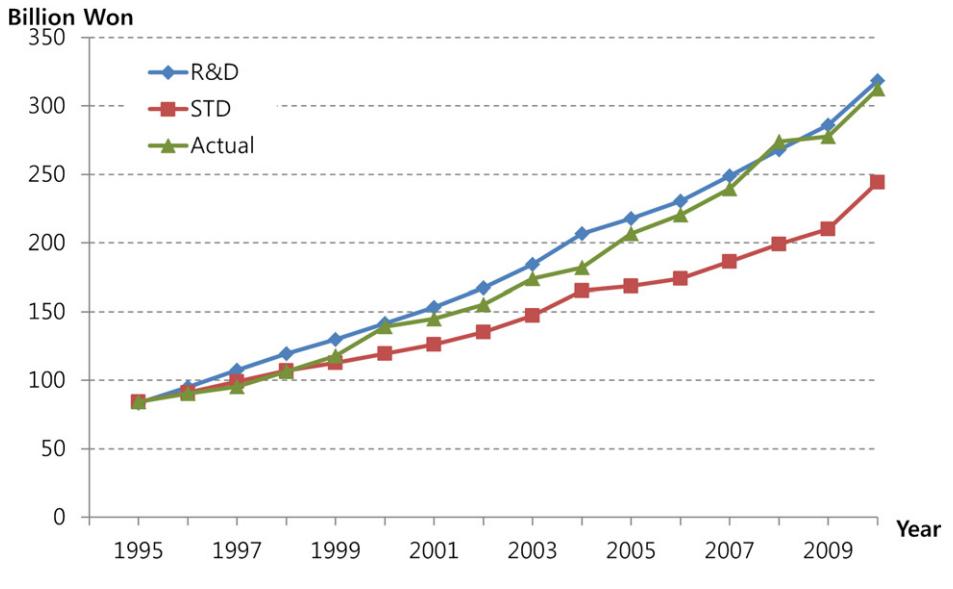
표준 연산일반균형 분석 모델이 고정된 TFP 계수 와 제한된 primary input (labor · capital 만) 으로 인해 R&D 활동의 macro 효과를 잡지 못한다는 문제를 제기하고, sector 자체의 knowledge stock + 타 sector 의 knowledge spillover 라는 두 setup 을 추가한 R&D-based CGE 모델을 제안한다. 1995-2010 한국 실측 데이터와 standard 모델 추정치를 비교해 27 개 산업 중 16-17 개에서 R&D-based 모델이 더 fit 가 좋고, 특히 전자·전기 (S13) 와 부동산·사업서비스 (S24) 같은 knowledge-intensive sector 에서 우수한 fit 을 보여준다.
- RQ: 기존 연산일반균형 분석 모델이 fixed TFP 가정 과 labor-capital 만의 primary input 때문에 R&D 활동이 활발한 경제의 실제 dynamics 를 얼마나 미스하는가, 그리고 R&D 를 추가한 모델이 표준 모델보다 baseline scenario fit 에서 더 나은가?
- 방법론: 연산일반균형 분석, 축차 동학, 사회회계행렬, 토빈의 Q
- 데이터: 한국 1995 SAM (Bank of Korea I-O table, 27 sector) + 1995-2010 시계열 (gross investment · I-O · physical+knowledge capital stocks)
- 주요 발견: R&D-based 모델이 27 개 산업 중 16-17 개에서 standard 모델보다 fit 우수 (Industry total MAPE: standard 13.2% vs R&D-based 6.0%). knowledge-intensive sector 인 Electronic and electrical equipment (S13) 와 Real estate and business services (S24, 연평균 9.5% · 11.9% real growth) 에서 특히 우수.
- 시사점: 2008 SNA 가 R&D 지출을 investment 로 capitalize 하는 흐름과 정합한다. 한국 같은 high-TFP-growth 국가에 macro 정책 평가 (특히 R&D 정책) 를 할 때 표준 CGE 보다 R&D-based CGE 가 fitness 측면에서 우월 — 단 Construction (S18) 처럼 base-year 비중이 매우 큰 산업이나 Finance (S23) 처럼 R&D 와 TFP 의 link 가 약한 산업에선 absorptive capacity 등 추가 coefficient 가 필요.
요약
본 paper 는 이정동 의 자기 분류 제3기 성장의 역학과 거시적 전환 (2013-2019) 의 연산일반균형 분석 본격 등장 지점이다. author page 가 “2014 년부터 CGE 분석이 본격적으로 나타난다” 고 명시한 출발점. 미시 (DEA · SFA · 제품 survival) 에서 거시 (국가 경제 전체 동학) 로의 도약이 방법론적으로 실현되는 첫 paper. 동시에 2008 SNA 의 R&D-as-investment capitalization 흐름 (UN Statistical Commission, US BEA 2013, EU·한국 2014 적용 예정) 과 정합하는 시기적 일치성도 의미를 가진다 — R&D 가 단순 expense 가 아닌 productive asset 임을 macro 통계가 인정하는 시점에 동시에 CGE 모델도 R&D 를 production factor 로 격상시키는 것.
이론적 배경은 Diao et al. (1996, 1999) 의 Romer (1990) endogenous growth 기반 CGE 와 Goulder–Schneider (1999) 의 climate change 정책 induced 기술변화 에서 출발한다. 두 setup 이 추가된다. 첫째, sector 자체의 own knowledge stock 이 production factor 로 들어간다 (private R&D 가 IR_i 로 sector-level 누적, public R&D 가 H_GOV 로 government 수준 누적, depreciation rate 15%). 둘째, 타 sector + government 의 knowledge spillover 가 TFP 계수를 endogenize 한다. private 투자의 sector 별 배분은 토빈의 Q 의 return to capital ÷ user cost of capital 비율로 결정 — 즉 R&D 가 production factor 일 뿐 아니라, R&D 투자도 capital market 의 logic 에 따라 sector 간 배분 된다는 점이 핵심 contribution.
검증은 baseline scenario 의 fit comparison 으로 진행된다. 1995 base-year SAM 으로 calibrate 한 뒤 policy shock 없이 1995-2010 dynamic equilibrium 만 풀고, 실측 sector-level output 과 MAD·MAPE 로 비교. 27 sector 중 16-17 개에서 R&D-based 모델 우세, 전 산업 합산 에서 MAPE 13.2% (standard) → 6.0% (R&D-based) 로 절반 이하로 줄어든다. knowledge-intensive sector (S13 전자·전기, S24 부동산·사업서비스) 의 fit 향상이 두드러지고, Food·Wholesale trade 같은 low-knowledge sector 에선 R&D-based 모델이 overestimate 한다 (knowledge effect 가 too strong). Construction·Finance 의 중간 사례는 base-year dominance 와 TFP-R&D link 의 sector-별 이질성을 시사. 본 paper 의 한계는 policy shock 없는 baseline 만 검증 한다는 점 — 실제 정책 평가 (탄소세 · R&D 보조금 등) 의 fit 은 후속 연구의 몫. 또한 Korea Productivity Center 추정 physical stock + Bank of Korea 추정 knowledge stock 의 base-year 값에 sensitivity 가 의존한다.
핵심 결과
| 지표 | Standard CGE | R&D-based CGE | 해석 |
|---|---|---|---|
| Industry total MAD (백만 won) | 28,895 | 9,419 | R&D-based 가 1/3 수준 |
| Industry total MAPE (%) | 13.2 | 6.0 | R&D-based 가 절반 이하 |
| Industry total slope | 9,649 | 15,009 | 실측 slope 15,014 에 R&D-based 가 거의 일치 |
| 우수 sector 수 (better fit) | 10-11 | 16-17 | R&D-based 가 다수 sector 우세 |
| 우수 sector output share | 24.5% | 75.5% | 우세 sector 가 base-year output 의 3/4 |
| S13 (Electronic·electrical) MAPE | 32.7% | 8.6% | knowledge-intensive sector 의 dramatic 개선 |
| S24 (Real estate·business) MAPE | 21.5% | 5.8% | 두 번째 high-TFP sector |
| S03 (Food·beverage·tobacco) MAPE | 12.3% | 50.2% | low-knowledge sector 에선 overestimate |
knowledge stock 의 depreciation rate (모든 sector 공통). private knowledge elasticity 는 Cho (2003) KIET 추정, public knowledge elasticity 는 Hwang et al. (2008) 추정.
방법론 노트
R&D-based CGE 의 두 핵심 setup:
(1) Knowledge accumulation as Tobin’s Q-driven investment allocation:
여기서 는 sector 의 knowledge stock, 는 R&D 투자, 는 knowledge return, 는 R&D price, 는 이자율, 는 calibrate·elasticity 파라미터.
(2) TFP endogenization via knowledge spillover:
여기서 로 spillover 가 클수록 value added 계수가 작아져 technical progress 가 발현 된다. 는 I-O table 의 inter-industry transaction ratio — 경제구조 내재 weight 로 spillover 의 sector 간 전달을 modelling. foreign technology spillover 도 imported intermediate goods 의 I-O share 를 통해 implicitly 포함.
식별은 1995 base-year SAM + Korea Productivity Center · Bank of Korea 의 stock 추정값 calibration 위에서 작동한다. validation 은 factor endowment (labor · physical capital · gross investment) 의 실측값을 exogenous 로 투입 하고 baseline scenario 만 풀어 실측 output 과 비교. policy shock 없는 baseline 인 만큼 모델의 내재적 dynamics 만 평가 — Das–Powell (2001) 의 absorptive capacity coefficient 가 후속 정교화의 자연스러운 다음 단계로 제시된다.
방법론 노트 - 평가지표
여기서 는 실측 industrial output, 는 CGE 추정값. recursive 회귀 의 slope 를 실측 slope 와 비교해 growth trend 의 일치도도 측정.
연구 계보
본 paper 는 연산일반균형 분석 에 R&D 를 endogenous factor 로 끼워넣는 전통의 직계 — Diao et al. (1996, 1999) 의 Romer (1990) endogenous growth 기반 CGE, Goulder–Schneider (1999) 의 climate change CGE, Ghosh (2007) 와 Lecca (2009) 의 R&D spillover CGE, Visser (2007) 의 Worldscan model R&D version, Verbič et al. (2009) 의 TFP 회귀 추정 setup 등을 통합. Coe–Helpman (1995) 의 imported goods 기반 international R&D spillover 도 implicit 으로 반영. 한국 특수 calibration 으로는 Cho (2003) KIET 의 sector-별 private knowledge elasticity 와 Hwang et al. (2008) 의 public knowledge elasticity = 0.25 가 source. 이정동 author page 의 제3기 (1) CGE 모델의 등장 분류 — 2014 년부터 CGE 분석이 본격적으로 나타난다 — 와 정확히 일치하는 시작점. sibling Profitability and productivity changes in the Korean electricity industry 의 index-number 기반 productivity 분해 가 같은 productivity 동학 라인의 micro 작업 — 본 paper 가 macro 차원으로 격상.
See also
- Profitability and productivity changes in the Korean electricity industry
- Effects of regulation and economic environment on the electricity industry's competitiveness: A study based on OECD countries
- 이정동
- 연산일반균형 분석
- 축차 동학
- 사회회계행렬
- 토빈의 Q
- 지식 파급
- 총요소생산성
- 지식 자본
- R&D 투자
- Economic Modelling
인접 그래프
- 인물 4
- 방법론 5
- 개념 5
- 주제 1
- 수록처 1
- 분류 2
- 논문 10
이 문서를 가리키는 페이지
논문 (10)
- Arms or butter: The economic effect of an increase in military expenditure
- Assessing the Socio-Economic Effects of Korea's Nuclear Power Policy
- CGE analysis of R&D investment policy considering trade-offs between economic growth and stability
- Effects of regulation and economic environment on the electricity industry's competitiveness: A study based on OECD countries
- Growth versus equity: A CGE analysis for effects of factor-biased technical progress on economic growth and employment
- Interindustry Knowledge Transfer and Absorption via Two Channels - The Case of Korea
- Macroeconomic effects of R&D tax credits on small and medium enterprises
- Profitability and productivity changes in the Korean electricity industry
- The Impact of Korea's Green Growth Policies on the National Economy and Environment
- The Relationship Among Stock Markets, Banks, Economic Growth, and Industry Development