R&D investment of electricity-generating firms following industry restructuring
jihwan-kim, 김연배, david-flacher (2012) · Energy Policy 48:103–117 · DOI ↗
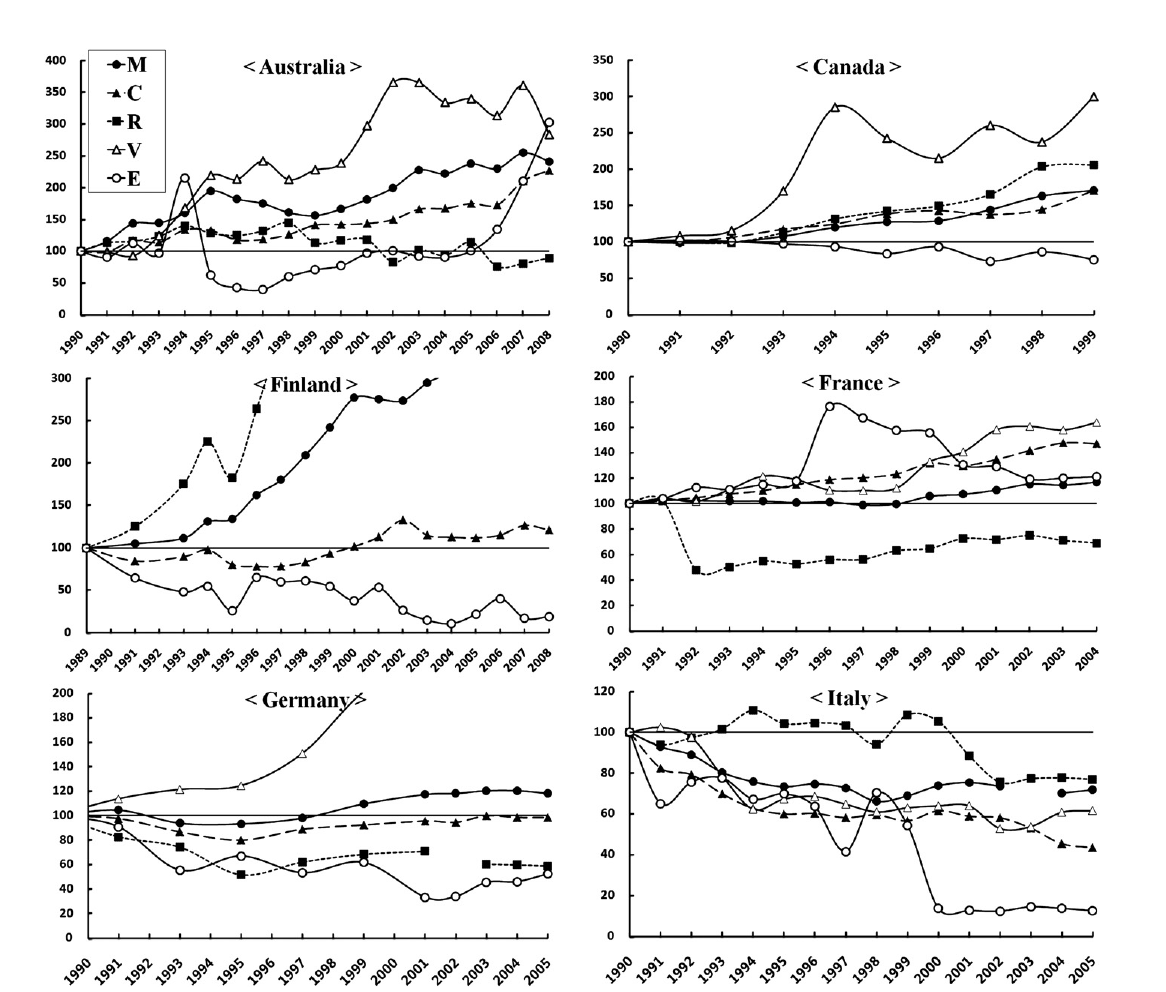
1990 년대 시작된 전력 산업 구조개혁 — entry liberalization (TPA, wholesale market, retail deregulation), vertical unbundling, privatization — 이 발전 기업의 R&D 투자에 미친 영향을 15 OECD 국 70 발전기업 × 1990-2008 패널로 분석. Entry liberalization 이 R&D 투자 감소 (계수 −0.18, p<0.01), 특히 wholesale market 도입이 가장 큰 부정 효과 (−1.20, p<0.01). Privatization 단독은 비유의, 그러나 entry liberalization 과 결합 시 R&D 감소 강화 (interaction −0.05, p<0.01). Vertical unbundling 자체는 비유의 — 단 regulated TPA 와 결합 시 부정.
- RQ: 전력 산업 구조개혁의 (i) entry liberalization (TPA, wholesale, retail), (ii) vertical unbundling, (iii) privatization 각각이 발전 기업 R&D 투자에 미치는 효과는? interaction effect 는?
- 방법론: fixed-effects-tobit panel — R&D investment 의 censoring (zero R&D 기업 26%) + firm fixed effect. Restructuring 변수의 binary timing dummy + interaction term. Multicollinearity 회피를 위한 단일-변수 별 spec separation
- 데이터: 15 OECD 국 70 발전기업 × 1990-2008 unbalanced panel (700 obs, 191 censored). Variables: log R&D, Overall Entry Liberalization (TPA, wholesale, retail 합성), 각 component dummies, Vertical Integration, Privatization (3 spec), Firm size, Govt energy R&D, GDP growth, fossil share, income
- 주요 발견: (i) Overall entry liberalization 계수 −0.184 (p<0.01) — 시장 경쟁 증가가 R&D incentive 감소. (ii) Wholesale pool 단독 효과 −1.198 (p<0.01) — 가장 큰 negative effect (자유 진입 4 component 중). Retail liberalization initial −1.285 (p<0.01), 완전 deregulation 후 +0.579 (p<0.10) — partial 자유화 가 가장 해롭다. Regulated TPA −0.606 (p<0.10), 그러나 negotiated TPA n.s. (iii) Privatization 단독 n.s., 그러나 Privatization × Entry liberalization interaction = −0.050 (p<0.01) — privatization 이 자유화 시장에서 R&D 더 감소. (iv) Vertical integration 단독 n.s., VI × regulated TPA interaction −0.586 (p<0.10) — vertically integrated firm 이 regulated TPA 에 더 민감. (v) Firm size + 양의 효과 (+1.32, p<0.01) + inverted-U (size² −0.174, p<0.01) — 최적 firm size ≈ 24 billion USD (Cohen-Klepper 1996 의 size-productivity trade-off 확인). (vi) Govt energy R&D 가 private R&D 를 촉진 (+0.79, p<0.01) — complement, crowding-out 아님.
- 시사점: (a) 전력 자유화의 dynamic efficiency 비용: static efficiency (price, allocation) 측면 gains 는 dynamic efficiency (innovation) loss 동반 — grid 신뢰성 + 신재생 통합 + 환경 대응 의 long-run 영향 위협. (b) Wholesale market 의 특이 부정 효과: open-bid market 의 spot price volatility + investment 회수 불확실성 이 long-horizon R&D 의 가장 큰 저해. (c) Privatization 의 contextual 효과: privatization 자체는 R&D 영향 없으나 자유화 시장 에서는 negative — private ownership 의 short-term profit 추구가 long-run R&D 와 충돌. (d) 정부 energy R&D 가 private R&D 의 substitute 아닌 complement — 공공-민간 R&D 가 동반 증가 패턴, NIS 정책 함의.
요약
본 paper 는 Access regulation and infrastructure investment in the mobile telecommunications industry 의 MVNO 규제와 MNO 투자 분석을 전력 산업의 entry liberalization 과 발전 기업 R&D 로 확장한 자매 작업 (Korea-France STAR 협업의 두 번째 paper). 김연배 author page 의 제2기 (SNU-TEMEP 확장기) 의 규제-투자 inter action 라인 (author page 분류) + 기술경영경제정책전공 의 에너지 정책 라인의 결합. 기존 electricity restructuring 문헌 (Barmack et al. 2007, Fabrizio et al. 2007, Hattori-Tsutsui 2004, Steiner 2001, Jamasb-Pollitti 2008) 은 static efficiency (price, generation efficiency) 중심으로, dynamic efficiency (R&D, innovation) 의 영향은 미분석 또는 단편. 본 paper 의 conceptual move 는 — restructuring 의 4 차원 (entry liberalization, vertical unbundling, privatization, firm size) 을 동시에 모형화하고 interaction effect 까지 식별.
방법론 핵심은 — (i) fixed-effects-tobit — R&D investment 의 zero-mass + lognormal 특성 처리, (ii) Entry liberalization 변수의 4 component 분해 (overall, TPA, wholesale, retail), (iii) Privatization 의 3 가지 measurement (continuous Privatization, binary Privat1, Privat2), (iv) Multicollinearity 회피를 위한 separate single-variable estimation + critical interaction (Privatization×Wholesale, VI×TPA) 만 joint, (v) Inverted-U firm size 의 squared term 검증.
발견의 정책 함의는 전력 자유화의 hidden cost 를 정량화. (a) Wholesale market 의 특이성: open-spot market 의 price volatility → long-horizon R&D 의 amortization 불확실성 → investment retrenchment. Regulated TPA 만 negative, negotiated TPA 는 비유의 — forced access 의 disincentive 가 voluntary access 보다 강. (b) Retail liberalization 의 phased effect: 부분 deregulation (Rliberal1) 이 가장 해롭고 완전 deregulation (Rliberal2) 은 reverse — transitional phase 의 우려가 strategic R&D 보류 유도. (c) Privatization × Entry liberalization 의 interaction: privatized + competitive 가 R&D 의 worst case — short-termism + competition 의 dual pressure. (d) Firm size 의 inverted-U: 24 billion USD 근처가 optimum — small firm 의 R&D 인프라 부족, large firm 의 bureaucratic inefficiency 의 trade-off. 한계: (i) Multicollinearity 가 일부 interaction 추정 제약, (ii) 191/700 censored — selection 문제 (Appendix C 의 selection model 검증), (iii) 전력 산업 only, (iv) Endogeneity (restructuring 결정의 historical R&D 영향 가능) 무시.
핵심 결과
Tobit panel 추정 (Table 3-4, dependent: log R&D)
| 변수 | 계수 | 해석 |
|---|---|---|
| Overall entry liberalization | −0.184* | 자유화 → R&D ↓ |
| Privatization (단독) | n.s. | 사유화 자체 영향 없음 |
| Pr × Entry liberalization | −0.050* | interaction 이 negative |
| Vertical integration | n.s. | VI 자체 영향 없음 |
| VI × Regulated TPA | −0.586* | VI 가 regulated TPA 에 더 민감 |
| Wholesale pool | −1.198* | 가장 큰 negative, single-variable |
| Retail (Rliberal1, partial) | −1.285* | partial 자유화 가장 해롭다 |
| Retail (Rliberal2, complete) | +0.579* | complete 자유화 는 reverse |
| TPA (전체) | −0.179 (n.s.) | TPA 자체 무영향 |
| Regulated TPA | −0.606* | regulated TPA 만 negative |
| Firm size | +1.32* | size + R&D + |
| Firm size² | −0.174* | inverted-U, optimum ≈ $24B |
| Government energy R&D | +0.79* | complement, crowding-out 아님 |
정량 결론. (i) Wholesale market 도입의 single-variable 효과 가 entry liberalization aggregate 의 7 배 (−1.20 vs −0.18) — wholesale pool 이 dynamic efficiency 손실의 dominant source. (ii) Retail 자유화의 partial vs complete 의 reverse — 정책 권고: transition 기간 단축. (iii) Privatization × competition 의 interaction-only 효과 — 공기업의 사유화 단독은 R&D 보존, 자유화와 결합 시만 R&D 감소.
방법론 노트
fixed-effects-tobit 의 채택은 (i) R&D investment 의 26% censoring at zero (Tobit 의 censored regression 정합), (ii) firm-level unobserved heterogeneity (within-transformation), (iii) Heckman-style selection 의 추가 가능 (Appendix C 검증).
핵심 식. Restructuring 의 R&D 효과 (Tobit latent):
관찰 R&D = . 식별은 (i) 70 firm × 19 year panel 의 sufficient variation, (ii) Restructuring 의 staggered adoption 으로 country-by-year 변동 확보 (DID-like identification), (iii) Multicollinearity 진단 후 separate spec for correlated variables, (iv) Government R&D 의 contemporary 통제 로 spillover 제거.
연구 계보
본 paper 는 (a) Schumpeter (1942) 의 시장 경쟁과 혁신의 관계, Aghion et al. (2005) 의 inverted-U, Cohen-Klepper (1996) 의 firm size-R&D 관계 의 이론 라인, (b) Barmack et al. (2007), Fabrizio et al. (2007), Hattori-Tsutsui (2004), Steiner (2001), Jamasb-Pollitti (2008), Sanyal-Ghosh (2008), Jacquier-Roux-Bourgeois (2002) 의 electricity restructuring 효과 literature, (c) Newbery (2002), Pollitt (2009) 의 energy R&D + market design 라인의 결합. Access regulation and infrastructure investment in the mobile telecommunications industry 의 MNO 투자 분석 framework 을 electricity sector R&D 로 sector-transfer 한 자매 paper — 두 paper 모두 Korea-France STAR 협력 산물. 김연배 author page 의 제2기 (SNU-TEMEP 확장기) 의 규제-투자 interaction 라인 (author page) — 기술경영경제정책전공 의 전력 산업 + 신재생 정책 분기로 연결 (Electricity-generation mix considering energy security and carbon emission mitigation: Case of Korea and Mongolia, Role of policy in innovation and international trade of renewable energy technology: Empirical study of solar PV and wind power technology 등 후속 sibling).
See also
- fixed-effects-tobit
- electricity-restructuring
- entry-liberalization
- wholesale-market
- privatization
- R&D 투자
- jihwan-kim
- 김연배
- david-flacher
- Access regulation and infrastructure investment in the mobile telecommunications industry
- Energy Policy
인접 그래프
- 인물 1
- 개관 1
- 방법론 1
- 개념 1
- 수록처 2
- 분류 1
- 논문 5